Recorded November 22, 2026
Space & AstronomyReported finding
60 Days in a Venus Oven: Minerals May Keep a Record of Ancient Water
Six minerals endured 60 days in NASA's 811-liter Venus simulator. Fluorine-bearing micas and magnesite formed — potential fingerprints of ancient water and hints of ongoing volcanism.
By James Calloway4 min read736 words
In brief
- Six minerals were exposed to simulated Venus surface conditions for 60 consecutive days in a nine-gas atmosphere
- Experiments used the 811-liter Glenn Extreme Environment Rig at NASA Glenn Research Center
- Hydrogen fluoride converted water-bearing minerals into stable fluorine-bearing micas; brucite plus CO2 formed magnesite
- Sulfur-bearing minerals formed on nearly all samples, implying ongoing volcanic replenishment of atmospheric gases
- Study published in the Planetary Science Journal (DOI: 10.3847/psj/aea909) ahead of NASA's DAVINCI, VERITAS and ESA's EnVision
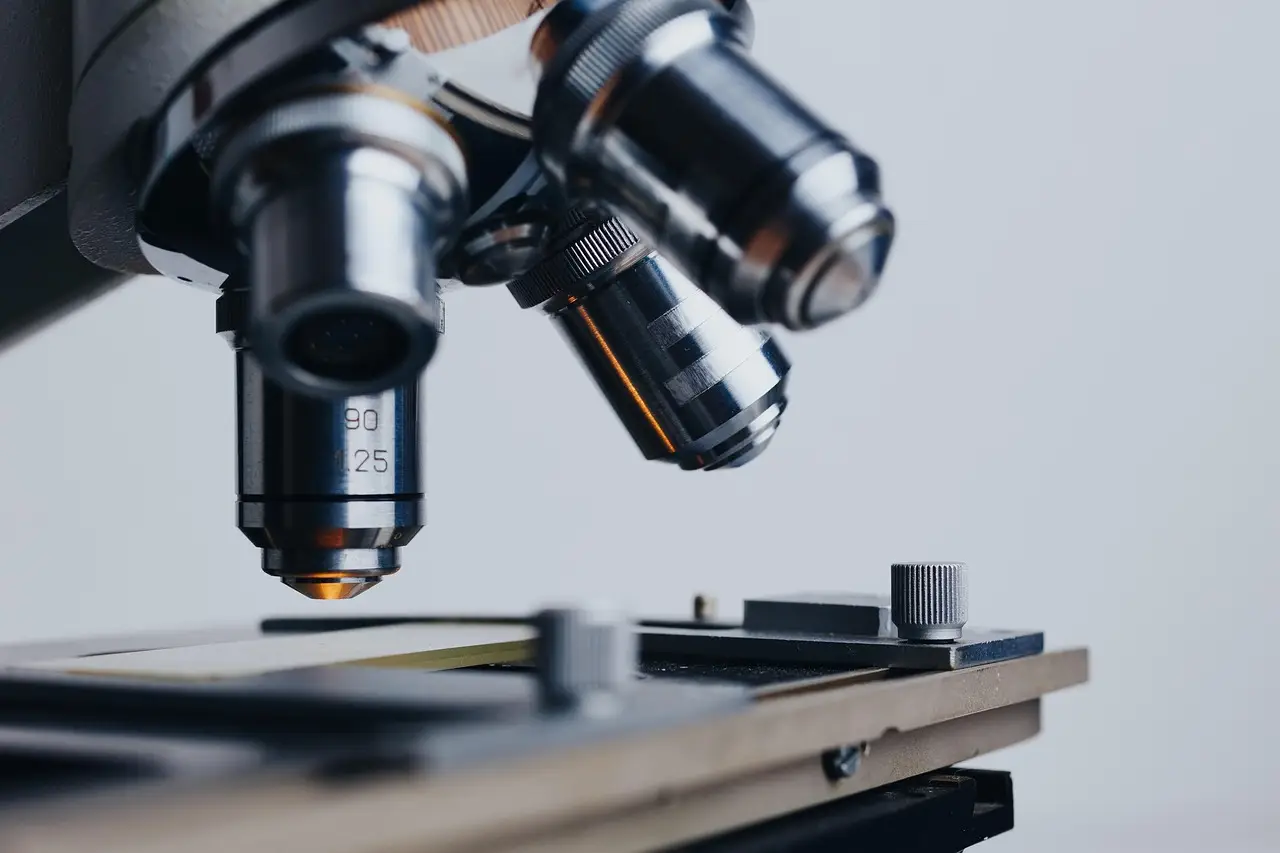
Six minerals spent 60 straight days inside an 811-liter chamber that mimics Venus — and instead of erasing their history, the planet's brutal atmosphere may have written some of it down in fluorine.
That's the headline result from a new study led by Sara Taeko Port, a postdoctoral researcher in UT San Antonio's Department of Physics and Astronomy, working with NASA and Arizona State University. The team's paper, "New Insights into Venus's Volatile Cycles Revealed by the Formation of Magnesite and Fluoro–Micas," appears in the Planetary Science Journal (DOI: 10.3847/psj/aea909).
Venus is not forgiving. Surface temperatures run hot enough to melt lead, and the atmospheric pressure sits at nearly 100 times Earth's. Yet scientists have long suspected the planet was once much wetter — possibly with water on its surface. The question is whether any mineral evidence of that era could survive the inferno.
Port's answer, cautiously: yes, some of it might.
What did the experiments actually show?
For the past decade, Port has studied how minerals behave under Venus-like conditions. In the latest round, her team exposed six rock-forming minerals to a simulated Venus surface for 60 consecutive days, inside an atmosphere containing nine gases.
The venue matters here. The tests ran in the Glenn Extreme Environment Rig (GEER) at NASA Glenn Research Center — described as the most comprehensive Venus simulation chamber in the world. It reproduces the heat, pressure and atmospheric chemistry of the real surface. Afterward, researchers examined the altered minerals with advanced analytical instruments at ASU.
Two findings stand out, and both come with caveats.
- Fluorine-bearing micas formed. Hydrogen fluoride in the simulated atmosphere reacted with water-bearing minerals, converting them into fluorine-bearing micas — flaky silicate minerals — that stay stable under Venus' extreme conditions. Detect these on Venus, and you'd have evidence that water-bearing minerals existed there earlier.
- Magnesite appeared. The water-rich mineral brucite reacted with carbon dioxide to form magnesite, a magnesium carbonate. That's a second potential mineralogical fingerprint of Venus' ancient water and carbon dioxide cycles.
Note the conditional. This is laboratory chemistry, not a field observation. Nobody has found these minerals on Venus yet.
"One of the exciting things we identified is that Venus' extreme atmosphere doesn't necessarily erase all evidence of its past," Port said. "Fluorine in the atmosphere can help stabilize minerals that may have originally formed when water was more abundant. If we find these fluorine-bearing minerals on Venus, they could give us clues about Venus' past surficial water."
Is Venus still erupting?
The experiments also speak to present-day Venus. Sulfur-bearing minerals formed on nearly all six samples, showing how aggressively the atmosphere's sulfur dioxide attacks fresh surface material.
Those reactions would continuously strip sulfur dioxide and hydrogen fluoride out of the air. Since both gases persist at observed levels in the atmosphere, something must be resupplying them. The candidates: volcanic degassing, and fresh volcanic rock exposed at the surface. That's suggestive evidence Venus remains volcanically active. It's not proof — but it narrows the suspects.
What does this change for upcoming missions?
Quite a bit, potentially. NASA's DAVINCI and VERITAS missions, plus ESA's EnVision, are all bound for Venus. The minerals identified in Port's lab work give mission scientists concrete targets to hunt for, and a framework for interpreting whatever the spacecraft actually find. Lab predictions meeting real data — that's the test that counts.
The stakes extend beyond one planet. Maitrayee Bose, associate professor in ASU's School of Earth and Space Exploration and Port's longtime collaborator, framed the bigger picture:
"Venus and Earth likely started with many of the same basic ingredients, yet today they are dramatically different planets," Bose said. "Understanding how Venus' surface and atmosphere have interacted over geologic time can help us reconstruct how Venus evolved, why it became so different from Earth and what that tells us about the evolution of rocky planets beyond our solar system."
Two planets, similar starting materials, radically different endings. Figuring out where Venus diverged — and whether water left a trace anyone can still read — may tell us something about rocky exoplanets too.
Until a lander or orbiter confirms those fluorine-bearing micas in the wild, though, the ancient-water story stays exactly that: a well-supported hypothesis, waiting for a spacecraft to check the math.
via phys.org/rss-feed/ (Source)
More from James Calloway
Show full bio
Staff writer covering regulation, policy and their impact on general science news at SciBeat.
570 articles
Nearby plates
- Venus minerals may hold chemical fingerprints of a wetter past
- Shock Tests Show Why Ancient Grains Do Not Tell Simple Tales
- Deep-Earth Magma Can Store Hidden Oxygen, Study Finds
- Superheated Magma Stays Fluid for Hours, Fueling Towering Lava Fountains
- 3.1-Billion-Year-Old Rocks Show Water Fueled Early Volcanoes