Plate Nº 18 · recorded November 15, 2026
Space & AstronomyReported finding
A Dead Star Flashes Every 8 Minutes — and Its Partner Is Nearly the Sun
Radio flashes every 7.9 minutes have revealed the first white dwarf pulsar orbiting a sunlike star, a Nature Astronomy find that overturns the red-dwarf pattern of long-period transients.
By Priya Raman5 min read907 words
In brief
- Radio pulses recur every 7.9 minutes, visible in a 6-hour window followed by 26 hours of silence.
- The binary system completes one orbit every 32 hours.
- The pulsing object weighs about two-thirds of the sun's mass — too light to be a neutron star.
- It is the first white dwarf pulsar found orbiting a sunlike (G-type) star.
- The study, led by Samuel J. McSweeney et al., appeared in Nature Astronomy in 2026 (DOI: 10.1038/s41550-026-03016-z).
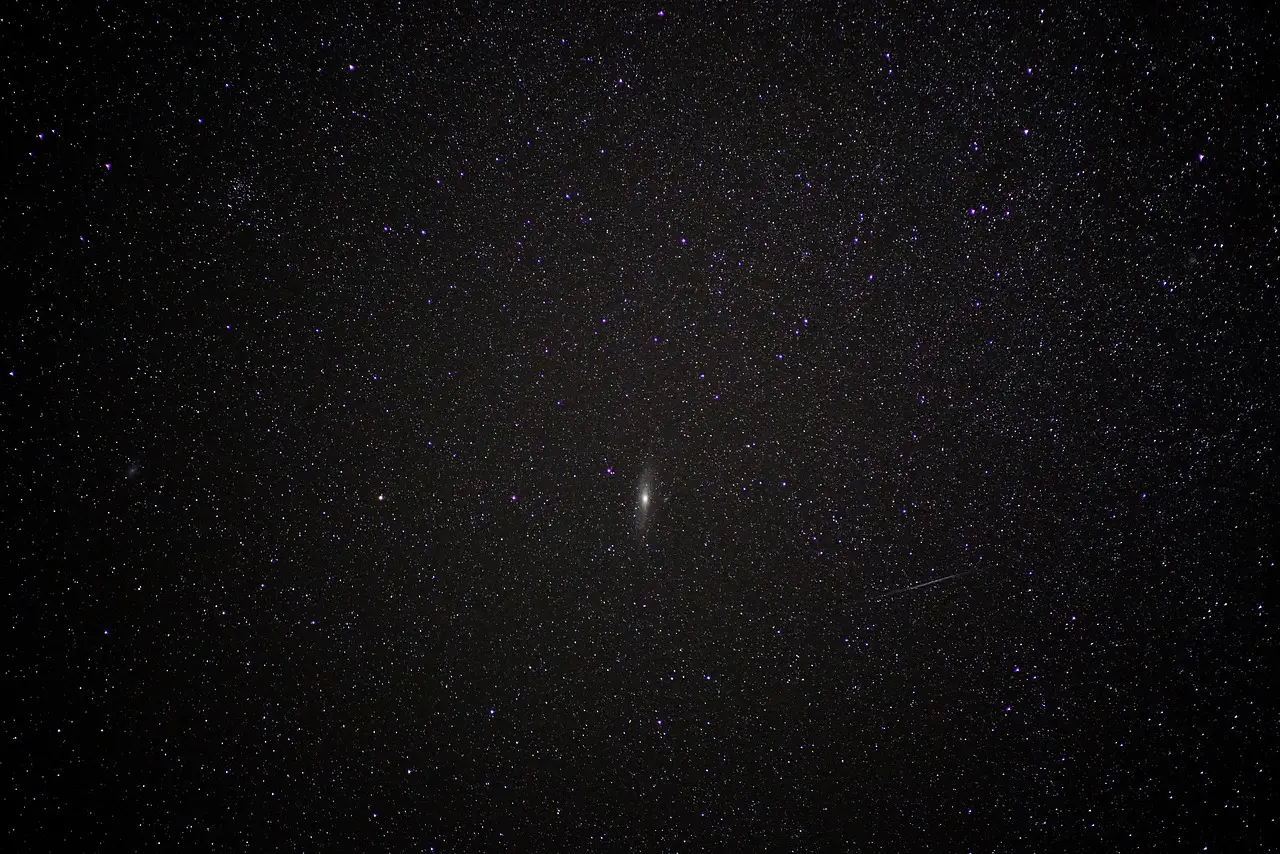
Every 7.9 minutes, a dead star 7 light-disciplines away in a patch of sky over Western Australia fires a short flash of radio waves toward Earth. Astronomers have now identified it as a white dwarf pulsar (a compact stellar remnant emitting beams of radio energy, like a lighthouse) orbiting a star almost identical in mass and temperature to our own sun — the first such pairing ever found. The discovery, published in Nature Astronomy in 2026, upends a pattern that had held since 2022.
Since the first long-period radio transient (an object that emits bright radio flashes every few minutes to every few hours) was detected in 2022, astronomers have puzzled over what powers them. Once they had ruled out aliens, natural explanations came first. One candidate was an extremely slow-spinning neutron star pulsar — the collapsed core of a massive star that sends out repeating radio flashes. But theory says a neutron star spinning that slowly should not produce radio waves at all. The answer had to lie elsewhere.
When researchers traced the signals back to their sources, a pattern emerged. Across the handful of long-period transients with identifiable source stars, each turned out to be a binary system: a white dwarf (the remnant left when a star like the sun exhausts its fuel) circling a red dwarf, a small, dim, cool star. That tidy picture has now broken.
What did the telescopes see?
In late 2024, the team was hunting for new transients with the Murchison Widefield Array radio telescope in Western Australia, using a search method developed by doctoral student Csanád Horváth. They spotted short flashes arriving like clockwork every 7.9 minutes.
Then the flashes stopped. For weeks the team saw nothing, and they nearly gave up. But when they plotted every detection and nondetection together, a rhythm appeared. The pulses emerge only during a window of about six hours, followed by 26 hours of silence. The most natural explanation is a binary system: two stars orbiting each other once every 32 hours, with the radio pulses visible only when the pair line up in the right orientation, the way a lighthouse beam sweeps past a ship only at certain moments.
The MeerKAT telescope in South Africa pinpointed the source to a tiny patch of sky containing a single faint star. The team then turned to the Keck telescope in Hawaii to record the star's spectrum — the "fingerprint" of its light, which reveals its physical properties. The result surprised them. This was no tiny red dwarf. It was a G-type star, almost the same mass and temperature as the sun.
How do you weigh a star you cannot see?
The astronomers needed to rule out a neutron star after all. The clue was in the timing. As the pulsing object swings around its orbit, the pulses arrive up to 4 seconds earlier or later than expected, because the radio waves travel farther at some points in the orbit than at others. That timing reveals the orbit's size.
The spectrum of the sunlike star shows it barely wobbles as its partner circles it, which means the sunlike star must be far heavier than its companion. Combining the orbit's size, the 32-hour orbital period and the spectral measurements, the team calculated that the pulsing object weighs about two-thirds of the sun's mass.
That is too light to be a neutron star. The team concludes the object is a white dwarf pulsar — the first ever found in orbit around a sunlike star.
How did this odd couple form?
The researchers reconstruct a violent history. The star that became the white dwarf must first have swelled into a giant, engulfing its companion. The companion then spiraled inward, shrinking the orbit, before the giant's outer layers were ejected and the exposed core cooled into a white dwarf.
Systems like this are probably common across the universe, the team believes, but white dwarfs beside bright stars are extremely hard to see. The bright star's glare hides the faint remnant, like a match beside a floodlight. Radio pulses cut through that glare. If more long-period transients turn out to conceal white dwarfs around bright stars, radio surveys could expose an entire population that optical and X-ray telescopes miss.
Why does it matter?
The stakes reach beyond stellar oddities. Some white dwarf binaries are thought to be the ancestors of Type Ia supernovae — exploding stars that astronomers use as "standard candles," reference points for measuring interstellar distances and the expansion of the universe. Finding more of these systems could clarify how those explosions arise.
With next-generation radio telescopes such as the SKA Observatory, the team expects many more discoveries. If such objects turn up around many different types of stars, they will offer new insight into the lives and deaths of stars like our own sun, across the galaxy and beyond.
The findings come with the usual cautions. The sample of identified long-period transients remains small — only a handful have traced sources — and the evolutionary scenario, while consistent with the data, is a reconstruction rather than an observed sequence. Still, one system has already overturned an emerging rule. The dark, as the researchers note, may be hiding stranger things.
Publication details: Samuel J. McSweeney et al., "A long-period transient with a Sun-like companion," Nature Astronomy (2026). DOI: 10.1038/s41550-026-03016-z.
via phys.org/rss-feed/ (Source)
More from Priya Raman
Show full bio
Senior reporter covering people, launches and day-to-day practice in general science news at SciBeat.
396 articles
Nearby plates
- Zombie Star Pulses Every 7.9 Minutes, and a Sun-Like Star May Be Why
- Dead Star Pulses Every Eight Minutes, and Astronomers Are Puzzled
- Eight-Minute Radio Pulse Traced to White Dwarf 5,000 Light-Years Away
- Dead Star Fires Radio Pulse Every Eight Minutes, and a Sun-Like Star Answers
- Radio Pulses Every 7.9 Minutes Trace Storms on a Sun-Like Star