Plate Nº 53 · recorded November 14, 2026
Space & AstronomyReported finding
Dead Star Pulses Every Eight Minutes, and Astronomers Are Puzzled
Astronomers have traced eight-minute radio pulses to a white dwarf paired with a sun-like star — the first such case, published in Nature Astronomy.
By Priya Raman4 min read881 words
In brief
- Radio pulses repeat every 8 minutes from system GPM J071507−114153.
- First reported radio pulsing from a white dwarf paired with a sun-like star, per a Nature Astronomy study.
- Analysis drew on more than 100 hours of radio observations using supercomputing facilities.
- Previously, similar signals were known only from systems with cooler red dwarf companions.
- The mechanism powering the pulses remains unconfirmed pending further observations.
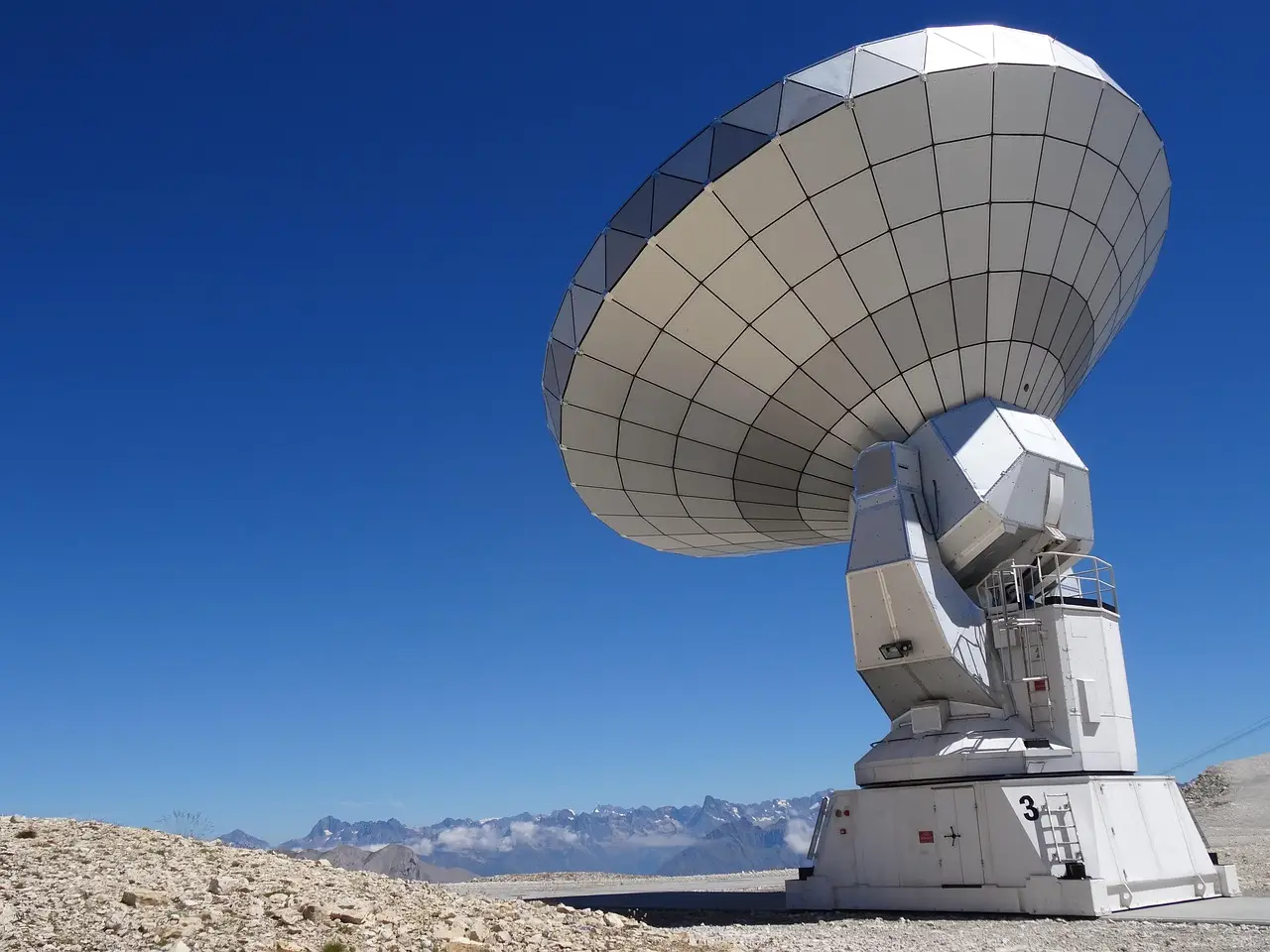
Every eight minutes, a dead star 1,800 words into this story still pulses. Let us begin again, precisely: a stellar corpse named GPM J071507−114153 emits a burst of radio waves once every eight minutes, and for the first time astronomers have traced this type of signal to a white dwarf orbiting together with a star much like our own sun.
The finding, published in Nature Astronomy, comes from scientists working with the International Centre for Radio Astronomy Research (ICRAR) at Curtin University. It is the first reported case of this kind of radio pulsing from a white dwarf paired with a sun-like companion, and it unsettles a working assumption about where such signals can arise.
What exactly did astronomers find?
The system, GPM J071507−114153, contains two objects bound together by gravity. One is a white dwarf: the dense leftover core of a star that has exhausted its nuclear fuel. Though roughly the size of Earth, a white dwarf can carry a mass comparable to that of the sun, squeezed into a planetary volume. Its companion is an ordinary star similar to the sun.
The team detected radio pulses tied to the white dwarf's motion. After analyzing more than 100 hours of radio observations with the help of supercomputing facilities, the researchers found the pulses sharp enough to reveal the dead star's orbital movement. That detail places the origin of the emissions close to the white dwarf itself, rather than somewhere vaguely within the wider binary system.
Why does a sun-like companion matter?
Until now, similar repeating radio signals had been linked to systems containing cooler, smaller red dwarf companions. Astronomers had reasoned that only certain kinds of stellar partnerships could produce these emissions. This discovery challenges that idea. A sun-like star, it turns out, can host the phenomenon too.
That single fact widens the field of suspects. If more types of stellar pairs can generate long-period radio pulses, then the underlying physical mechanism may be more general — or more varied — than current models assume. Researchers will not know which until they collect more examples.
What are long-period transients?
The objects in question belong to a category astronomers call long-period transients. Unlike the rapid radio pulses associated with some other stellar remnants, which fire in fractions of a second, these signals repeat on timescales of minutes or even hours. Think of a lighthouse whose beam sweeps past every eight minutes, rather than dozens of times each second.
Only a small number of long-period transients have been identified. The scarcity matters: with so few examples, astronomers have limited material for comparison, and each new case carries outsized weight. A system that breaks the established pattern, as this one does, is especially valuable.
How might the pulses be produced?
The mechanism remains an open question, and the researchers are candid about that. Their leading picture is that beams of radio emission from the white dwarf pass through the atmosphere of its companion, an interaction that could imprint clues about how the two stars affect one another. But the precise process that creates and powers the pulses still needs further investigation.
White dwarfs bring unusual ingredients to such an encounter. Their magnetic fields can be intensely strong, and a compact, magnetized remnant in close quarters with a living star creates conditions that physics does not yet fully describe. The team suggests two observational paths forward:
- Tracking whether the radio pulses change in timing, brightness or polarization (the orientation of the radio waves) could help researchers distinguish between competing explanations.
- Observations at other wavelengths, across the electromagnetic spectrum, may show how the two stars exchange energy.
How confident should we be?
The core result — pulses locked to the white dwarf's eight-minute rotation and orbit, in a pair with a sun-like star — rests on more than 100 hours of data and appears in a peer-reviewed journal. Yet the interpretation is preliminary in a specific sense. The origin of the pulses near the white dwarf is established; the engine that generates them is not. Researchers offer hypotheses, not a settled account.
The study's own authors frame the next steps plainly: more observations of this system, and searches for others like it. Those follow-ups will determine whether the same physical mechanism operates across different pairs of stars, or whether several distinct processes can produce deceptively similar signals.
Why this matters beyond one system
Long-period transients sit at an awkward edge of astronomy: rare enough to resist easy explanation, distinctive enough to promise real insight if solved. Each new member of the class constrains the models. A white dwarf with a sun-like companion demonstrates that the phenomenon is not confined to red dwarf partnerships, which loosens the assumptions guiding previous searches.
If astronomers can explain these slow, patient pulses, they will learn something about magnetic fields, stellar atmospheres and the transfer of energy between stars in close orbit — processes that shape far more objects than this one pair.
For now, GPM J071507−114153 keeps its own time: one pulse every eight minutes, steady enough to time an orbit by, mysterious enough to keep a telescope watching.
Eight minutes is a long silence for a star that refuses to stay quiet.
via knowridge.com (Source)
More from Priya Raman
Show full bio
Senior reporter covering people, launches and day-to-day practice in general science news at SciBeat.
390 articles
Nearby plates
- Eight-Minute Radio Pulse Traced to White Dwarf 5,000 Light-Years Away
- Zombie Star Pulses Every 7.9 Minutes, and a Sun-Like Star May Be Why
- Dead Star Fires Radio Pulse Every Eight Minutes, and a Sun-Like Star Answers
- Radio Pulses Every 7.9 Minutes Trace Storms on a Sun-Like Star
- LISA's Gravity Ripples Could Spot Planets Around Dead Stars