Recorded November 19, 2026
Science Policy & FundingReported finding
AI-linked Maya site claim fails; 2025 survey had already mapped it
An AI-assisted claim of a new Maya center in Mexico unraveled within a day: archaeologists had described the site in a 2025 paper built on lidar analyzed since 2016.
By James Calloway5 min read1,014 words
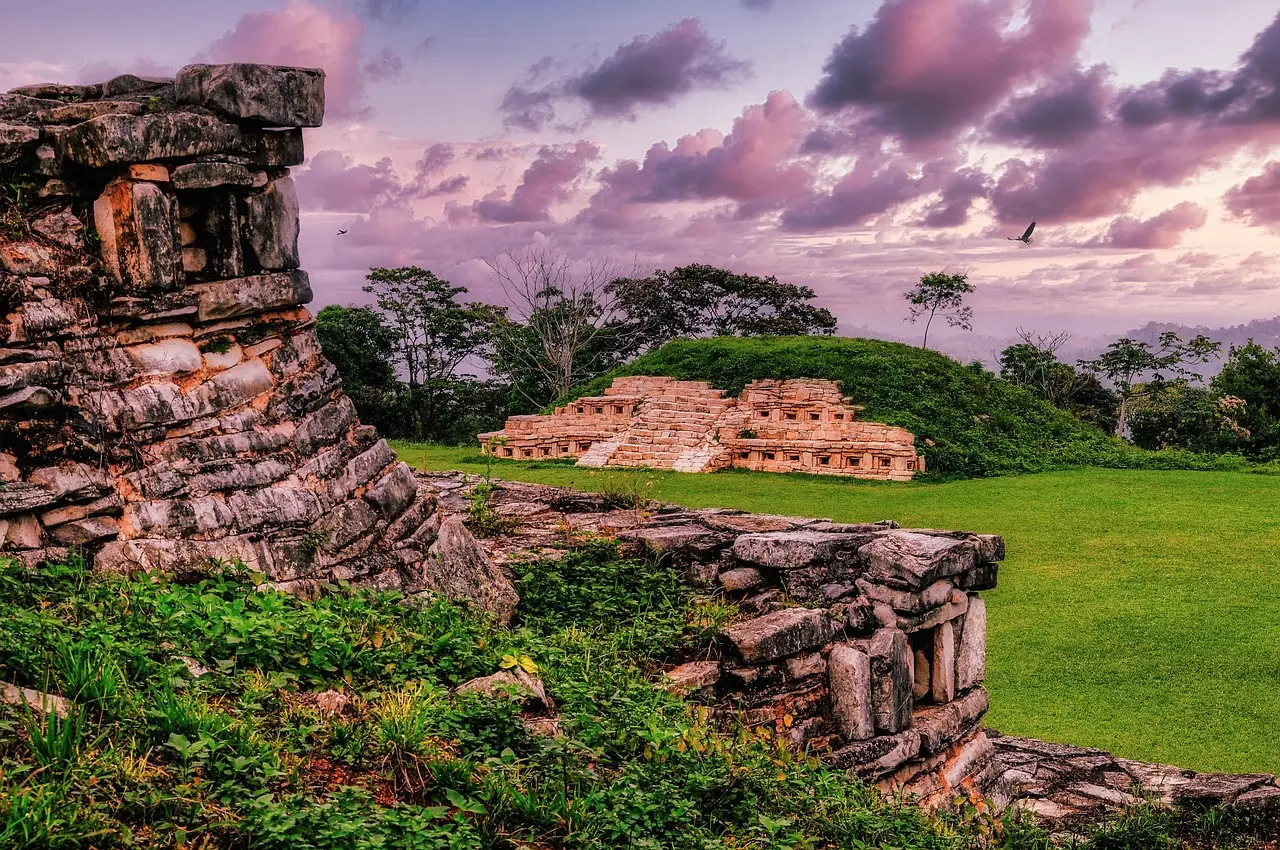
Archaeologists had already described the Maya site in a 2025 journal paper, and researchers had analyzed its lidar data as early as 2016, despite an AI-assisted post on Nov. 10 presenting the location as a new discovery.
The correction came in less than a day. On Nov. 10, artificial intelligence researcher Pietro Miotti said on X that dozens of AI agents had found what appeared to be an unmapped Maya civic center at an undisclosed location in Mexico.
The post went viral. Polymarket, an online betting platform, other social accounts and some national media outlets amplified what users called “vibe archaeology.” Users cheered it as another AI-assisted breakthrough. Miotti said the project began while he was on vacation in Peru.
How did a known site become a “new discovery”?
In a blog post, Miotti said he prompted dozens of AI agents to sift through publicly available NASA lidar data—light detection and ranging—across the former Maya Empire for signs of now-hidden structures.
The system highlighted one area. Miotti said the AI could not identify evidence that the site had been documented in academic papers, and suggested that he contact Mexican officials.
Mexico’s National Institute of Anthropology and History replied that it had no record of the location. That absence offered a clue, not confirmation of a legitimate discovery. INAH did not respond to a request for comment.
His original blog post said his agents had discovered a site that, as far as anyone could tell, no one had reported. He later updated it.
Less than a day after Miotti’s X post, Sarah Parcak, a professor at the University of Alabama at Birmingham, said the site had been documented at least once before. Francisco Estrada-Belli, a professor at Tulane University, and his colleagues had described it in the Journal of Archaeological Science: Reports in 2025.
Parcak put it plainly: “This is why peer review exists.” She added: “Why would we rely on machines? We need other people to tell us we’re wrong.”
Their work built on lidar data that researchers had analyzed before, as early as 2016, according to Marcello Canuto, a co-author of the 2025 study and a Tulane anthropology professor. Canuto said the region held dozens upon dozens of similar sites.
Ivan Šprajc, another co-author and head of the Institute of Anthropological and Spatial Studies at the Research Center of the Slovenian Academy of Sciences and Arts, helped visit the site in May. He classified it as a peripheral group within a larger center.
Those records did not make the site a newly found monument. They made Miotti’s novelty claim checkable. It failed.
Archaeologists and other scientists treated the error as a warning against unverified “vibe science.” The uproar faded quickly, but it exposed a deeper divide over AI’s role in science.
What can AI actually contribute?
Miotti still sees a real speed advantage, and he maintains that the episode marks a new research frontier driven by AI. He said screening 1,200 km² of raw lidar data required highly specialized knowledge five years ago; now, one person with a hypothesis can run AI agents overnight to triage candidate structures for expert review.
That concerns workflow, not accuracy. The episode produced no independent error rate, and showed how quickly an incomplete literature search can become a public discovery claim. A scholar found the prior record.
Earlier in the year, OpenAI announced that a large language model—a system trained on vast amounts of text—had solved the Navier-Stokes problem, a math problem about fluid motion that had remained open for centuries. Other mathematical problems have reportedly fallen to AI since.
Some experts have suggested particle physics or neuroscience may be next. Proponents even argue that no discipline will remain untouched. Those are forecasts, not validation of any particular model, dataset or archaeological conclusion.
AI systems can also hallucinate, meaning they can produce confident claims unsupported by evidence. This failure, though, centered on an incomplete searchable record rather than a fabricated monument.
AI systems also depend on information available online, not knowledge confined to an expert’s field notebook. Parcak said thousands upon thousands, and millions, of articles, books and archaeological datasets sit outside publicly accessible databases. A Bluesky commenter faulted the systems for imitating human answers to similar queries, calling the result artificial mediocrity.
The viral mix-up overshadowed work archaeologists already do with AI. Researchers use machine learning to decipher ancient Greek texts, reveal design secrets of Etruscan tombs and reconstruct ruins. Parcak said the field is pushing the limits of what machine learning can and cannot do.
What does this change for AI-assisted research?
The practical case is narrower than either enthusiasts or skeptics want. Miotti’s account suggests AI can sort huge public lidar datasets and flag candidate structures; experts still must test novelty against published surveys, institutional records and field evidence.
Miotti also identified the human roles: literature review, field verification and domain-specific expertise. Researchers can use AI as a search assistant, not a final authority.
Estrada-Belli said he welcomes citizen scientists experimenting with AI, but they should not accept results blindly or make public claims before doing background checks and due diligence. Parcak also pushed back against the stereotype that archaeologists are luddites who reject computers, noting that researchers still use trowels and field visits.
Users added a community note to Miotti’s original X post, citing the 2025 paper. Miotti then posted a correction and updated the blog. He said the virality was completely unexpected; he had meant the post mainly for his AI community.
As soon as archaeologists and the community pointed him to the study, he updated the X thread and blog to credit the survey. He had not contacted Estrada-Belli directly, Miotti said, but was glad the professor’s work had been highlighted and was receiving credit.
The practical lesson is neither that AI discovered a site nor that AI failed archaeology. AI narrowed a search; human specialists supplied the record that ended the false novelty claim.
via scientificamerican.com (Source)
More from James Calloway
Show full bio
Staff writer covering regulation, policy and their impact on general science news at SciBeat.
570 articles
Nearby plates
- A Maya King Called 'Bat' Ruled a Roadless Jungle City Called Sakil
- Drone laser survey finds three unregistered Aboriginal rock shelters
- AI and the Largest 2D Map of the Universe Uncover 70 New Gravitational Lenses
- Keepsakes May Date Back Half a Million Years, Study Claims
- GPT-5.2 named just 9.5% of Colombian wildlife photos correctly