Plate Nº 30 · recorded October 10, 2026
Biology & EvolutionReported finding
Algerian Farms Lose a Third of Holdings to Endangered Macaque Raids
About one-third of 94 surveyed farms in northern Algeria have been abandoned after raids by endangered Barbary macaques, a new study finds. Daily raids hit 68% of holdings.
By Priya Raman3 min read615 words
In brief
- About one-third of 94 surveyed farms in Algeria's Béjaïa province were abandoned after Barbary macaque raids
- 68% of farms experienced daily crop-foraging by macaques during conflict periods
- Béjaïa lost roughly 50,400 hectares of forest (124,500 acres) between 2001 and 2023 — about 40% of baseline cover, with the largest single-year loss in 2023
- Figs were the most-affected crop, hit on nearly every surveyed farm, with crop-foraging peaking from July to September
- Study: Mellal et al., Scientific Reports (2026), DOI: 10.1038/s41598-026-71407-3
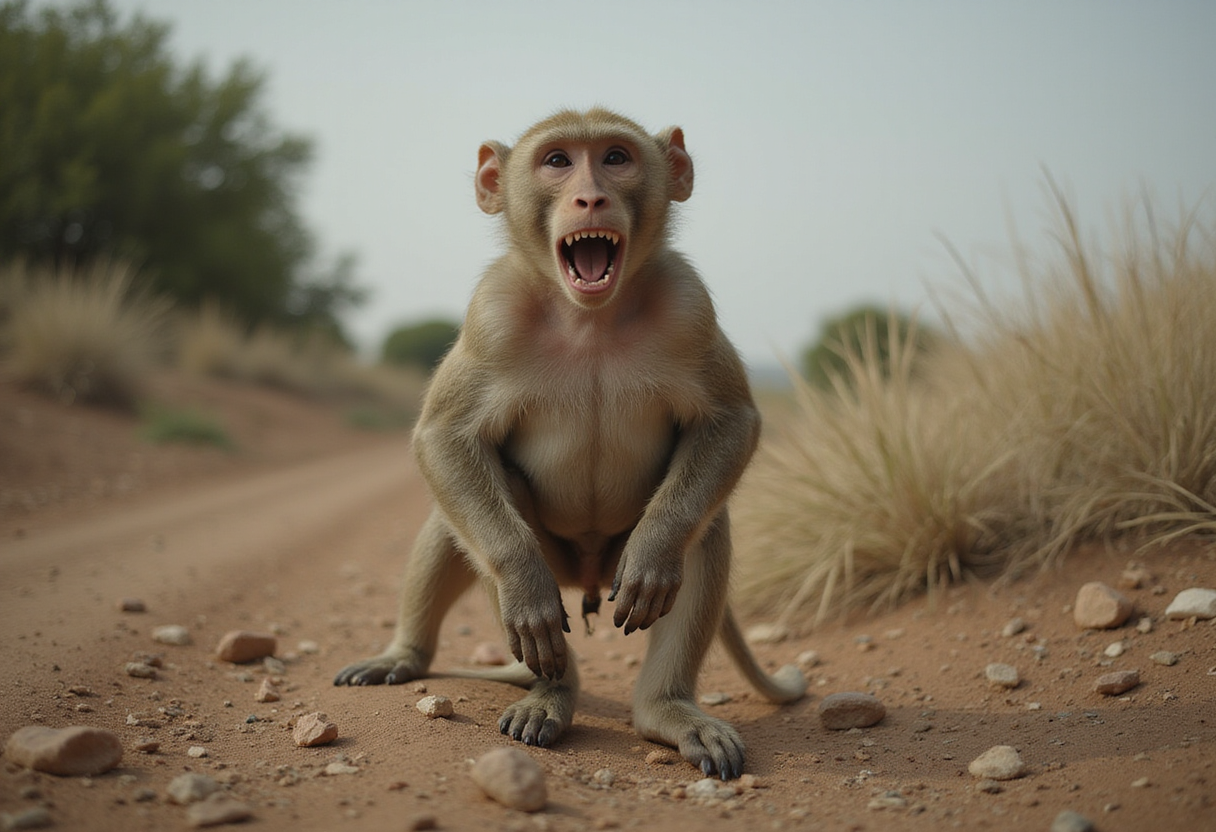
About one-third of 94 surveyed farms in northern Algeria had been abandoned after repeated raids by endangered Barbary macaques, according to a study published this year in Scientific Reports.
The research, led by Mohammed Khalil Mellal and colleagues, focused on small-scale farmers in Béjaïa province, where families share mountainous terrain with one of North Africa's most adaptable primates. Around 68% of farms experienced daily crop-foraging by macaques during conflict periods. More than half of farmers also reported damage to infrastructure such as roofing materials and drip-irrigation systems.
The Barbary macaque is legally protected in Algeria. Hunting it or using poison can bring fines and prison sentences. Few farmers in the survey reported using poisoned bait or guns. But continued crop losses could still turn farmers against the species if practical protection methods stay out of reach.
Why is the conflict so severe?
Macaques favored figs most of all. The researchers found fig trees hit on almost every surveyed farm, with apples and pears, grapes, and tree nuts close behind. The animals ate the fruit whole, leaving little behind to harvest.
Crop-foraging peaked from July to September, when local figs ripen, then tapered off in late fall and winter as acorns became abundant in nearby oak forests. Incursions happened most often at dawn and dusk, when human activity was lower.
What's at stake for farmers?
Farming contributed about 35% of household income across the surveyed area. For some families, it was their only income. Daily raids and infrastructure damage turned the macaque conflict into a heavy economic burden.
No farmer reported physical aggression by macaques or concerns about disease transmission. The researchers concluded that the conflict is essentially economic — a fight over crops, property, and livelihoods.
Why aren't current deterrents working?
Farmers already tried to keep macaques out. The most common methods included guarding fields with dogs, building traditional fences, and using slingshots.
But simply piling on more methods did not reduce how often macaques foraged. "The macaques alter their behavior depending on the obstacles they encounter and learn to circumvent them," Mellal and colleagues wrote.
Larger cultivated areas drew more frequent crop-foraging. Altitude and distance to settlements mattered less.
What's pushing macaques into fields?
Béjaïa province lost roughly 50,400 hectares (124,500 acres) of forest between 2001 and 2023 — about 40% of its baseline cover. The single largest annual loss came in 2023, a year of deadly wildfires in the region.
Agricultural land did not expand between 2014 and 2021. The authors argue that wildfire-driven loss of the forests and shrublands that normally feed macaques, not farmland encroachment, pushed the animals into orchards.
The study cannot prove that habitat loss caused the rise in farmer encounters. But the pattern points that direction, and the team argues conservation efforts should look beyond the farm fence.
What could change the picture?
Almost none of the surveyed farmers had received wildlife-conflict management training. That gap, the authors say, leaves room for education and technical support.
The team also recommends:
- Field trials of electric fencing and motion-activated devices under local conditions
- Buffer zones planted with crops macaques find less appealing, such as citrus, around high-value orchards
- Compensation or subsidy programs, which Algeria's national conservation strategy has proposed but not yet rolled out in the study area
Protecting the Barbary macaque requires more than guarding the animals themselves. It means safer habitats, smarter deterrents, and concrete support for the farmers whose harvests sustain them.
Publication details: Mellal et al., "Conflict between farmers and Barbary macaques (Macaca sylvanus) in Northern Algeria: threats and conservation implications," Scientific Reports (2026). DOI: 10.1038/s41598-026-71407-3
via Phys.org Biology (Source)
More from Priya Raman
Show full bio
Senior reporter covering industry trends and analytics at SciBeat.
207 articles
Nearby plates
- Raptors banded in Europe are dying in West Africa, study finds
- Rainfall Predicts Lassa Fever Outbreaks, 30-Year Rodent Study Finds
- Baby Whales Are Washing Up Dead in Argentina, and Scientists Are Racing to Find Out Why
- Cambridge AI Maps Senegal's Smallholder Crops With 84% Accuracy
- Protecting Standing Amazon Forests Beats Restoration, Study Finds