Recorded November 22, 2026
Earth & ClimateReported finding
Ancient Storms Followed a 405,000-Year Cycle, Rocks Reveal
Geologists found 59 orbital-paced cycles in 500-million-year-old Chinese rocks, with storm deposits clustering on a 405,000-year beat linked to Venus and Jupiter.
By James Calloway3 min read615 words
In brief
- 59 cycles of roughly 405,000 years identified across ~24 million years of Cambrian rock history
- Study led by Shuyuan Shi in China's Sichuan Basin, rocks ~half a billion years old
- Cycle matches a Milankovitch eccentricity cycle driven mainly by Venus and Jupiter
- Published in Palaeogeography, Palaeoclimatology, Palaeoecology
- Researchers caution sea level, sediment supply and preservation could also explain the pattern
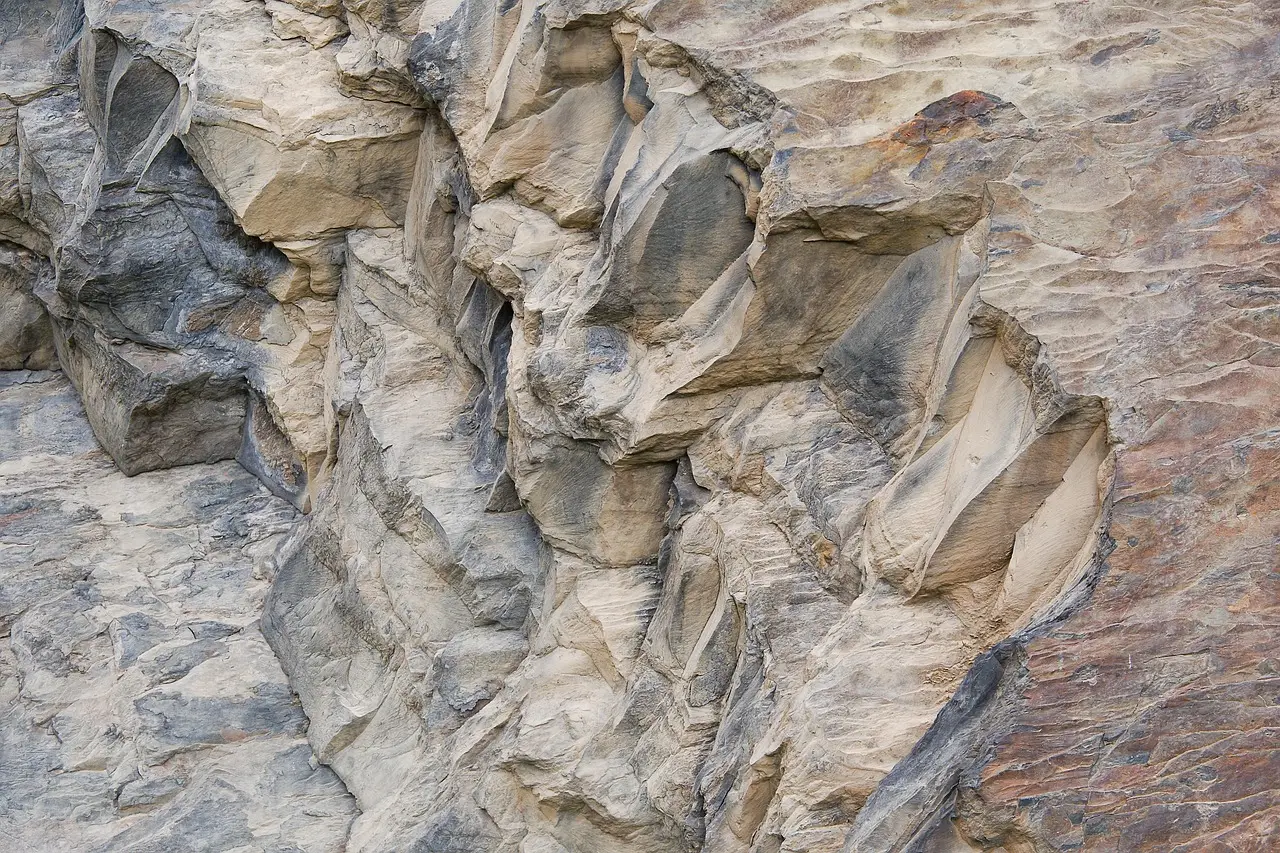
Geologists have counted 59 repeating cycles of storm activity in half-billion-year-old rocks, each lasting roughly 405,000 years, and the fingerprints of ancient storms cluster at the same point in every one of them. If the pattern holds, storms that look random were anything but.
The finding comes from a paper led by Shuyuan Shi of China's Research Institute of Petroleum Exploration and Development, published in Palaeogeography, Palaeoclimatology, Palaeoecology. The team worked in the Sichuan Basin, where rocks dating back roughly half a billion years preserve the floor of an ancient tropical sea from the Cambrian period.
What did the researchers actually find?
Storms leave traces. Waves and currents churn up sand, silt, and mud from the seafloor, carry it along, and dump it in layers that eventually harden into rock. Geologists call these deposits tempestites — stone-hard storm records that can survive for hundreds of millions of years.
Spotting one tempestite is easy. Dating a whole series and stitching the dates into a timeline is the hard part, and that's where earlier efforts tended to stall. Shi's team used a technique called cyclostratigraphy, which hunts for repeating patterns in layered sediment and matches them against known cycles in Earth's orbit. Paired with chemical clues in the rock, it let them reconstruct about 24 million years of geological history.
Within that window they identified 59 cycles of roughly 405,000 years each. The tempestites were not scattered randomly through them. They clustered during the rising and peak phase of each cycle, and those intervals held thicker, coarser deposits stacked close together — the signature of more intense storm activity. The opposite phases produced thinner, finer, isolated layers.
What drives a 405,000-year storm metronome?
The researchers didn't have to search far for a suspect. Earth's orbit isn't a perfect circle; it's slightly elliptical, and how elliptical it is — its eccentricity — fluctuates over time. The gravity of other planets, mainly Venus and Jupiter, drives several overlapping eccentricity cycles, including one that completes in about 405,000 years. Previous studies had already linked that same cycle to tempestites elsewhere.
Crucially, these orbital shifts barely change the total sunlight Earth receives in a year. What they change is how that sunlight is spread across the seasons, mainly through interaction with precession — the slow wobble in the orientation of Earth's rotational axis.
The proposed mechanism, and it stays a proposal, runs like this: in the warm Cambrian climate, periodic orbital variations intensified the heating of tropical oceans. More heat meant more energy exchanged between sea and atmosphere. More energy meant conditions ripe for stronger storms.
What are the caveats?
Plenty, and the researchers say so themselves. Sea level changes, sediment supply, and the quirks of how tempestites get preserved could each shape the pattern they measured. A rhythm in the rock is not automatically a rhythm in the sky.
There's also the relevance question. Earth's climate today differs sharply from the Cambrian's, so this orbital metronome may not drum up storms on the same schedule now, if at all. One basin, one period, one interpretation.
What does this change for science?
Possibly a new tool. If tempestites reliably encode orbital cycles, they give researchers another way to reconstruct Earth's distant climate — tracking ancient storm activity and sea-level shifts that other methods struggle to capture. Half-billion-year-old weather is normally out of reach.
So the scattered debris of long-dead storms may be something more disciplined: a ledger of Earth's position in a slow gravitational dance with its neighbors. Impressive, if it survives scrutiny. That test hasn't happened yet.
via sciencealert.com (Source)
More from James Calloway
Show full bio
Staff writer covering regulation, policy and their impact on general science news at SciBeat.
570 articles
Nearby plates
- Mantle movement may explain Earth’s billion-year geological gaps
- Plate Tectonics May Have Switched On 2.5 Billion Years Ago
- 3.95-Billion-Year-Old Rocks in China Hint at Early Plate Tectonics
- Two West Coast Faults May Rupture Hours Apart, Study Finds
- Ancient Rocks Mark a Shift Toward Modern Plate Tectonics