Recorded November 19, 2026
Space & AstronomyReported finding
Astronomers Track Two Flaring Red Dwarfs 59 Light-Years Away
Eighteen years of VLBA radio observations resolved both stars of the flaring red-dwarf pair DG CVn individually, yielding precise orbits, masses and distance 59 light-years away.
By Marcus Bennett3 min read572 words
In brief
- DG CVn lies 59 light-years from Earth and hosts two flaring red dwarfs.
- Observations span 18 years, including measurements from 2023 to 2025.
- Both stars emitted trackable radio signals separately.
- The system is estimated at 30–150 million years old.
- The study was published in Astronomy & Astrophysics.
Astronomers have measured the individual orbits of two flaring red dwarfs just 59 light-years from Earth with unusual precision, after tracking both stars separately in radio light for 18 years. The study, published in Astronomy & Astrophysics, resolves the orbit, masses and distance of the binary system DG CVn more accurately than ever before.
The two small stars circle each other and can produce powerful bursts of radiation — a trait that matters for anyone hunting planets around nearby stars, because flares can mimic or mask the signals researchers rely on.
Why two small stars needed a continent-sized telescope
Red dwarfs are smaller and cooler than our Sun, but some are far from quiet. Rapid rotation and strong magnetic fields drive sudden flares that release radio waves, X-rays and other radiation.
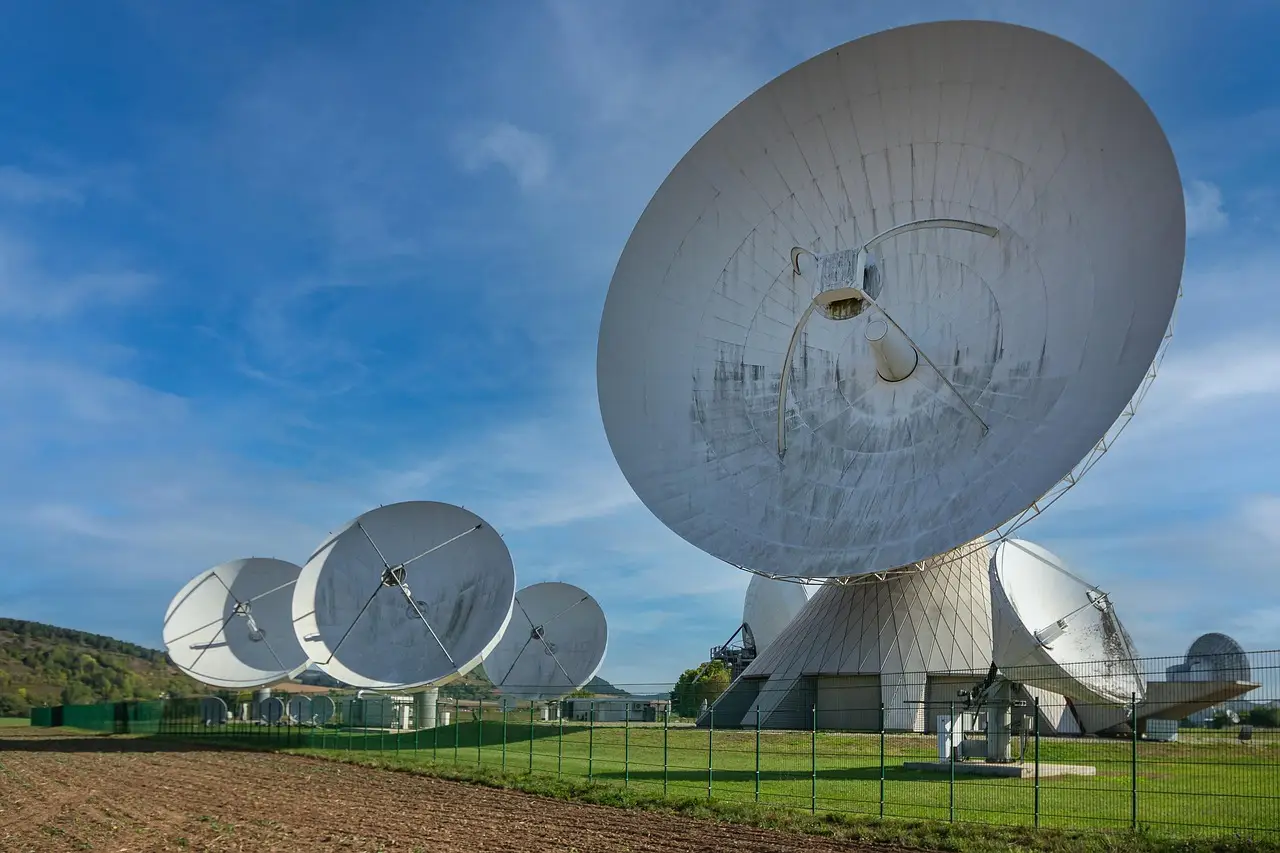
To watch the pair move, the team used the Very Long Baseline Array (VLBA), a network of radio telescopes spread across the United States. By combining signals from antennas thousands of kilometers apart, the array works as one giant instrument that can measure extremely small shifts in a star's position on the sky — a technique called interferometry.
The researchers pieced together observations covering 18 years, including new measurements collected between 2023 and 2025. Surprisingly, both stars emitted radio signals strong enough to track individually. That let the team follow each star's own path instead of treating the pair as one blurry dot.
In short: patience over decades turned a smudge into two moving stars.
What did the measurements change?
From the recorded positions, the astronomers pinned down the stars' orbit, masses and distance with better accuracy than earlier work. The results also separate the stars' real motion through space from apparent changes caused by magnetic activity.
That distinction carries practical weight. DG CVn first drew attention during searches for planets via the wobble method — watching a star shift under a planet's gravitational pull. Instead of a planet, researchers found a much larger, more complicated motion: two stars orbiting one another.
Knowing the exact orbit helps because a flare can make a star appear to change position or brightness unexpectedly. Precise measurements let researchers tell a true movement apart from a temporary flicker in radio emission or light.
The takeaway: with a firm orbit on record, flare-induced illusions become easier to strip out of the data.
How old is the system, and what remains unknown?
The study delivers an unusually detailed picture of a young binary system estimated at between 30 million and 150 million old — a wide range that reflects how difficult young active stars are to date.
Radio telescopes suit this kind of work because magnetic stars burst brightly at radio wavelengths. By recording a position repeatedly over many years, astronomers detect movements invisible in any single observation. The technique demands patience: a short slice of an orbit can mislead, while a long record reveals the repeating pattern.
Questions remain open. The team still cannot say which star drives particular kinds of flares and changing light patterns. Additional observations may clarify how magnetic activity differs between the two companions.
The result reaches beyond one system: it shows long-term radio monitoring can expose hidden details of active stellar pairs and sharpen the measurements astronomers use to study how small stars grow and evolve.
For observers of nearby stars, the message is simple — an 18-year baseline just made one flaring pair far easier to read.
via knowridge.com (Source)
More from Marcus Bennett
Show full bio
News editor covering regulation, policy and their impact on general science news at SciBeat.
597 articles
Nearby plates
- Two Flaring Red Dwarfs Weighed With Record Precision
- Triple star system Welopōʻai found just 28 light-years away
- A Mysterious Radio Signal Pointed at a Super-Earth. Was It Aliens?
- LISA's Gravity Ripples Could Spot Planets Around Dead Stars
- Hidden Star Siwarha Appears to Plow Through Betelgeuse's Atmosphere