Recorded November 26, 2026
Biology & EvolutionReported finding
Cas12m proteins cut DNA: first active variants identified in 2026
A University of Tokyo team led by graduate student Hayato Morinaga found the first Cas12m proteins that cleave DNA, comparing an active variant with an inactive one by cryo-EM.
By Marcus Bennett4 min read773 words
In brief
- First active Cas12m proteins demonstrated in Nature Chemical Biology, 2026; DOI 10.1038/s41589-026-02377-w
- Active variant UnCas12m4a compared with inactive variant TfCas12m3
- Activation attributed to an intact RuvC active site and a bipartite ssDNA kink
- Custom screening system using laboratory bacteria tested many Cas12m candidates
- Cryo-electron microscopy resolved structures at atomic scale; sample preparation was among the hardest steps
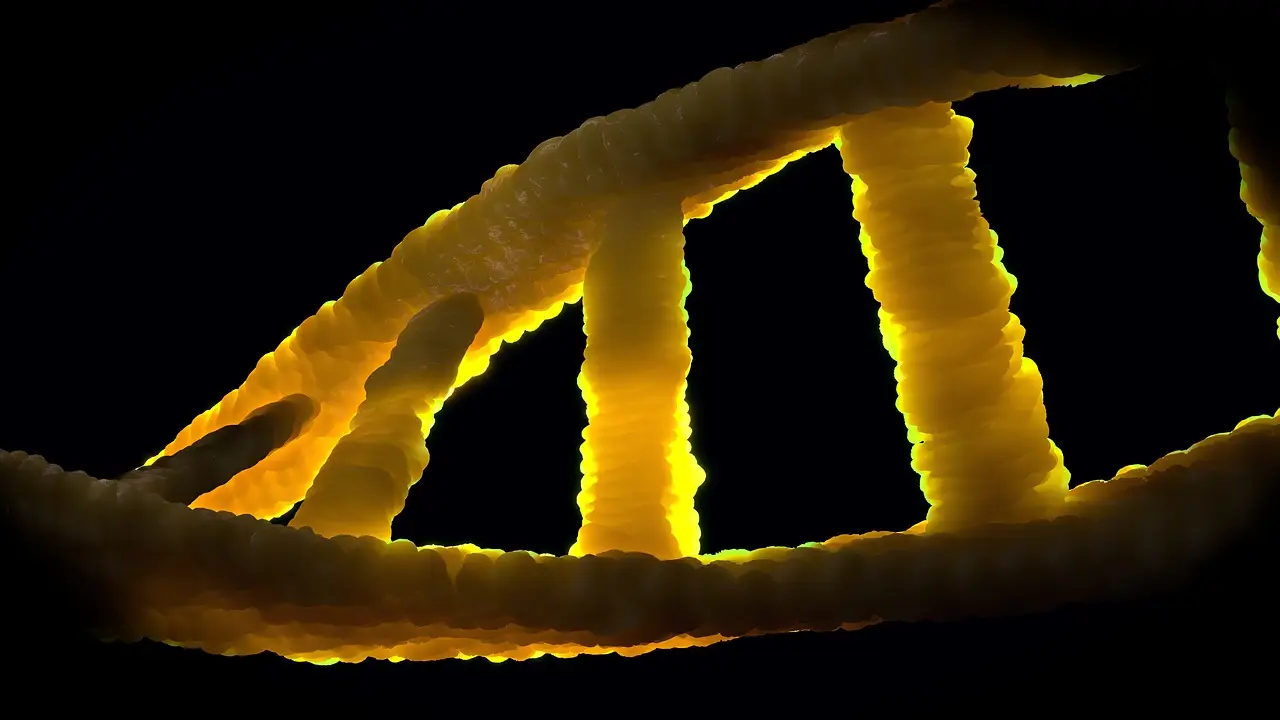
Some Cas12m proteins can cut DNA after all: a University of Tokyo group led by graduate student Hayato Morinaga has demonstrated for the first time that members of this small Cas-family subgroup can reach an active state capable of cleaving DNA, in a paper published in Nature Chemical Biology in 2026.
The team also isolated what separates the working proteins from the inactive ones, handing the field design principles for building compact genome-editing tools.
What did the University of Tokyo team actually show?
- For the first time, the group demonstrated that some Cas12m proteins have an active state capable of cutting, or "cleaving," DNA.
- The team pinned the difference onto specific amino acids — the building blocks of proteins — by changing them one at a time and measuring the effect on cleavage.
- Two named proteins anchored the comparison: the active UnCas12m4a and the inactive TfCas12m3.
- The paper appeared as "Cas12m nuclease activation governed by intact RuvC active site and bipartite ssDNA kink" (Nature Chemical Biology, 2026; DOI 10.1038/s41589-026-02377-w).
In plain terms: the smallest Cas enzymes are no longer a family without a working member.
Why anyone cared about the smallest Cas proteins
Cas12m was the black sheep of the Cas protein family. Scientists had not found a single member that cuts DNA, even though most other proteins in the family could. The subgroup still attracted attention because of its relatively small size, which could make these enzymes easier to package and deliver into cells — the step that decides whether an editor works inside a living organism.
That left two possibilities: inactivity might be a property of the whole group, or active members might simply not have been found yet. The Tokyo group set out to settle which it was.
How did they test so many candidates at once?
The researchers built a screening system designed specifically for the task, using laboratory bacteria, which allowed them to test many Cas12m candidates and identify those capable of cutting DNA. Some did.
Explaining the difference proved harder. That required cryo-electron microscopy, an imaging technique that reveals detailed three-dimensional molecular structures at atomic scale. Preparing samples suitable for structural analysis turned out to be among the most challenging parts of the work.
"Even after determining the structures, I was surprised by how similar the active and inactive Cas12m proteins were, which made it difficult to identify the features responsible for their difference in activity. Generating numerous variants and testing their functions one by one was painstaking work," Morinaga said.
In plain terms: the switch between cutting and not cutting sits in a few molecular details that only close-up imaging and patient, one-by-one mutagenesis can reveal.
What actually turns the enzyme on?
The researchers changed selected amino acids and tested how each change affected DNA cleavage. That work identified which amino acids differ between the active UnCas12m4a and the inactive TfCas12m3.
The published title attributes activation to two features: an intact RuvC active site — the catalytic pocket, the molecular machinery that performs the cut — and a "bipartite ssDNA kink," a two-part bend in single-stranded DNA. The amino-acid swaps then confirm which residues separate the active protein from the inactive one.
In plain terms: activation comes down to a working cutting pocket plus the target DNA bent into the right shape.
What does this mean for genome-editing tools?
The payoff is still ahead. The researchers describe the findings as design principles for developing compact genome-editing tools, with potential long-term applications in biomedical research, medicine and biotechnology — not a finished editor.
"I hope to improve the DNA-cleavage efficiency and precision of the active Cas12m proteins identified in this study and develop them into practical and effective genome-editing tools," Morinaga said, looking to the future.
Three limits to keep in mind:
- The reported activity comes from a bacterial screening system and structural work on purified protein, not from editing genes in human or animal cells.
- The DNA-cleavage efficiency and precision of the active variants remain unoptimized; Morinaga names both as his next targets.
- The detailed structural comparison centers on one active protein, UnCas12m4a, against one inactive one, TfCas12m3.
In plain terms: this is a working proof of concept for a smaller editor, not yet a small editor you can use.
What to watch next
- Efficiency and precision work on the active Cas12m variants
- Delivery studies inside cells, where the size advantage should matter most
- Wider screening of Cas12m candidates with the new bacterial system
In plain terms: the discovery answers the old question, and the practical tool is the next job.
via phys.org/rss-feed/ (Source)
More from Marcus Bennett
Show full bio
News editor covering regulation, policy and their impact on general science news at SciBeat.
638 articles
Nearby plates
- Eight-Letter DNA Works: Scientists Show Cells Can Read a Doubled Genetic Alphabet
- All Five Genetic Letters of Life Found in 4.5-Billion-Year-Old Asteroid
- E. coli's Gene-Copying Machine Can Read an Eight-Letter DNA Alphabet
- Why a 70-Year-Old Leukemia Drug Still Surprises Scientists
- One Protein Family Lets Microbes Make Drugs Without Self-Harm