Recorded November 26, 2026
Biology & EvolutionReported finding
Tobacco Plants Engineered to Grow Taxol, a Cornerstone Chemo Drug
Researchers engineered tobacco relatives to produce the chemotherapy drug Taxol at yew-bark concentrations, solving a decades-old biosynthetic puzzle and boosting output nearly 600-fold.
By James Calloway4 min read852 words
In brief
- Engineered tobacco plants produced paclitaxel at concentrations comparable to natural yew bark, after a near-600-fold optimization
- Researchers introduced more than 20 yew genes into Nicotiana benthamiana and mapped paclitaxel production across four cell compartments
- Taxol's structure was published in 1971; the FDA approved it for ovarian cancer in 1992
- Smoking accounts for about 15% of all new cancer cases globally
- The study was published in Nature Chemical Biology
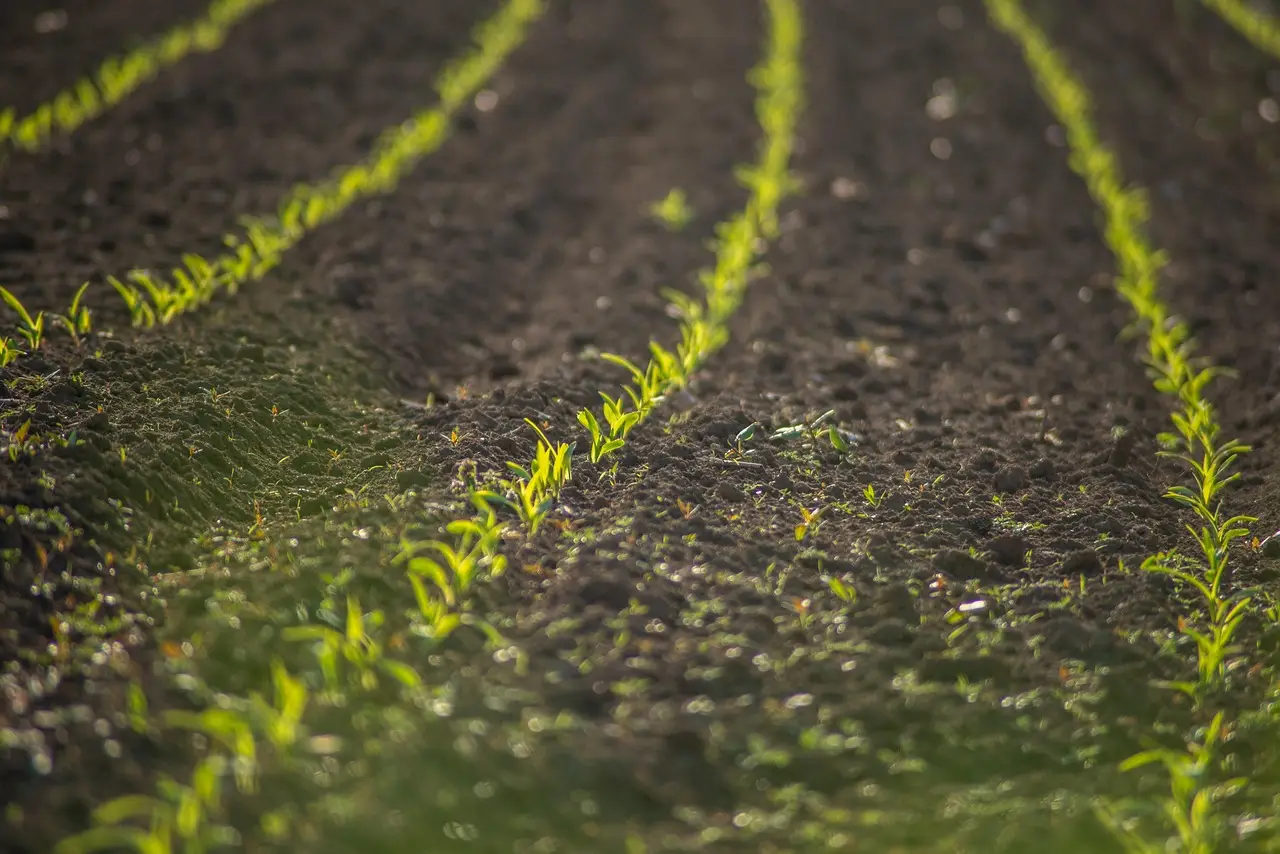
Tobacco leaves can now produce paclitaxel — the chemotherapy drug better known as Taxol — at concentrations comparable to those found naturally in yew bark. A team from the University of Copenhagen and the National and Kapodistrian University of Athens engineered a close relative of tobacco, Nicotiana benthamiana, to build one of the world's most widely used cancer drugs, solving a biochemical mystery that had frustrated scientists for decades. The study appears in the journal Nature Chemical Biology.
The irony is hard to miss. Smoking causes roughly 15% of all new cancer cases globally, making tobacco the world's leading preventable cause of the disease. Now a botanical cousin of that same plant may help fight it.
But hold the celebration. This is a proof of concept, not a working drug factory.
How did we get Taxol in the first place?
The story starts in the early 1960s, when the US National Cancer Institute launched a sweeping search for cancer treatments hidden in nature. Botanists collected thousands of plant samples from forests and other ecosystems across the country.
In August 1962, botanist Arthur Barclay gathered bark, twigs and leaves from a Pacific yew in Washington State's Gifford Pinchot National Forest. The tree seemed unremarkable at the time. Laboratory tests proved otherwise: extracts from the yew killed cancer cells. Barclay returned for more bark in 1964.
Chemists Monroe Wall and Mansukh Wani at the Research Triangle Institute in North Carolina then spent years on painstaking chemical detective work. They isolated the responsible compound and published its molecular structure in 1971, naming it Taxol.
The mechanism is elegant. When cells divide, they rely on microscopic structures called microtubules to pull their chromosomes apart. Paclitaxel locks those structures in place, jamming cell division. In 1992, the FDA approved Taxol for ovarian cancer, and it has since become a cornerstone of chemotherapy for breast, lung and several other cancers.
Why was supply always a problem?
Pacific yews grow slowly and make tiny quantities of paclitaxel. Harvesting their bark can kill the tree outright. That's a poor foundation for a global drug supply.
Manufacturers found workarounds: extracting chemical precursors from yew plants and converting them into paclitaxel, or growing yew cells in controlled environments. Both remain relatively complex. Chemists have synthesized paclitaxel entirely from scratch, too, but that route stays commercially impractical.
What did the researchers actually crack?
Yew trees assemble paclitaxel through a long chain of chemical reactions, each driven by a specific enzyme — a protein that performs one chemical job. Scientists had worked out many individual steps but didn't know precisely how they fit together. Competing proposed recipes even contradicted one another.
The Copenhagen-led team tested those rival recipes directly, recreating individual steps in tobacco plants and yeast cells. Along the way, they isolated eight intermediate molecules formed at different stages and verified their structures to confirm each reaction behaved as expected. Piece by piece, they mapped how nature builds the drug.
Stanford University biochemist Conor McClune, who was not involved in the research, told Chemical & Engineering News: "This paper does this crucial and often thankless work of directly testing and comparing all of these different proposed enzymes."
The researchers introduced more than 20 yew genes into N. benthamiana, the "lab rat" of botanical studies. What they found surprised them. Making paclitaxel isn't a one-location job. The process runs across four separate compartments inside the plant cell, each handling different production stages. Move some enzymes out of their usual compartment, and the plants stopped making paclitaxel entirely.
The right ingredients aren't enough. The machinery needs the right addresses.
How much drug did the plants make?
Once the team understood the assembly line, they optimized it. By tweaking the process, they got tobacco leaves to produce nearly 600 times more paclitaxel than in their initial experiments. The engineered plants eventually accumulated concentrations comparable to those naturally found in yew bark — an impressive feat, given how much faster tobacco grows.
What does this change for cancer treatment?
For patients, nothing yet — and that caveat deserves emphasis. The plants only temporarily express the introduced genes, so large-scale greenhouse production would need permanently engineered lines. No commercially viable drug factory exists today.
The bigger prize may be yeast. The recipe could be transferred into yeast cells, allowing manufacturers to produce paclitaxel in fermentation tanks. Yeast is far less demanding than plants.
Sotirios Kampranis, the study's senior author, said in a statement: "Now that we have the crucial blueprint for biosynthetic Taxol production, there is potential to produce it in many different ways. We also see fermented yeast cells as a promising solution."
Whether tobacco or yeast can compete economically with existing manufacturing remains an open question — one this study does not answer.
Still, scientists finally hold something they lacked for decades: a complete, experimentally validated recipe for making paclitaxel from scratch inside a living organism. More than 60 years after Barclay pocketed that bark in a Washington forest, one of nature's most remarkable medicines may be approaching grow-to-order status. Fittingly, we may have a tobacco plant to thank.
via zmescience.com (Source)
More from James Calloway
Show full bio
Staff writer covering regulation, policy and their impact on general science news at SciBeat.
625 articles
Nearby plates
- Tobacco Plants Coaxed to Grow Taxol, One of the World's Priciest Cancer Drugs
- Cancer Cells Tricked into Manufacturing the Drugs That Kill Them
- High-risk MDS stem cells show 'energy addiction' to NAD molecule
- Same-Day Chemotherapy Turns Into a Booster for Cancer Vaccines
- One Protein Family Lets Microbes Make Drugs Without Self-Harm