Plate Nº 61 · recorded November 8, 2026
Reported finding
Chemical Traces of Red Blood Cells Found in 115-Million-Year-Old Dinosaur Bones
Heme molecules, the chemical core of hemoglobin, survived 115 million years inside a Brazilian theropod's bones — mineralized remnants, not dinosaur blood.
By James Calloway3 min read651 words
In brief
- Chemical traces of red blood cells found in 115-million-year-old bones of Aratasaurus museunacionali from Brazil
- Ellipsoidal structures averaged 23 by 20 micrometers inside the bones' vascular canals
- Researchers detected heme B and its derivative 3,8-diethyl heme B, key to hemoglobin's oxygen-carrying function
- Manganese oxide mineral hausmannite likely protected the structures from degradation
- The study was published in PNAS; no intact blood or hemoglobin proteins survived
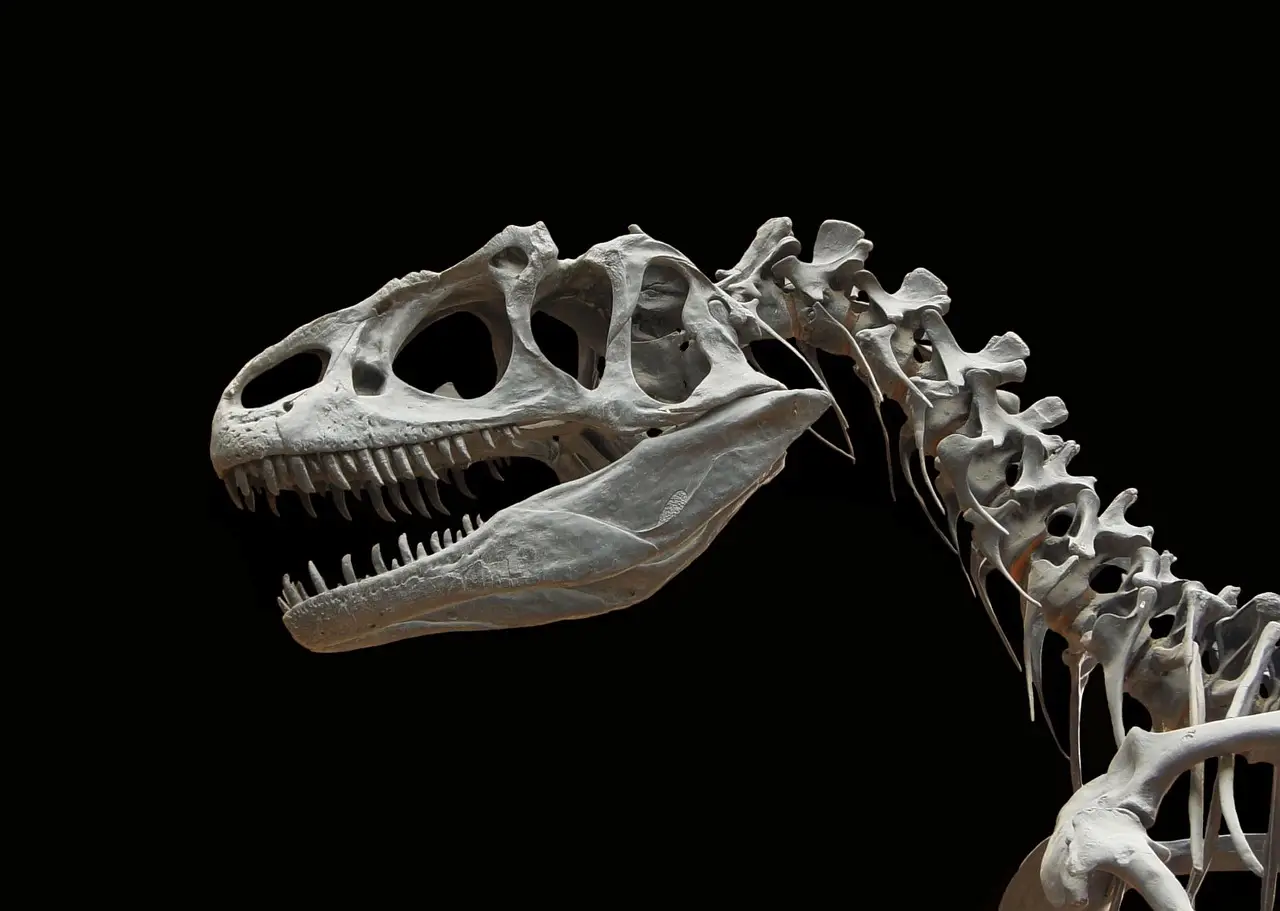
Chemical traces of red blood cells have survived inside dinosaur bones for 115 million years, according to a study published in the Proceedings of the National Academy of Sciences. That is the headline finding, and it is genuinely remarkable. But let's be precise about what the researchers actually found, because the fine print matters here.
The fossils belong to Aratasaurus museunacionali, a coelurosaurian theropod — a small, bird-like carnivorous dinosaur — that lived in what is now northeastern Brazil during the Early Cretaceous epoch. The bones came from the Mina Pedra Branca site of the Romualdo Formation, a locality known worldwide for its exceptionally well-preserved specimens.
A team led by Professor Kliti Grice of Curtin University examined the dinosaur's hind-limb bones and identified numerous tiny, ellipsoidal structures inside the vascular canals — the channels that once carried blood vessels through the bone. Each structure averages roughly 23 micrometers long and 20 micrometers wide. For scale, a human red blood cell is about 7 to 8 micrometers across, so these objects are several times larger, though dinosaur cells may well have been.
What exactly did they find?
Not blood. Not proteins. Molecules.
The researchers detected heme B, the small iron-bearing molecule at the heart of hemoglobin's oxygen-carrying function, along with a chemically altered derivative called 3,8-diethyl heme B. Imaging and spectroscopic analyses located these heme-related chemical signatures inside the very same structures, which strengthens the case that they are mineralized remnants of red blood cells rather than random contamination.
The team credits preservation to manganese oxide mineralization, particularly a mineral called hausmannite, which they suggest shielded the cellular structures and their organic contents from degradation over geological time.
"Our findings challenge longstanding assumptions that certain biomolecules such as hemoglobin cannot survive deep time," Professor Grice, the study's first author, said in a statement.
That is a fair claim, carefully worded. Heme is a sturdy, small molecule — chemically a far cry from fragile proteins or DNA. So the discovery pushes boundaries without breaking the laws of chemistry.
Is this dinosaur blood, then?
No. And the researchers are upfront about it.
The discovery does not mean intact blood or hemoglobin proteins survived for more than 100 million years. Anyone hoping for a real-world Jurassic Park scenario should park that expectation. What survived are molecular fingerprints — heme-derived molecules and their breakdown products — encased in mineral, not the soft tissue itself.
Still, Grice does not undersell the result. "To detect intact heme derived molecules in 115-million-year-old red blood cells is astonishing: this really is a landmark discovery," she said.
"It not only extends the known fossil record of blood, but also offers a direct molecular window into the physiology of long-extinct animals so we may better understand them and the world they lived in."
What does this change for paleontology?
Potentially a lot — with caveats attached.
"It opens exciting new avenues for molecular-level paleontology, allowing us to investigate the evolution of blood, metabolism and even activity levels in ancient animals," Grice said.
If heme signatures can be recovered reliably from other fossils, scientists gain a chemical probe into questions that bone shape alone cannot answer: how fast an animal's blood could carry oxygen, how active it was, how its metabolism compared with relatives. That is the promise.
Now the caveats. This is one specimen, from one famously well-preserved formation, described in a single paper. The interpretation rests on chemical signatures matching locations within the tiny structures — persuasive, but an interpretation nonetheless. Whether heme traces turn out to be common in dinosaur bones or a freak preservation event unique to Romualdo conditions, only further studies will tell. The paper, by Grice and colleagues, appears in PNAS 123 (46), article e2614248123.
A landmark, yes. A settled science, no. But 115-million-year-old molecules don't turn up every day.
via sci.news (Source)
More from James Calloway
Show full bio
Staff writer covering regulation, policy and their impact on general science news at SciBeat.
346 articles
Nearby plates
- 115-Million-Year-Old Dinosaur Bone May Hold Oldest Blood Traces Ever Found
- Dinosaur Blood Traces Found in 115-Million-Year-Old Bone
- Study claims 115-million-year-old dinosaur blood traces survived
- Neutron Imaging Reveals 66-Million-Year-Old Blood Vessels in T. Rex Rib
- First Diplodocus Ever Found Outside North America Came From Spain