Plate Nº 42 · recorded November 6, 2026
Biology & EvolutionReported finding
Dinosaur Blood Traces Found in 115-Million-Year-Old Bone
A 115-million-year-old Brazilian dinosaur bone contains the first direct molecular evidence of blood: heme molecules inside structures resembling red blood cells, plus traces of collagen.
By James Calloway3 min read697 words
In brief
- Researchers reported the find on November 2, 2026, in the Proceedings of the National Academy of Sciences.
- The fossil bone is 115 million years old and belongs to Aratasaurus museunacionali from Brazil's Romualdo Formation.
- It is the first direct molecular evidence of dinosaur blood preserved within red-blood-cell-like structures.
- Chemical analysis detected heme (from hemoglobin), collagen traces, iron, carbon and nitrogen.
- The dinosaur was named 'born from the National Museum fire' after surviving Brazil's 2018 museum fire.
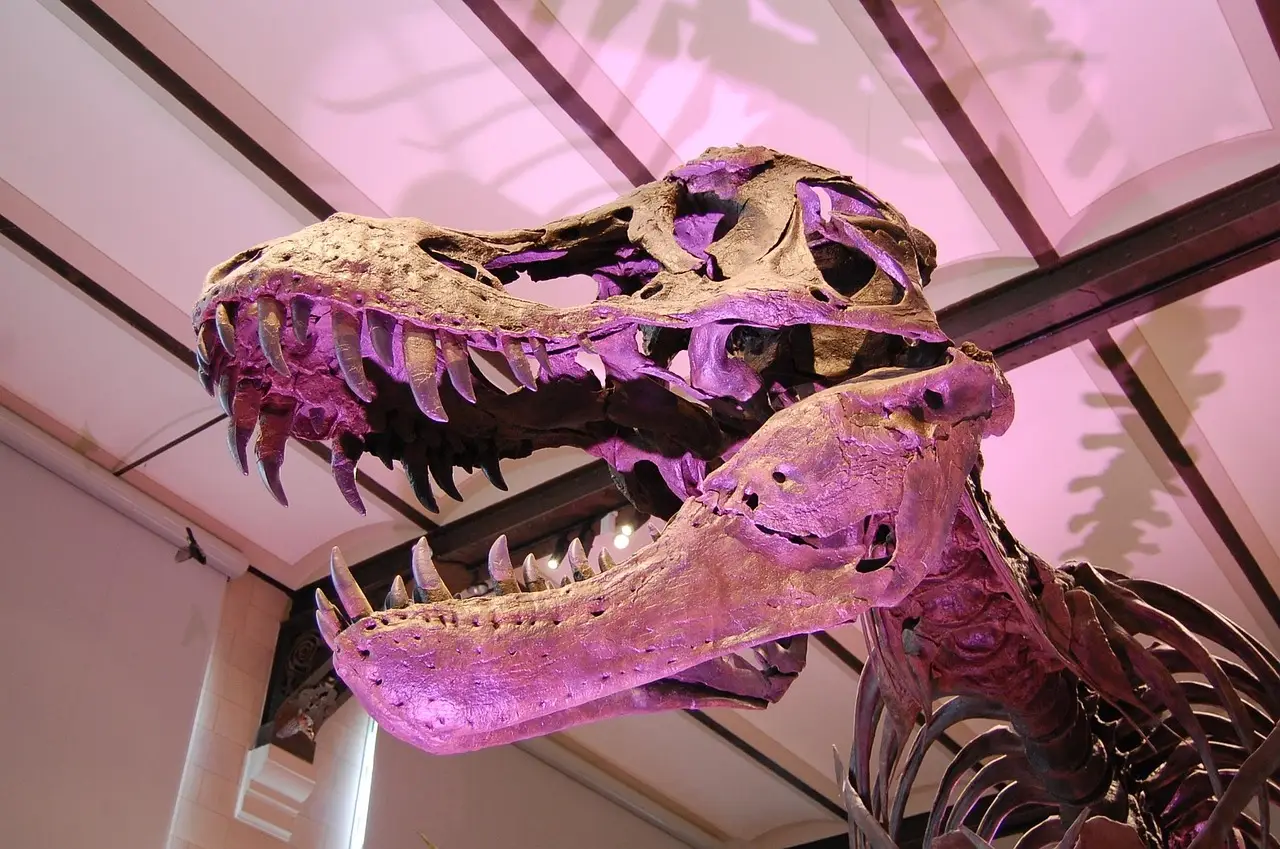
Scientists say they have found the first direct molecular evidence of dinosaur blood — heme molecules, the core of hemoglobin, preserved inside structures that resemble red blood cells, locked in a 115-million-year-old fossil bone from Brazil.
The team, led by Kliti Grice of Curtin University in Australia with colleagues from Brazil, Japan and the United States, reported the discovery on November 2, 2026, in the Proceedings of the National Academy of Sciences. Extraordinary claim? Yes. But the researchers lined up several independent lines of evidence before saying it out loud.
What exactly did they find?
The fossil belongs to Aratasaurus museunacionali, a small dinosaur from the Romualdo Formation in northeast Brazil, a site famous for exquisitely preserved fish, turtles, crocodile relatives and pterosaurs. The specimen is an exceptionally well-preserved partial hind limb, now housed at a palaeontology museum in northeast Brazil.
Its name carries its own story. It lived at Brazil's National Museum until a catastrophic fire destroyed much of the collection in 2018. The building holding this fossil survived. The name combines the Tupi words ara ("born") and atá ("fire") with the Greek sauros ("lizard") — "the dinosaur born from the National Museum fire."
Inside the bone, the team found tiny structures resembling red blood cells. Chemical analysis revealed two molecular "fingerprints" with the structure of heme, a key component of hemoglobin, the protein that carries oxygen in blood. The researchers also detected traces of collagen, the protein found in connective tissue.
How do they know it's really blood?
Fair question. The team's first job was ruling out the boring explanations: contamination, or minerals that merely mimic biological shapes.
Their strongest card is location. The cell-like structures appear exclusively inside vascular canals — the channels where red blood cells travel in living vertebrates. The sediment surrounding the fossil contained none of them, which argues against outside contamination.
The chemistry also split cleanly. The surrounding sediment was dominated by compounds from plants and bacteria; the bone itself carried a distinct signature dominated by heme molecules. Additional analysis confirmed iron, carbon and nitrogen, plus amino acids associated with collagen.
Grice's team put microscopy, mineralogy, spectroscopy and molecular geochemistry to work, and all four pointed the same way. "We are convinced these are fossilized red blood cell structures containing traces of heme molecules," the researchers wrote.
Still, this is a single specimen. Independent replication, on this bone and others, remains the real test.
How does blood survive 115 million years?
Not fresh, that's for sure. The dinosaur was buried rapidly in a low-oxygen environment, which slowed decay. During fossilization, the microscopic red blood cells turned into minerals themselves.
A second factor may be hausmannite, a mineral that acts a bit like an antioxidant, potentially stabilizing sensitive organic molecules and slowing their breakdown. Together, these conditions preserved molecular-level biological information far longer than researchers expected.
What does this change for paleontology?
The cell-like structures look somewhat larger and more rounded than red blood cells in modern birds and crocodilians. That could mean distortion during fossilization. Or — more interesting — it could mean non-avian dinosaurs had differently shaped red blood cells than their bird relatives. Further research will have to settle it.
The bigger implication is practical. If soft tissues and blood-derived molecules can survive more than 110 million years under the right conditions, then museum drawers around the world may hold an enormous, largely untapped resource. Many of those fossils aren't display pieces. Even so, they may preserve molecular, chemical and environmental information that modern analytical techniques can now read.
Specimens collected decades ago could be revisited with entirely new questions. That's the promise. The caveat: one spectacular fossil proves preservation is possible, not that it's common.
The fossil was collected and curated by researchers including Renan Bantim and Antônio Saraiva of the Regional University of Cariri, along with Juliana Sayão and Alexander Kellner of Brazil's National Museum and the Federal University of Rio de Janeiro. Collaborators also included Yuta Isaji, Calum Fox, Nana Ogawa and Noa Ohkouchi of the Japan Agency for Marine-Earth Science and Technology, and Jasmina Wiemann of Johns Hopkins University.
via subscribe.earthsky.org (Original)
More from James Calloway
Show full bio
Staff writer covering regulation, policy and their impact on general science news at SciBeat.
273 articles
Nearby plates
- 115-Million-Year-Old Dinosaur Bone May Hold Oldest Blood Traces Ever Found
- Giant 20-meter dinosaur found at Brazilian construction site
- First Diplodocus Ever Found Outside North America Came From Spain
- Adult Fossil Confirms Homo erectus Roamed Southern Africa 2 Million Years Ago
- 240-Million-Year-Old Tanzania Fossil Reshapes Dinosaur Timeline