Plate Nº 36 · recorded October 10, 2026
Chemistry & MaterialsReported finding
Chemists identify true active surface of nickel hydrogen catalysts
The active surface of nickel water-electrolysis electrodes is nickel dioxide (NiO₂), not NiOOH as assumed for decades, Ulm University chemists report in Nature Catalysis.
By James Calloway3 min read537 words
In brief
- Ulm University researchers identified NiO₂, not NiOOH, as the active surface of nickel electrolysis electrodes.
- The findings were published in the journal Nature Catalysis.
- The old NiOOH assumption had stood for decades in the field.
- Nickel is a cheap, robust catalyst for climate-neutral hydrogen production via alkaline water electrolysis.
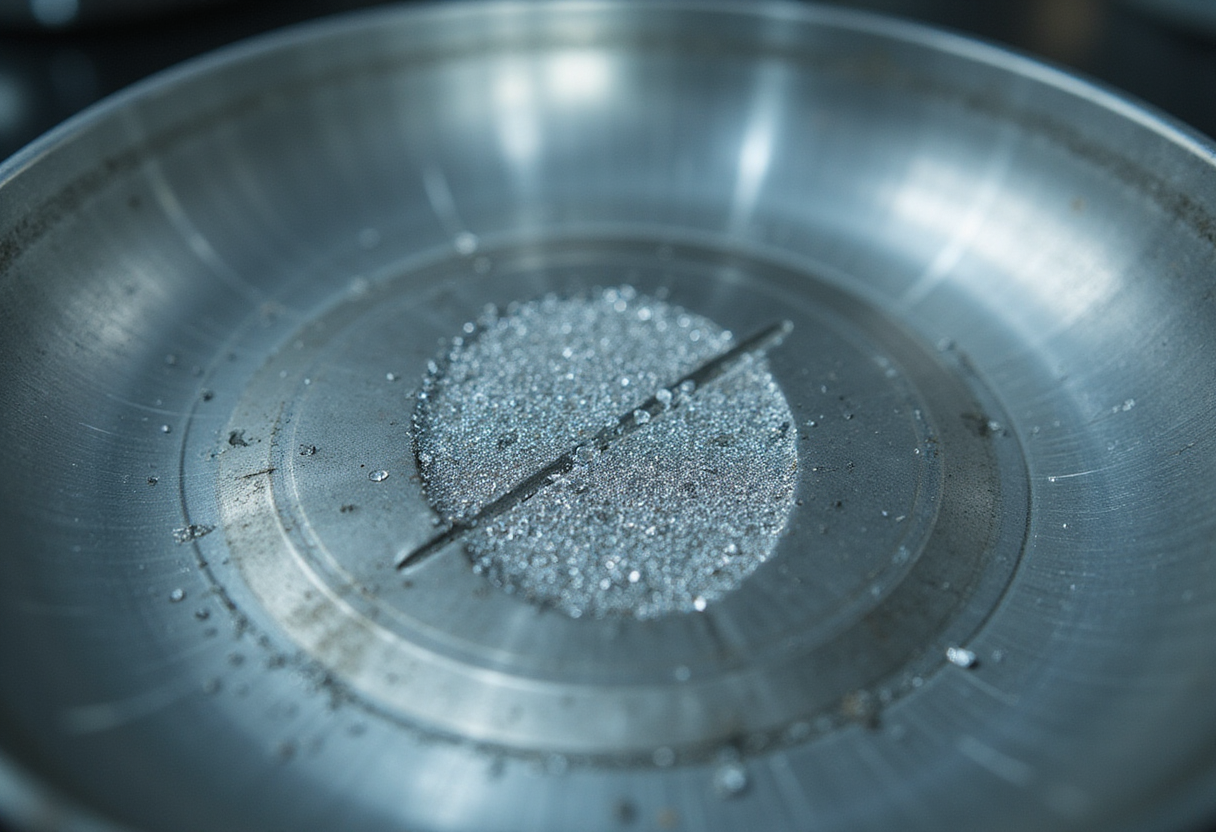
The catalytically active surface of nickel electrodes in alkaline water electrolysis is nickel dioxide (NiO₂), not nickel oxyhydroxide (NiOOH) as chemists had assumed for decades, according to a new study from Ulm University published in the journal Nature Catalysis.
The finding matters because alkaline water electrolysis is a key technology for producing hydrogen without greenhouse gas emissions, and nickel is one of the most promising electrode materials for it. Nickel is cost-effective and robust, which makes it attractive for large-scale, climate-neutral hydrogen production. But until now, researchers had not conclusively determined what the surface of a nickel electrode actually looks like while the reaction is running.
Why did the old assumption matter?
For roughly the past several decades, most researchers in the field believed that when a nickel electrode operates in an alkaline electrolyzer, its surface transforms into nickel oxyhydroxide, a compound of nickel, oxygen and hydrogen. This layer was thought to be the part of the electrode that drives the reaction.
That assumption shaped how scientists interpreted experiments and how they tried to improve nickel-based catalysts. If the true active surface is a different chemical compound, then some of those earlier interpretations may need revisiting, and efforts to optimize these electrodes may have been aimed at the wrong target.
The Ulm University team has now refuted the old picture. Their work shows that the catalytically active surface under reaction conditions consists of nickel dioxide, a compound in which each nickel atom is bonded to two oxygen atoms.
What does this change for hydrogen production?
Hydrogen produced by electrolysis can serve as a climate-neutral fuel and industrial feedstock, provided the electricity comes from renewable sources. Electrolyzers split water into hydrogen and oxygen using electric current, and the electrodes that make this possible rely on catalysts to speed up the reaction.
Nickel's advantages are practical:
- It is far cheaper than precious-metal catalysts such as platinum or iridium.
- It withstands the harsh chemical environment inside alkaline electrolyzers.
- It is abundant and already used at industrial scale.
Knowing the exact identity of the active surface gives chemists a concrete chemical structure to target when they design better electrodes. Instead of optimizing for a compound that is not actually doing the work, researchers can now study how NiO₂ forms, how stable it is, and how its surface properties govern catalytic performance.
How solid is the finding?
The study addresses a question that the field had left open: the structure of the active nickel surface under real reaction conditions had never been conclusively determined. By examining the electrode in its working state, the Ulm team was able to distinguish between the two candidate compounds and rule out the long-assumed NiOOH.
The results are published in Nature Catalysis, a peer-reviewed journal dedicated to catalysis research, which places the work before a specialist audience.
As with any single study overturning a long-standing assumption, independent follow-up work will show how the new picture holds up across different electrode preparations and operating conditions. Still, if confirmed, the identification of NiO₂ as the active surface could redirect research on nickel catalysts and, over time, contribute to cheaper and more efficient electrolyzers for climate-neutral hydrogen production.
via Phys.org Chemistry (Source)
More from James Calloway
Show full bio
Staff writer covering marketplaces and e-commerce at SciBeat.
205 articles
Nearby plates
- A hidden nickel-oxygen structure unlocks cheaper methane conversion
- New Electrode Design Breaks Energy Barrier in Green Ammonia Production
- Palladium Membrane Lets Hydrogen Through and Keeps Water Out
- Real-Time Oxygen Sensing Exposes Hidden Losses in Solar Water Splitting
- Iodide Coating on Platinum Boosts Solar Hydrogen Output