Plate Nº 57 · recorded November 15, 2026
Earth & ClimateReported finding
COP31 Divided as 1.5C Climate Goal Slips Out of Reach
With the world already 1.4C warmer, COP31 negotiators in Turkey are split between defending the 1.5C target and quietly working to drop it, observers say.
By Nathan Brooks4 min read716 words
In brief
- The world has already warmed about 1.4C above preindustrial times, and the UN said in September that crossing 1.5C is imminent and unavoidable.
- COP31 talks are taking place in Antalya, Turkey, chaired by Australia.
- Under the Paris Agreement, nearly 200 nations pledged to keep warming well below 2C while pursuing 1.5C.
- UNEP published a first-of-its-kind overshoot study in September on returning to 1.5C by 2100.
- Reversing warming would require decades of massive carbon-removal deployment, according to Global Carbon Budget lead author Pierre Friedlingstein.
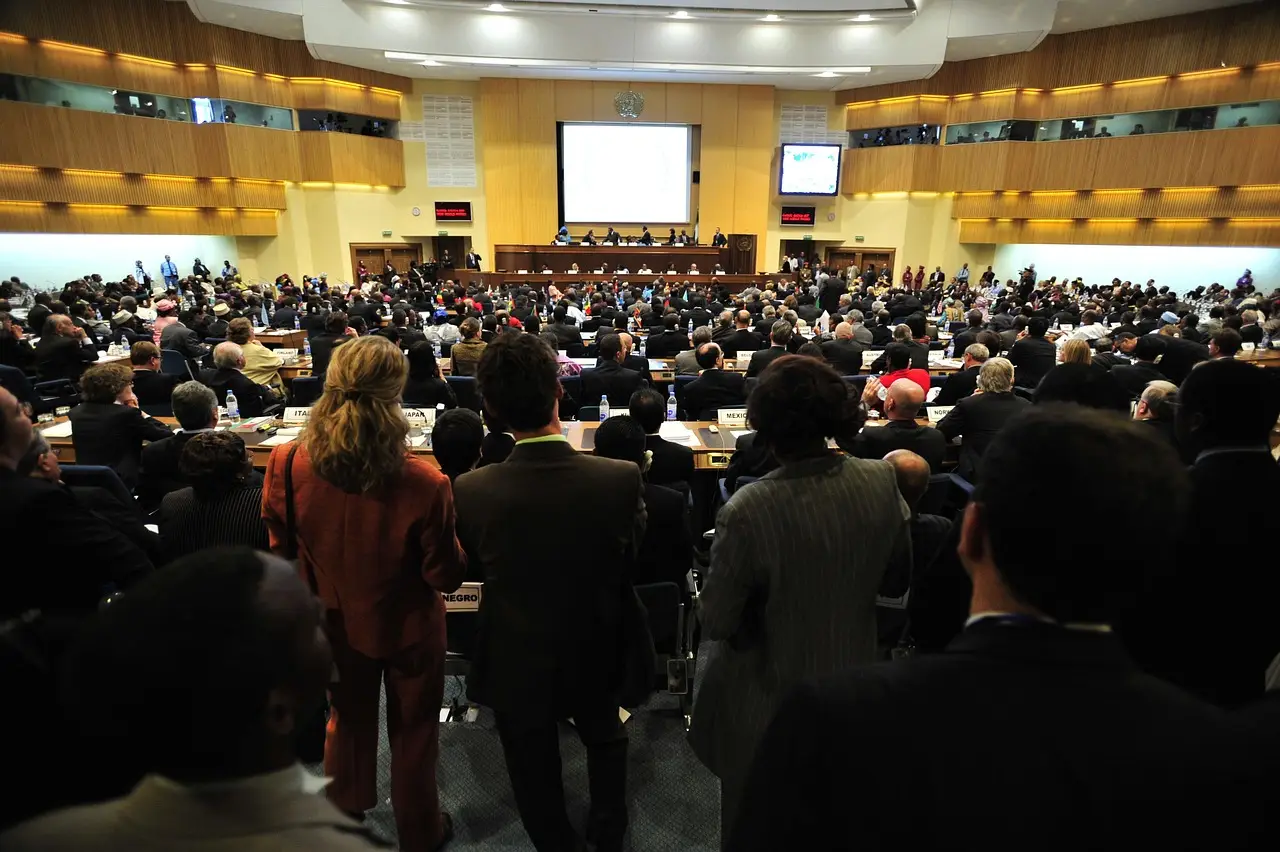
The world has already warmed about 1.4C above preindustrial levels, and at COP31 in Turkey, negotiators can't agree on what to do about the 1.5C target they're about to miss. This is the first UN climate summit since the United Nations declared in September that crossing the 1.5C threshold—the most ambitious goal of the Paris accord—was imminent and unavoidable.
For a decade, 1.5C served as the north star of climate action: a line nearly 200 nations pledged to hold to avoid the worst effects of a warming planet. Now, at the midway point of talks in Antalya, countries are split between clinging to the goal and quietly working to drop it.
Who still wants to defend 1.5C?
Front-line nations are leading the defense. Palau President Surangel Whipps Jr., whose Pacific island nation is threatened by rising seas, told world leaders that 1.5C was not "an abstract target."
"It is an existential threat to our food, our economies and sovereignty," he said.
According to a summary of negotiating positions released by Australia, which chairs the talks, some countries want the final COP31 deal to affirm that 1.5C remains the "right goal." There's also a push for language about returning to 1.5C "as soon as possible," and for stating that global temperatures are "still able" to be lowered once the threshold is exceeded.
Privately, some negotiators are skeptical of that framing. They're still reluctant to abandon a target they see as essential for driving the fastest possible cuts in planet-heating greenhouse gas emissions.
Who wants to walk away from it?
Several observers of the closed-door negotiations told AFP that some countries see an opening to jettison 1.5C entirely. That includes the Arab Group and the Like-Minded Developing Countries—two negotiating blocs of emerging economies that include Saudi Arabia and India.
One senior delegate from a Western nation warned of "potential backsliding" in climate action if those efforts succeed.
Jasper Inventor, head of Greenpeace's delegation in Antalya, said some developing nations worry that "a stronger reference" to 1.5C could translate into greater pressure to cut emissions—without extra financial help to do it.
A negotiating wish list released on Thursday added another flashpoint. Some nations urged rejection of "gray literature," an oblique reference widely read as a swipe at the UN Environment Programme. In September, UNEP published a first-of-its-kind study on "overshoot" scenarios—exploring how the world might bring temperatures back down to 1.5C by 2100 after breaching the threshold.
Outgoing UN chief Antonio Guterres, who spent his decade in office rallying nations behind 1.5C, told the summit that any overshoot must be "as small as possible for as short a time as possible."
Can warming actually be reversed?
The physics of the Paris Agreement are simple on paper: keep warming "well below" 2C while pursuing efforts to limit it to 1.5C. As scientific evidence mounted after the 2015 accord, the lower number took on ever greater weight.
Scientists say the risks rise sharply beyond 1.5C—from more severe floods and heat waves to irreversible changes such as the permanent loss of coral reefs.
But reversing warming back to that level is far from guaranteed, said Pierre Friedlingstein, a climate scientist at the University of Exeter and lead author of the benchmark Global Carbon Budget study. Getting there would require emissions to fall rapidly while carbon is pulled back out of the atmosphere—through natural approaches like planting trees and restoring wetlands, or through emerging technologies.
"A massive rollout of these new technologies" would be needed at enormous scale over decades, Friedlingstein told AFP.
"It is not something I would call utopian but it is certainly extremely ambitious," he said.
What happens next?
The talks in Antalya still have their second half to run. The outcome will hinge on whether defenders of 1.5C—mostly nations facing rising seas and extreme weather—can hold off blocs pushing to loosen the target, and on whether wealthy countries offer the finance that developing nations say they need before signing on to tougher language.
For now, the number that anchored a decade of climate diplomacy remains in limbo: missed, but not yet formally abandoned.
via phys.org/rss-feed/ (Source)
More from Nathan Brooks
Show full bio
Market editor covering companies, deals and strategy in general science news at SciBeat.
382 articles