Plate Nº 65 · recorded October 10, 2026
Space & AstronomyReported finding
Crew-13 Targets Oct. 1 Launch for Sub-9-Hour Trip to ISS
NASA and SpaceX are targeting 11:10 a.m. EDT on Oct. 1, 2026 for the Crew-13 launch to the ISS. If on schedule, Dragon will dock in under nine hours, joining Expedition 75.
By Marcus Bennett3 min read654 words
In brief
- Target liftoff: 11:10 a.m. EDT on Oct. 1, 2026 from Space Launch Complex 40 at Cape Canaveral.
- If on schedule, Dragon will reach the ISS in less than nine hours, with docking at about 8 p.m. EDT.
- Crew: commander Jessica Watkins, pilot Luke Delaney, and mission specialists Joshua Kutryk (CSA) and Sergey Teteryatnikov (Roscosmos).
- The four astronauts will join Expedition 75 for a roughly six-month stay on the ISS.
- Crew-13 entered preflight quarantine at NASA's Johnson Space Center before traveling to Kennedy on Sept. 26.
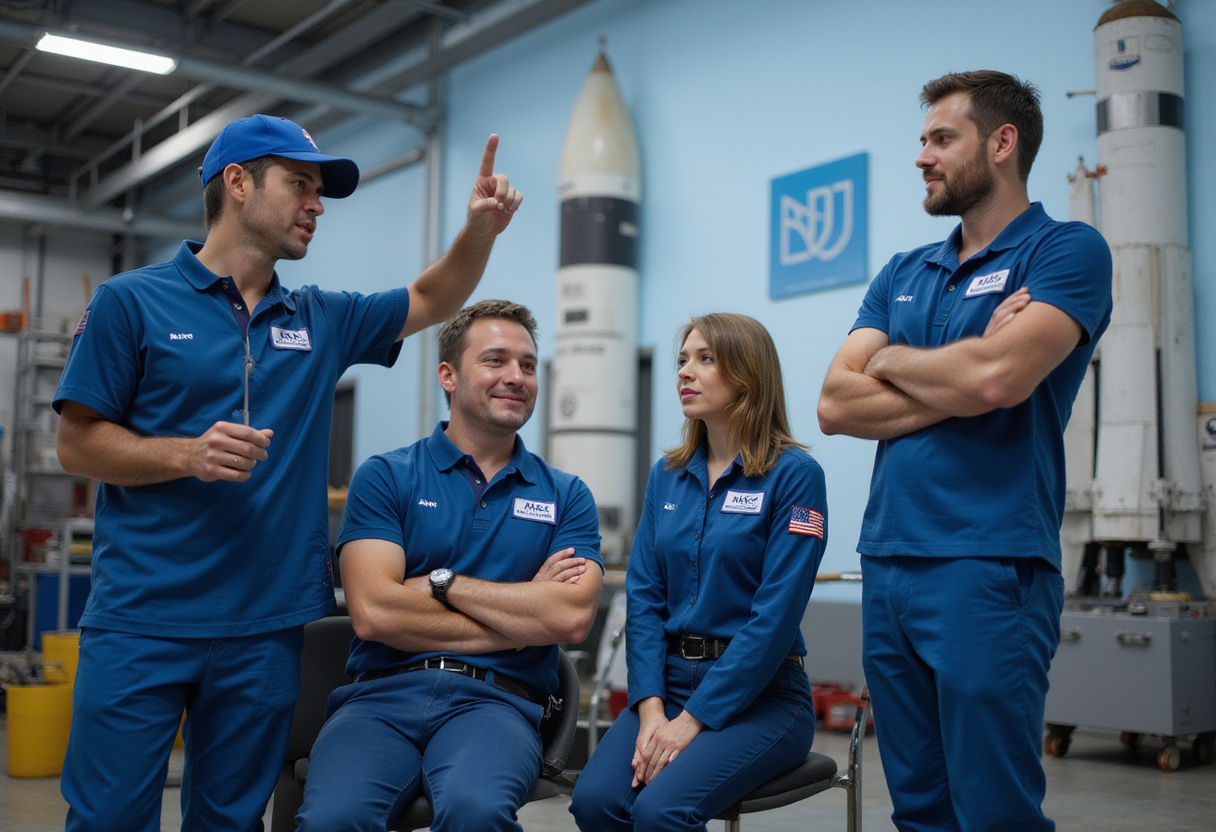
NASA and SpaceX are targeting 11:10 a.m. EDT on Thursday, Oct. 1, 2026, as the earliest launch opportunity for the Crew-13 mission to the International Space Station. If liftoff occurs on schedule, SpaceX's Dragon spacecraft will reach the station about nine hours later, with docking planned for roughly 8 p.m. EDT.
The mission will lift off from Space Launch Complex 40 at Cape Canaveral Space Force Station in Florida. Engineers are now wrapping up final launch-readiness reviews covering the four-person crew, the space station itself, the Dragon capsule, and the Falcon 9 rocket.
How fast is "less than nine hours"?
That transit time would rank among the shortest crewed trips to the ISS from U.S. soil. SpaceX first shortened its rendezvous profile from roughly 24 hours to a few hours in 2020, and recent Crew Dragon flights have occasionally reached the station in under 10 hours.
The accelerated timeline depends on careful orbital phasing — matching Dragon's path to the station's orbit so the capsule can intercept the outpost safely. After liftoff, Falcon 9 places Dragon into low Earth orbit. The spacecraft then performs a series of timed engine burns to climb toward the station.
NASA targets docking for about 8 p.m. EDT at the forward-facing port of the Harmony module. Harmony is one of the station's connecting nodes and provides berthing locations for visiting vehicles. During the final approach, Dragon autonomously lines up with the designated port and softly attaches.
Astronauts typically monitor the automated docking sequence but do not need to take manual control unless a problem develops. Once hard capture is confirmed, the crew equalizes pressure between Dragon and the station before opening the hatch.
Who is flying on Crew-13?
NASA astronaut Jessica Watkins will serve as spacecraft commander. NASA astronaut Luke Delaney will fly as pilot. CSA (Canadian Space Agency) astronaut Joshua Kutryk and Roscosmos cosmonaut Sergey Teteryatnikov will serve as mission specialists.
The Crew-13 lineup draws on three space agencies — NASA, the Canadian Space Agency, and Russia's Roscosmos. Multinational crews are standard for ISS expeditions and reflect the international agreements underpinning the orbiting outpost.
Once aboard, the four astronauts will join Expedition 75, the long-duration rotation of personnel on the ISS. Expedition crews live and work aboard the station for roughly six months. They run scientific research, maintain station systems, support visiting vehicles, and conduct technology demonstrations.
What is the preflight status?
Crew-13 is currently in quarantine at NASA's Johnson Space Center in Houston. Preflight isolation is a standard precaution designed to reduce the risk of crew illness before flight.
The crew is scheduled to travel to NASA's Kennedy Space Center on Saturday, Sept. 26. From there, they will enter final prelaunch preparations ahead of the Oct. 1 window.
Both agencies will reassess launch readiness in the days before liftoff. If weather or technical issues intervene, backup opportunities typically exist on subsequent days. Officials have not yet confirmed whether additional dates are available for this attempt.
What's at stake for the station?
Crew-13 will join the astronauts currently aboard the ISS as part of the regular crew rotation. Maintaining overlapping crews keeps research operations running continuously and ensures around-the-clock maintenance of station systems.
The arrival also positions the station to host upcoming cargo missions and support planned spacewalks. Crew rotations typically follow a handover period during which outgoing astronauts brief their replacements on ongoing experiments and station operations.
Harmony, Dragon's docking destination, sits on the forward end of the U.S. segment. The module connects the U.S. laboratory to European and Japanese research facilities and serves as a passageway between segments.
NASA has not yet announced a return date for Crew-13. Standard ISS missions last about six months, though some have been extended or shortened based on vehicle availability and crew rotation needs.
via ScienceDaily: Space & Time (Source)