Plate Nº 72 · recorded November 14, 2026
Space & AstronomyReported finding
Euclid Telescope Logs Nearly a Billion Cosmic Objects in First Big Data Drop
ESA's Euclid telescope has catalogued nearly a billion objects—over 900 million galaxies and 60 million candidate quasars—in a 1.7-million-gigabyte first data release.
By Nathan Brooks4 min read702 words
In brief
- Euclid's first major release documents nearly 1 billion objects, including 900+ million galaxies.
- The dataset exceeds 1.7 million gigabytes, which ESA calls the largest space-based survey of its kind.
- The survey identified around 15,000 strong gravitational lensing candidates.
- Euclid launched in July 2023 and carries a roughly 600-megapixel visible-light camera.
- 60 million possible quasars are included, pending confirmation.
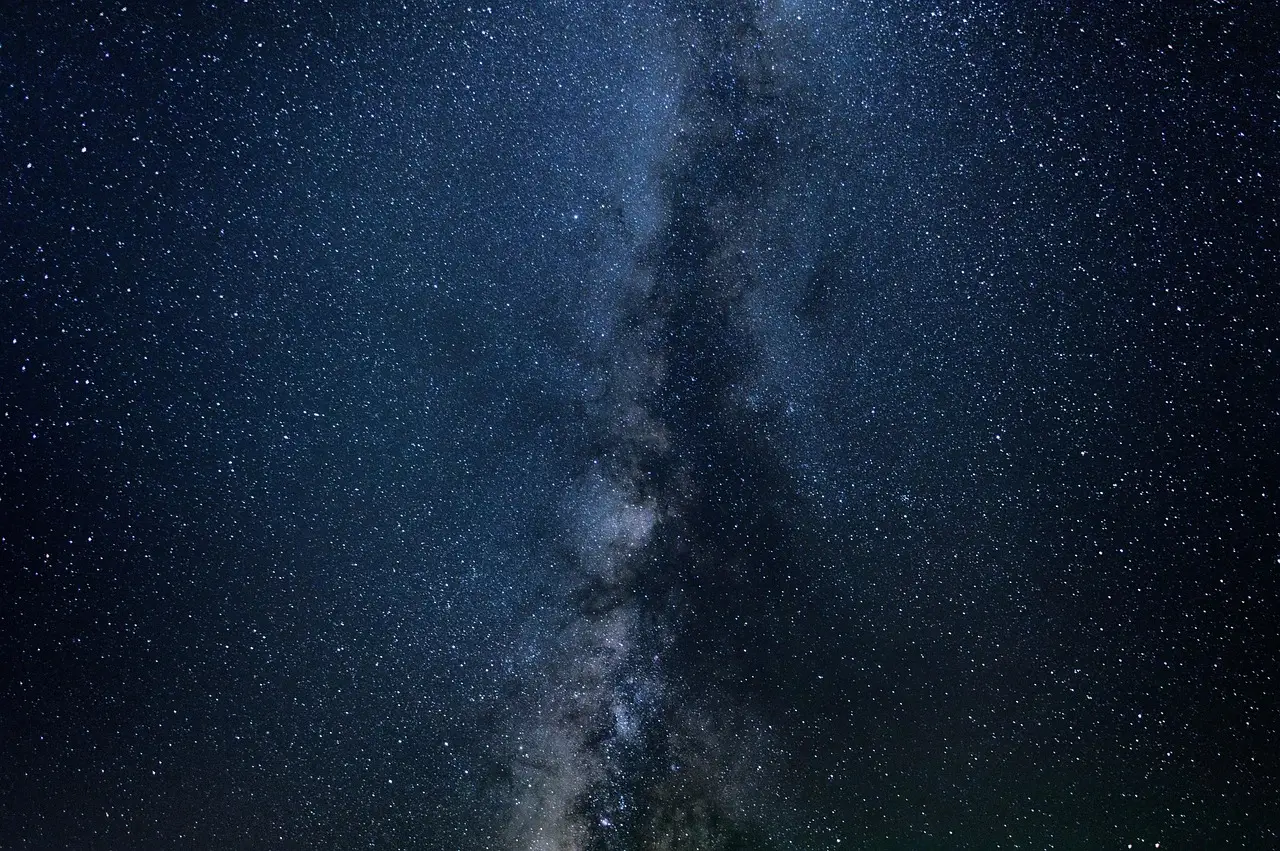
The European Space Agency's Euclid space telescope has catalogued nearly one billion celestial objects, according to its first major data release. The haul includes more than 900 million galaxies and 60 million candidate quasars—the ultrabright cores of galaxies where ultrahot gas spirals into a supermassive black hole.
ESA announced the release alongside figures that put the survey's scale in perspective. The dataset weighs in at more than 1.7 million gigabytes, making it, in ESA science director Carole Mundell's words, "the largest space-based survey of its kind, laying the foundation of future discovery in a new regime for astronomy."
Euclid launched in July 2023 and has been scanning the sky since with a roughly 600-megapixel visible-light camera. Earlier image releases covered only narrow slices of sky; this one opens the floodgates.
What makes gravitational lensing so valuable here?
A big part of Euclid's power comes from a cosmic trick called gravitational lensing. When light from a distant galaxy passes a massive object on its way to us, that object's gravity bends and magnifies the light. The effect brightens faint sources and can even let astronomers weigh them.
The catch: the objects need to line up almost perfectly, so strong lenses are extremely rare. That's why the new numbers stunned Scott Gaudi, an astronomer at Ohio State University who isn't part of the Euclid program. He called the find of roughly 15,000 strong lensing candidates "bonkers."
"Gravitational lenses are one of nature's toolboxes for us measuring dark matter mass by looking for these distortions of background quasars and galaxies due to foreground structures," Gaudi said. "But you can't do it from the ground. You just need the high-resolution imaging to do it."
That last point matters. Ground-based telescopes can't resolve the subtle distortions lensing produces, so a space telescope with sharp optics is essential for this kind of dark matter accounting.
How does Euclid pair with the Roman Space Telescope?
Euclid won't work alone. NASA's Nancy Grace Roman Space Telescope, which observes infrared light rather than the optical wavelengths Euclid targets, will also use gravitational lensing to probe distant objects.
The two missions divide the workload differently, Gaudi explained. "Euclid is going for as much area as possible, whereas Roman is focusing in the infrared, and it's focusing on repeating observations of the same area of the sky with different roll angles and different filters," he said.
He sees the pairing as especially strong for hunting dark energy and dark matter, the invisible components that make up most of the universe. "I think the joint approach of those two missions is very powerful because you can vet the big statistics you get with Euclid with a very careful controlled system with Roman," Gaudi said.
What do galaxy clusters reveal?
The release also ships a large trove of data on galaxy clusters—groups of galaxies bound together by gravity. How galaxies bunch together carries clues about how the first matter formed and organized itself shortly after the Big Bang.
Euclid's wide coverage should also let astronomers pin down where individual galaxies sit relative to their neighbors. That could eventually produce what ESA describes as the most comprehensive three-dimensional map of the universe ever built.
Barbara Sartoris, an astrophysicist at France's Joseph-Louis Lagrange Laboratory, highlighted the value of pairing depth with breadth. "Euclid doesn't just look far back in time—it does so across huge areas of sky," she said in the ESA statement. "This gives us an unprecedented view of large samples of ancient galaxy clusters that were previously out of reach. We will explore these in the coming months to learn how these giants grew, and decipher what they reveal about the dark Universe."
The caveats are worth noting. The 60 million quasars are described as possible candidates, and the 15,000 lensing finds are strong candidates rather than confirmed detections—expect follow-up work to refine both counts. Still, as a first major release from a mission not yet two years old, the dataset already gives astronomers more raw material than most surveys deliver in a lifetime.
via scientificamerican.com (Source)
More from Nathan Brooks
Show full bio
Market editor covering companies, deals and strategy in general science news at SciBeat.
358 articles
Nearby plates
- Euclid's New 3D Map Covers Sky Equal to 9,500 Full Moons
- Euclid releases data on 900 million galaxies for a 3D cosmos map
- Euclid's First Data Release Images 900 Million Galaxies
- Euclid's First Data Haul: 900 Million Galaxies in 2.5 Trillion Pixels
- Euclid's first major data release captures over 1 billion cosmic objects