Plate Nº 49 · recorded November 13, 2026
Space & AstronomyReported finding
Euclid's New 3D Map Covers Sky Equal to 9,500 Full Moons
Euclid's new release packs 900 million galaxies into a sky area of 9,500 full moons, building a 3D map to test dark matter and dark energy.
By Nathan Brooks3 min read538 words
In brief
- Euclid's release covers about 13 months of observations and light from more than a billion objects.
- The surveyed sky area equals roughly 9,500 full moons — about 14% of the planned six-year survey.
- The dataset includes over 900 million galaxies, ~60 million possible quasars and ~15,000 gravitational lensing candidates.
- The release amounts to roughly 1.7 million gigabytes of data.
- Analyses built on the data will take years of calibration and modeling before conclusions on dark matter and dark energy.
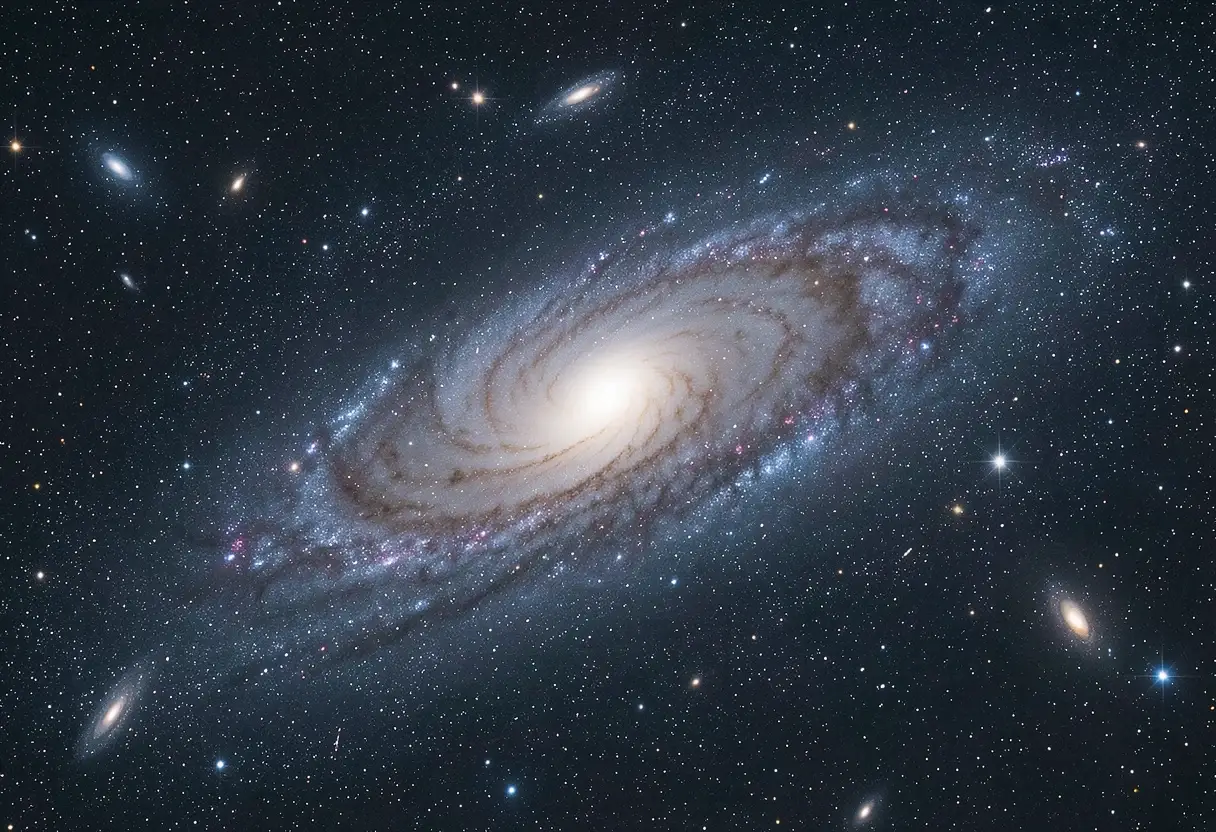
Europe's Euclid space telescope has just released a dataset covering a patch of sky equal to roughly 9,500 full moons, gathered over about 13 months of observations. The European Space Agency and the Euclid Consortium say the collection captures light from more than a billion objects — the raw material for an exceptionally detailed three-dimensional map of the universe.
The numbers behind the release are striking on their own. The dataset includes images of more than 900 million galaxies, around 60 million possible quasars — the blazing cores of distant galaxies — and some 15,000 candidates for strong gravitational lensing. Lensing happens when the gravity of a massive object bends light from something farther away, producing distorted images that let scientists trace matter telescopes can't see directly.
For scale: this release represents about 14% of the sky area planned for Euclid's full six-year wide survey. Even so, it already amounts to roughly 1.7 million gigabytes of data — a major resource for scientists studying how galaxies form, grow and gather into clusters.
Why a 3D map instead of pretty pictures?
Rather than photographing a handful of famous galaxies, Euclid is surveying enormous regions of space to reveal how cosmic structures fit together. The telescope doesn't just take pictures. It also records spectra, measurements that separate light into its component wavelengths.
Spectra help astronomers investigate distant objects and estimate how far away they are. Combine those distances with each object's position on the sky, and a flat picture becomes a three-dimensional view of the cosmic web — the vast network of galaxies and clusters that spans the universe.
What does this have to do with dark matter?
The survey's ultimate target is two of astronomy's biggest mysteries. Dark matter doesn't emit light, but its gravity influences how galaxies move and arrange themselves. Dark energy is the label for the unknown phenomenon tied to the universe's accelerating expansion.
The scale of the survey matters because the universe isn't evenly filled with galaxies. Gravity pulls matter into long strands, dense clusters and enormous voids with relatively few galaxies. Mapping these patterns at different distances lets scientists effectively compare the universe at different stages of its history.
That comparison is where the science gets pointed. Small differences between the observed patterns and theoretical predictions could reveal whether existing explanations of cosmic expansion and gravity are complete. By comparing cosmic structures across enormous distances and different epochs, Euclid aims to put those ideas to the test.
Has Euclid solved these mysteries yet?
No — and the Consortium isn't claiming it has. The new release is a foundation for analyses that will take years, and interpreting such a huge collection requires careful checks of measurements and computer models. Making the pattern-versus-prediction comparisons will demand rigorous calibration before anyone can draw firm conclusions.
Still, the unprecedented breadth of the observations gives researchers a powerful new way to investigate the hidden structure of the universe. With 86% of the wide survey still to come over the remaining years of the mission, this billion-object snapshot is best read as a strong first installment rather than a verdict on dark matter or dark energy.
via knowridge.com (Source)
More from Nathan Brooks
Show full bio
Market editor covering companies, deals and strategy in general science news at SciBeat.
353 articles
Nearby plates
- Euclid releases data on 900 million galaxies for a 3D cosmos map
- Euclid's First Data Haul: 900 Million Galaxies in 2.5 Trillion Pixels
- Euclid's First Data Release Images 900 Million Galaxies
- Euclid's New Data Release Maps a Billion Cosmic Objects in 3D
- Euclid's first major data release captures over 1 billion cosmic objects