Recorded November 25, 2026
Space & AstronomyReported finding
FCC Approves 1 Million SpaceX AI Satellites for Orbital Data Centers
The FCC has cleared SpaceX to deploy one million Starmind AI satellites, starting in 2027 on Starship. The constellation would dwarf every satellite network humanity has ever launched.
By Marcus Bennett3 min read691 words
In brief
- The FCC approved 1 million Starmind AI satellites for SpaceX on Nov. 25.
- First Starmind launches are planned for Q3 2027 aboard Starship.
- SpaceX targets a $28.5 trillion market, nearly $23 trillion from enterprise AI.
- Humanity has launched only ~28,000 satellites since 1957; the largest constellation today has ~11,000.
- Next-gen Starlink (~100,000 satellites) would need ~1,700 Starship launches to assemble.
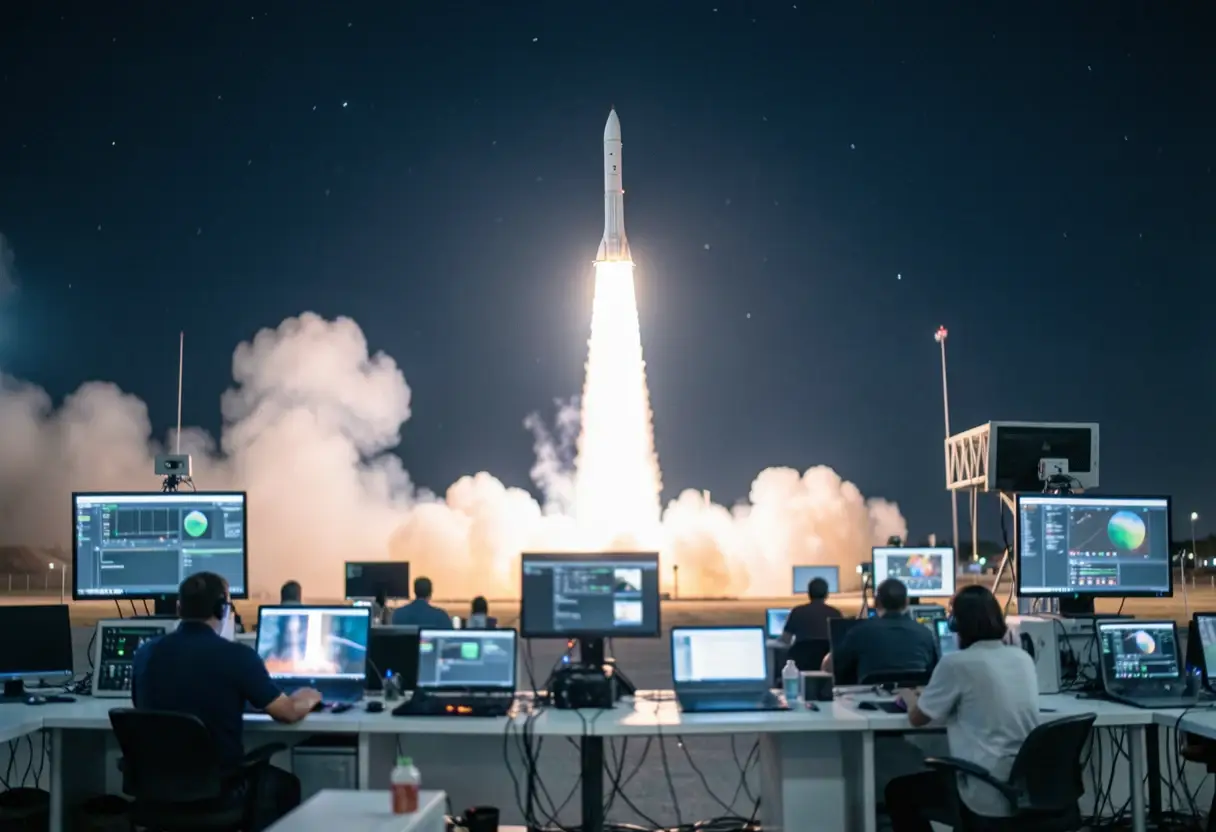
The U.S. Federal Communications Commission has granted SpaceX approval to deploy one million Starmind satellites — orbiting AI data centers that the company says could redefine where the world's computing power lives.
FCC Chairman Brendan Carr announced the approval on Nov. 25, framing it as a step toward securing American technological primacy. "This action opens a bold new frontier for the computing infrastructure needed to power America's leadership and growth," Carr said in a statement.
Why does SpaceX want AI in orbit?
Over the past year, AI has moved from a side project to the center of SpaceX's business identity. The company has pointed to a total addressable market of $28.5 trillion over the long term, and it expects nearly $23 trillion of that to come from enterprise AI applications.
Starmind is the vehicle for those ambitions. Elon Musk, SpaceX's founder and CEO, argues that the future of AI computing belongs in space, where solar energy is effectively unlimited and there are no land-owning neighbors to file complaints against power-hungry ground-based data centers.
In short: the bottleneck for AI is electricity and real estate, and orbit solves both — at least on paper.
When do the launches start?
SpaceX plans to launch the first Starmind satellites in the third quarter of 2027. They will ride on Starship, the company's fully reusable megarocket, which has already deployed 26 next-generation Starlink satellites across its two most recent test flights.
Those 52 Starlink spacecraft are the vanguard of a separate but related buildout. Musk has said the next-gen Starlink network will eventually consist of roughly 100,000 satellites.
The scale of what SpaceX is now licensed to attempt has no historical precedent. Since the space age began in 1957, humanity has launched about 28,000 satellites in total, give or take a few hundred. The largest constellation ever operated — the current version of Starlink — numbers about 11,000 spacecraft. Starmind alone would be roughly 90 times larger.
What does the logistics look like?
The launch arithmetic is stark. Starship can carry a maximum of 60 V3 Starlink satellites per flight, meaning the next-gen Starlink network alone would take about 1,700 launches to assemble. Maintenance adds more: each satellite's operational life is expected to run about five years, so SpaceX would need to keep replacing hardware indefinitely just to hold the network steady.
The Starmind deployment, at one million satellites, would require launch campaigns far beyond anything the industry has attempted.
What about collisions?
Crowding is the obvious physical risk. More spacecraft in orbit means more chances for them to hit each other, and debris from any collision threatens everything else in nearby orbits.
SpaceX has built a strong track record here: its current Starlink satellites can detect and avoid potential collisions autonomously. Even so, as orbit fills up, the number of evasive maneuvers required will keep climbing, and the margin for error will shrink.
Who else is racing to orbit?
SpaceX is not alone. Cowboy Space, Starcloud, Blue Origin and Google, among others, have announced similar ambitions for space-based data centers. Starcloud and Google have already launched AI pathfinder satellites — small test craft that prove the concept works before companies commit to full constellations.
What did the FCC chairman say?
Carr's statement tied the approval to a specific policy vocabulary. "Compute campuses or data centers are essential to sustaining America's leadership in SI," he said, using "SI" — super intelligence — the Trump administration's preferred term for AI.
"By moving compute capacity beyond Earth, SpaceX and the many competitors working on their own orbital data centers are meeting the moment," Carr added. "This is the kind of American ingenuity that can unite our strengths in space and advanced technology, reinforce our economic leadership, and expand prosperity here at home."
The approval is a regulatory green light, not a finished system. No Starmind satellite has flown yet, and the first launch is more than two years away. If the buildout proceeds as licensed, the FCC's Nov. 25 decision will mark the moment Earth's orbit became a computing platform.
via space.com (Source)
More from Marcus Bennett
Show full bio
News editor covering regulation, policy and their impact on general science news at SciBeat.
620 articles
Nearby plates
- Senate Passes Energy Permitting Bill 62-33 as Power Prices Climb 39%
- White House Plans Major Redirect of Research Funds Toward AI
- Genesis Mission: Inside the $5 Billion Push to Remake US Science with AI
- NASA Seeks Industry Proposals for Commercial Space Stations
- DOE's AI Push Is Squeezing Funding for Research Grants