Recorded November 22, 2026
Reported finding
Fermi Telescope Pins Down 450 Gamma-Ray Sources in Astronomy's 'MeV Gap'
A 14-year Fermi-LAT dataset has identified 450 sources of low-energy gamma rays, the clearest view yet of the 'MeV gap' — including 73 objects with no known counterpart.
By James Calloway4 min read836 words
In brief
- Researchers cataloged 450 gamma-ray sources in the 20–200 MeV range using 14 years of Fermi-LAT data.
- 325 sources lie outside the Milky Way; nearly half the catalog consists of flat-spectrum radio quasars (blazars).
- 73 sources lack counterparts at other wavelengths; 60 appear to be entirely new gamma-ray discoveries.
- A single 20 MeV photon can only be traced to a sky patch 20 degrees wide — over 40 times the full moon's size.
- The catalog, 2FLE, was published in The Astrophysical Journal Supplement Series (2026), DOI: 10.3847/1538-4365/aeb54d.
Astronomers have cataloged 450 sources of low-energy gamma rays using 14 years of data from the Fermi Gamma-ray Space Telescope, delivering the sharpest view yet of a notoriously hard-to-observe slice of the sky. The new atlas, called the Second Catalog of Low-Energy Fermi-LAT Sources, or 2FLE, covers the 20–200 megaelectronvolt (MeV) energy range — a band scientists have long nicknamed the "MeV gap." An international team with the Fermi Large Area Telescope (LAT) Collaboration published the results in The Astrophysical Journal Supplement Series in 2026 (DOI: 10.3847/1538-4365/aeb54d).
That's the headline number. Now the caveats, because there are plenty.
Why has the 'MeV gap' been such a problem?
Astronomers are spoiled for instruments at the low end of the energy spectrum — think NASA's Chandra X-ray Observatory — and reasonably well equipped at the high-energy gamma-ray end. The middle ground is where tools go fuzzy.
The reason is physics, not laziness. Gamma rays refuse to bounce off mirrors, so instruments like Fermi-LAT work less like traditional telescopes and more like particle detectors in orbit. They record what happens when a gamma-ray photon slams into layers of tungsten and silicon inside the spacecraft.
At energies around 1 gigaelectronvolt, that collision is destructive enough that researchers can trace a line back to the source. Below that, in the 20–200 MeV band, photons scatter far more randomly. The direction gets murky.
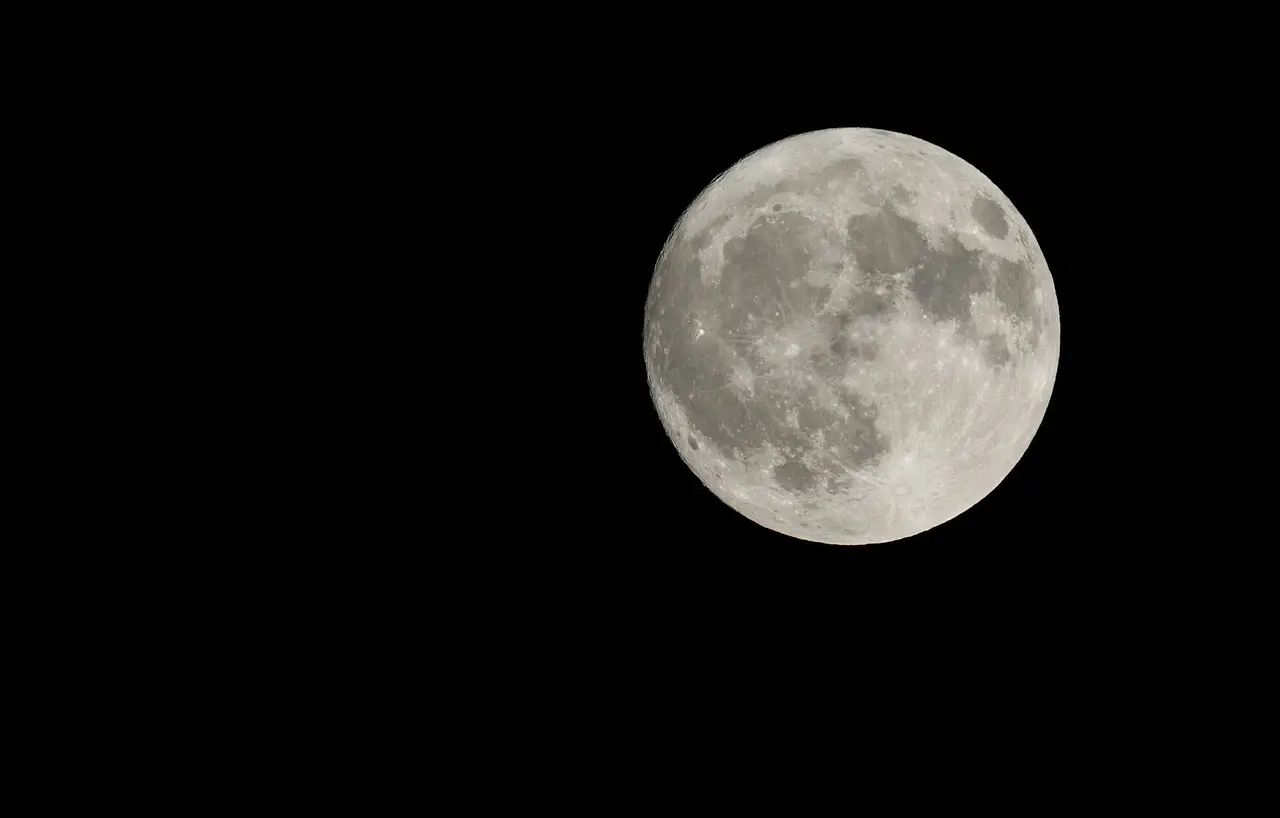
How murky? A single 20 MeV photon can only be pinned to a patch of sky roughly 20 degrees wide. That's more than 40 times the apparent size of the full moon. Add a flood of background radiation — from the sun to distant galaxies — and picking out individual sources becomes a statistical slog.
The team's workaround was patience plus math. Fourteen years of accumulated Fermi observations, fed through advanced statistical modeling, let them squeeze out 450 distinct detections.
What did they actually find?
Cross-checking against radio, optical and X-ray data turned up known counterparts for 377 of the 450 sources. The breakdown:
- 325 sources sit far outside the Milky Way. Almost half the entire catalog consists of flat-spectrum radio quasars (FSRQs) — a type of blazar, meaning a supermassive black hole with one of its twin plasma jets aimed nearly straight at Earth. The catalog confirms these FSRQ blazars emit most of their energy in the 20–200 MeV window.
- 52 sources lie inside our galaxy. Most are pulsars — the rapidly spinning remnants left behind when a massive star explodes as a supernova. One outlier stands out: gamma rays apparently coming from M2, a globular cluster, which would be the first detection of that object at gamma-ray energies.
- 73 sources have no clear counterpart at any other wavelength. Sixty of those look like brand-new gamma-ray discoveries.
That last group is where the skepticism deserves a workout. Some of those 73 signals could be overlapping emissions from neighboring objects bleeding into one blob — the researchers themselves acknowledge this. But the paper argues it's likely at least some are genuinely new, exotic cosmic accelerators awaiting follow-up observations.
One mystery object, labeled 2FLE J0340.8+5258, appears to line up with something also detected by an observatory in China. This source seems capable of producing light across nine orders of magnitude in energy. Striking, if it holds up. Unconfirmed physics, until it doesn't.
What does this change for astronomy?
For blazar researchers, it's a solid data point: the 2FLE catalog confirms where these extreme objects put out most of their power. For everyone else, it's a target list — 60 candidate new objects that other observatories can now chase at radio, optical and X-ray wavelengths.
But there are limits, and the team is candid about them. Fermi-LAT has likely given all it can on this front. The researchers believe they've squeezed nearly everything obtainable from the satellite's data, and the spacecraft has been operating since its 2008 launch — nearly two decades. This catalog is probably Fermi's final word on the low-energy gamma sky.
Who picks up the baton?
The gap doesn't close with this paper. It narrows.
NASA's Compton Spectrometer and Imager (COSI) is coming online, and it's built specifically for the job. COSI targets an even lower band, 0.2–5 MeV, using a special type of germanium detector that has only become available in the last few years. That technology sits below where Fermi's new catalog reaches, meaning COSI probes territory Fermi never could.
The long game is obvious: stack COSI's fresh measurements on top of the decades of Fermi data. That combination might finally illuminate one of the oldest blind spots in extreme astrophysics.
Until then, 2FLE stands as the best map of the MeV sky we have. Imperfect, statistically massaged, with 73 unexplained entries — and still the clearest look humanity has ever managed at light that refuses to be seen.
via phys.org/rss-feed/ (Source)
More from James Calloway
Show full bio
Staff writer covering regulation, policy and their impact on general science news at SciBeat.
570 articles
Nearby plates
- Fermi catalog maps about 450 gamma-ray sources in 14 years
- Astronomers Map 450 Gamma-Ray Sources in a Neglected Energy Range
- Brightest Ever Space Explosion May Have Fired a Hollow Magnetic Jet
- Gamma-ray burst's engine fired for 27 days, shattering the record
- Brightest-Ever Gamma-Ray Burst May Hide a Hollow-Core Magnetic Jet