Plate Nº 77 · recorded November 11, 2026
Biology & EvolutionReported finding
Fiber-Optic Cable Records Bowhead Whale Calls for First Time
A 2026 Alaska trial produced the first fiber-optic detections of bowhead whale calls, suggesting undersea telecom cables could broaden real-time monitoring of baleen whales.
By James Calloway4 min read751 words
In brief
- Spring 2026: Bowhead whale vocalizations were detected for the first time in distributed acoustic sensing data.
- Terabytes of cable data were analyzed over several weeks to make the Alaska detections.
- Blue and fin whale calls fall below 100 hertz; bowhead and North Atlantic right whale calls run roughly 150–300 hertz and are quieter.
- Bouffaut first documented blue and fin whale detections with fiber-optic sensing in 2022.
- A 2026 review proposed moving whale monitoring from proof of concept to an operational tool.
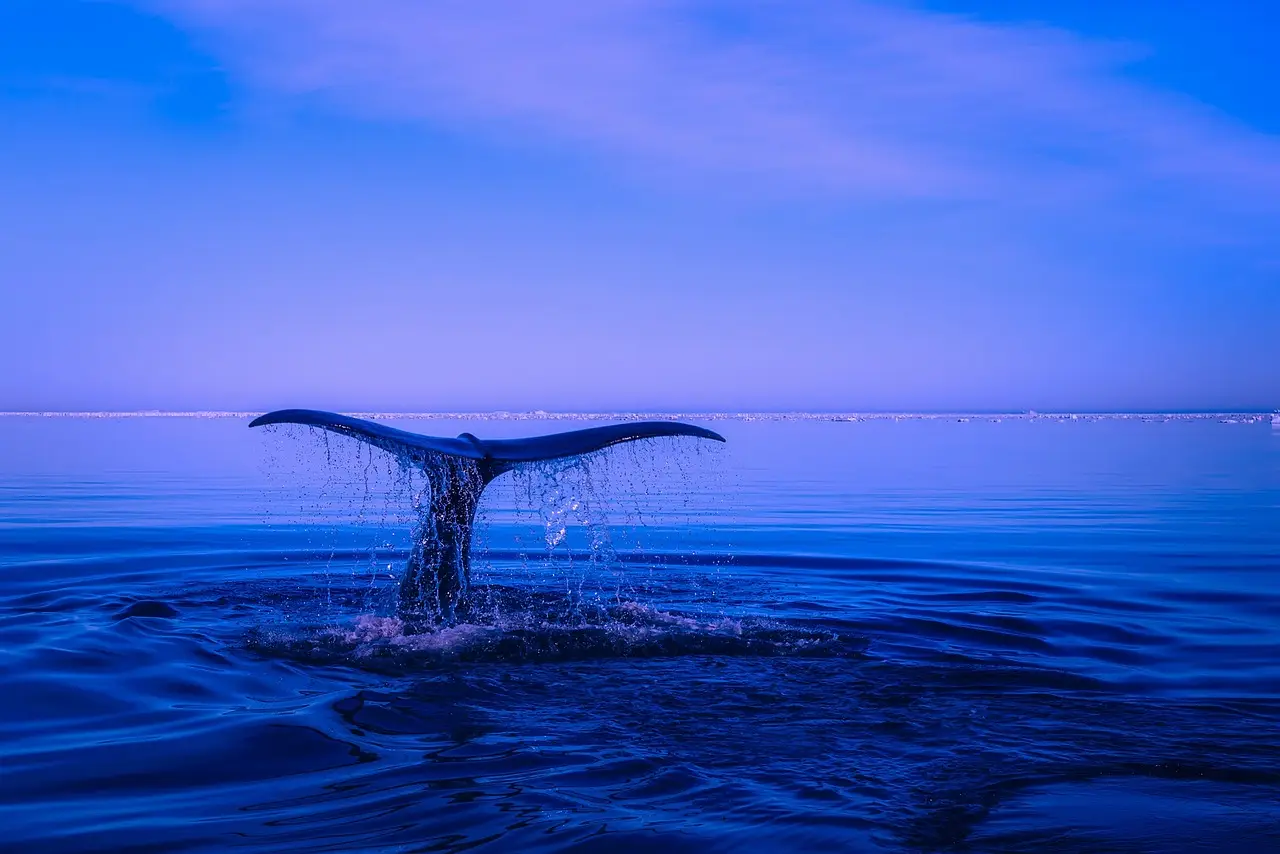
In a spring 2026 Alaska field trial, Léa Bouffaut and colleagues made the first distributed acoustic sensing detections of bowhead whale vocalizations on a subsea fiber-optic cable, extending a monitoring method previously shown mainly on blue and fin whales.
The breakthrough followed weeks of analysis covering terabytes of data from an existing Quintillion telecommunications cable in Utqiaġvik, on Alaska’s North Slope.
“Being able to detect bowhead whales on a telecommunication cable is the proof of concept we need to show that DAS can be used to monitor all baleen whales,” Bouffaut said. “This is truly exciting as this technology enables real-time data access, over tens of kilometers and from land.”
How does a fiber-optic cable hear whales?
For several years, Bouffaut, a bioacoustics researcher at Cornell’s K. Lisa Yang Center for Conservation Bioacoustics, has monitored whales without relying on conventional underwater microphones. She has instead tapped fiber-optic cables lying on the ocean floor, which carry telecommunications traffic or transmit power.
Distributed acoustic sensing, or DAS, uses attached instruments to send laser pulses through a fiber and measure tiny changes caused by passing sound waves. Whale calls disturb the signal, allowing researchers to identify sounds over many miles of cable. Each whale species leaves a distinctive acoustic fingerprint.
The system effectively turns long stretches of seafloor into dense networks of virtual acoustic sensors. That could expand monitoring around the world without requiring a separate underwater microphone at every location.
Bouffaut first documented DAS detections of blue and fin whales in 2022. She then asked whether the same approach could record all baleen whales, a group that includes bowheads, and whether scientists could implement it more broadly.
Earlier demonstrations centered on the loud, extremely low-frequency calls of blue and fin whales, below 100 hertz, or sound-wave cycles per second. Bowhead whales and North Atlantic right whales call at roughly 150 to 300 hertz and at lower intensity. Their higher-frequency, quieter calls had proved harder for DAS to detect.
The Alaska work tested that gap directly. Utqiaġvik is home to Iñupiat whalers, whose communities have hunted bowhead whales on the North Slope for thousands of years. During spring 2026, Bouffaut worked with the Barrow Whaling Captains Association and the North Slope Borough Department of Wildlife Management.
Their test used an existing fiber-optic cable owned by Quintillion. After Bouffaut and the team analyzed terabytes of data over several weeks, they obtained the first-ever bowhead vocalizations recorded in DAS data. The result establishes detection on one cable, not a completed monitoring system for every baleen species.
What does this change for whale monitoring?
Bouffaut said cable-based sensing could support estimates of whale populations, track when migrations pass, and examine how Arctic whales respond to rapid environmental change. These are potential applications, not outcomes the Alaska trial demonstrated, and population estimates would still require methods beyond simply detecting calls.
Her review of the rapidly developing technology turns those possibilities into a practical argument. Published in Methods in Ecology and Evolution, it synthesizes what scientists know about DAS for marine mammal monitoring and recommends steps for moving from proof of concept to an operational tool for whale management and conservation.
“The review is also a call to action for scientists, industry partners and regulators to collaborate,” Bouffaut said. “We now have the technical blueprint to turn global undersea infrastructure into a global network for ocean conservation.”
That blueprint still needs people willing to build it. DAS will not replace traditional underwater microphones, Bouffaut said; scientists can use it to complement them and expand monitoring around the world. The immediate value is additional coverage without placing a new microphone at every location.
The design is dual-use, meaning the same infrastructure can collect several kinds of data. Telecommunications and offshore energy industries already monitor fiber-optic cables for safety and security. The same data streams could also support environmental compliance and wildlife protection.
Bouffaut also argued that the cables’ “immense conservation and operational value” must be demonstrated now. Her review provides the technical case; collaboration and real-world deployment provide the test. If that works, a network already lying beneath the ocean could become a much larger whale-monitoring instrument. If it does not, the first bowhead detections will remain a promising proof of concept rather than a global conservation system.
The review, “Distributed acoustic sensing for marine mammal monitoring,” appeared in Methods in Ecology and Evolution in 2026. Its DOI is 10.1111/2041-210x.70437.
via phys.org/rss-feed/ (Source)
More from James Calloway
Show full bio
Staff writer covering regulation, policy and their impact on general science news at SciBeat.
346 articles
Nearby plates
- Reef sound playback drew up to 14 times more fish larvae
- Humpback Whale Mother Stayed With Dead Calf for Days, Study Finds
- Swordfish Dive Over 1,000 Meters — Possibly to Navigate the Ocean
- Elephants synchronize rumbles during group decisions, study finds
- Baby Whales Are Washing Up Dead in Argentina, and Scientists Are Racing to Find Out Why