Plate Nº 68 · recorded November 9, 2026
Space & AstronomyReported finding
Final iROSA array can boost ISS power by as much as 30%
NASA astronaut Anil Menon and Canadian astronaut Joshua Kutryk installed the ISS’s eighth roll-out solar array, adding capacity for operations through a planned late-2030 retirement.
By Nathan Brooks4 min read714 words
In brief
- The eighth and final iROSA can increase ISS electricity output by as much as 30%.
- The array was installed Nov. 5 during a 6-hour, 59-minute spacewalk.
- Eight iROSAs, deployed from June 2021 through Nov. 5, were delivered by SpaceX Dragon.
- The upgrade supports ISS operations through retirement and a controlled deorbit scheduled for late 2030.
- The EVA was the 101st U.S. spacewalk without a shuttle and the 286th overall supporting the ISS.
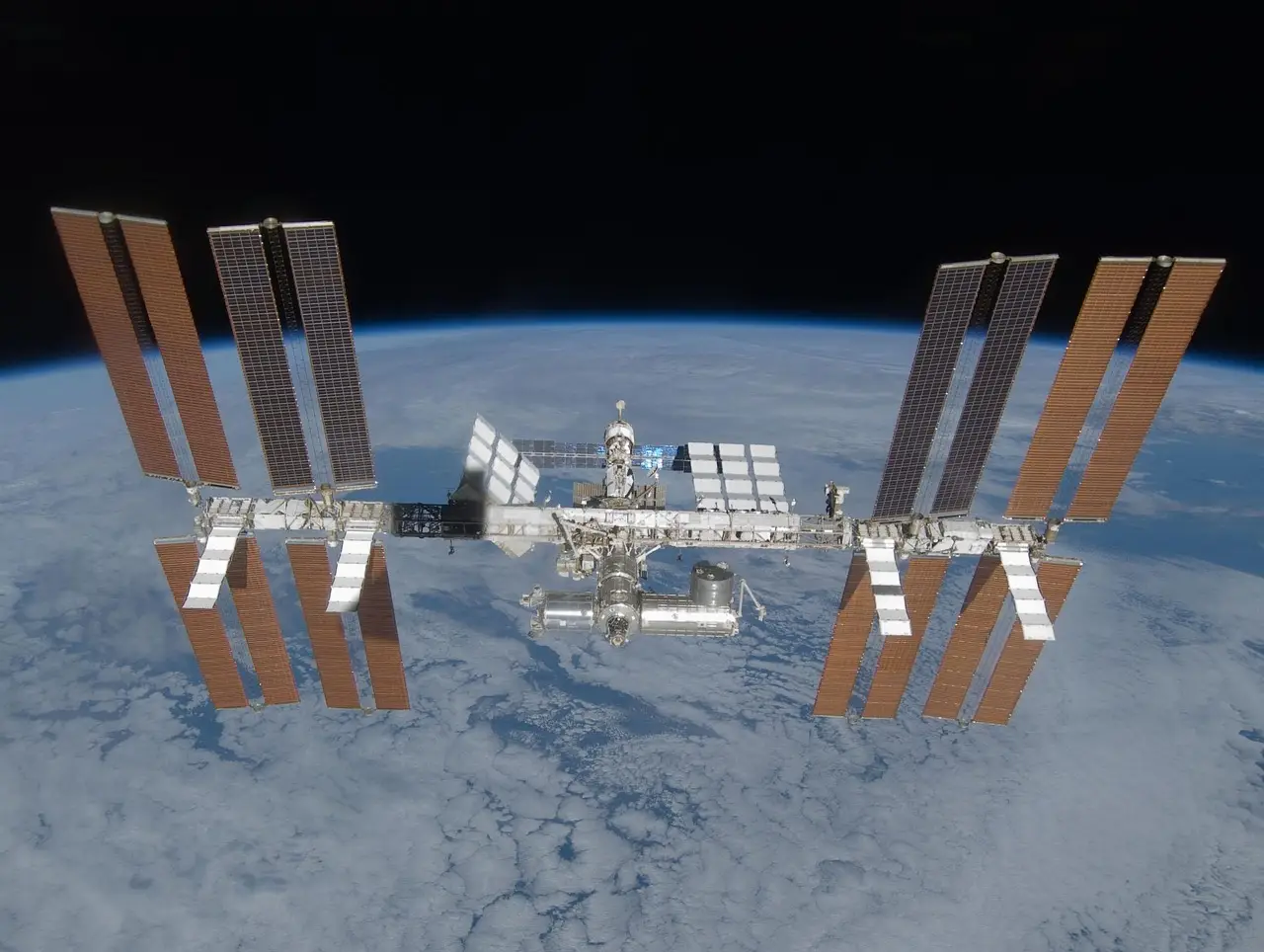
The eighth and final ISS Roll-Out Solar Array, or iROSA, can add enough power for the station’s older solar wings to produce as much as 30% more electricity. On Thursday, Nov. 5, NASA astronaut Anil Menon and Canadian astronaut Joshua Kutryk installed it during a 6-hour, 59-minute spacewalk. Both served as flight engineers for Expedition 75.
The extravehicular activity, or EVA, ran from 8:36 a.m. to 3:35 p.m. EST, or 13:36 to 20:35 GMT. Menon closed with: “We got it done!” The timing also matched NASA’s preparations for a ground demonstration called “Max Power,” while the astronauts delivered the same added power capability to the ISS.
What did the astronauts install?
The 750-pound (340-kilogram) assembly rested on a temporary stowage platform. Menon and Kutryk used the Canadarm2 robotic arm to carry it to the starboard side of the station’s backbone truss, or main framework, and mounted it to a bracket kit on electrical power channel 3B.
They repeated much of their Oct. 29 work, which added the penultimate iROSA. Menon then attached cables to tie the new array into the station’s electrical systems.
Why did deployment briefly pause?
Only half the expected shunt current appeared. In plain terms, that meant the electrical flow expected into the station’s systems fell short. “We are seeing half of the expected shunt current that we want,” NASA astronaut and spacewalk officer Nichole Stilwell radioed from Mission Control, adding that the configuration might not permit deployment.
Because sunlight energizes the arrays, the astronauts waited for the station to enter Earth’s shadow before inspecting the connectors. They used the delay to clean the worksite and return Canadarm2 to its parking position. Ground readings then showed good current, and Stilwell gave the go-ahead to deploy.
How did the array unfold without a motor?
After releasing two bolts, Menon and Kutryk watched the array extend to its full 63-foot (19-meter) length. Deployment took about 10 minutes and required no motor: rolled carbon-composite booms released their stored potential energy, or energy held in the rolled structure, to extend the array.
Menon said the outing completed one array and, after more than 15 years of development, all eight. He praised the new arrays, saying they were half the size of the old ones and brought 40% more power.
How was the eight-array rollout completed?
SpaceX Dragon cargo spacecraft delivered each iROSA and its mounting assembly to the station. Beginning in June 2021, four pairs of astronauts deployed the units across four power channels:
- Joshua Kutryk of the Canadian Space Agency and NASA’s Anil Menon deployed arrays on channels 2A and 3B.
- NASA’s Shane Kimbrough and the European Space Agency’s Thomas Pesquet handled channels 2B and 4B.
- NASA astronauts Josh Cassada and Frank Rubio handled channels 3A and 4A in December 2022.
- NASA astronauts Steve Bowen and Woody Hoburg handled channels 1A and 1B in June 2023.
Why did the ISS need more power?
Flight controllers discovered the need for augmentation when the ISS’s eight original solar arrays began losing power output after exceeding their 15-year design life. The iROSAs provide the additional electricity needed to support ISS operations through retirement and a controlled deorbit, a planned guided descent from orbit, currently scheduled for late 2030.
What did the spacewalk mean for station history?
Menon’s career total reached 33 hours and 30 minutes across four spacewalks. Kutryk reached 14 hours and 10 minutes across two.
Thursday’s outing counted as the 101st U.S. EVA at the ISS without a space shuttle present and the 286th overall supporting assembly, maintenance and upgrades. NASA counted it as the ninth spacewalk of 2026 and the sixth conducted by Expedition 75’s resident crew.
Stilwell congratulated the pair after the station surpassed 26 years of continuous human presence. She called their work among the most difficult and dangerous tasks humans perform in space, said they made it look easy, and praised the execution as a demonstration of humanity at its best.
With all eight iROSAs deployed, the project has completed its planned array rollout. The extra capacity supports ISS operations through the retirement and controlled deorbit scheduled for late 2030.
via space.com (Source)
More from Nathan Brooks
Show full bio
Market editor covering companies, deals and strategy in general science news at SciBeat.
325 articles
Nearby plates
- ISS Solar Array Upgrade Advances With Seventh Installation
- Final iROSA Solar Panel Installed on ISS, Closing Five-Year Power Upgrade
- Space Station's Roll-Out Solar Arrays Add Over 160 Kilowatts
- Voyager 1 Reaches One Light-Day From Earth as Engineers Fight to Keep It Alive
- SpaceX Delivers Brain Models, Heart Tissue and Retina Tech to Space Station