Plate Nº 62 · recorded November 9, 2026
Space & AstronomyReported finding
Final iROSA Solar Panel Installed on ISS, Closing Five-Year Power Upgrade
Menon and Kutryk installed the last iROSA array on Nov. 5, finishing a five-year upgrade that gives the ISS about 215 kilowatts and power margin toward 2030.
By James Calloway4 min read707 words
In brief
- EVA-101 on Nov. 5, 2026 installed the final iROSA solar panel, ending a five-year ISS power upgrade that started in June 2021.
- The eight iROSA arrays each produce 8 kilowatts, giving the ISS roughly 215 kilowatts of total power.
- EVA-100 lasted 7 hours 11 minutes; EVA-101 lasted 6 hours 59 minutes, the 286th overall ISS spacewalk.
- The upgrade provides enough power margin for ISS operations and science up to its planned end of life around 2030.
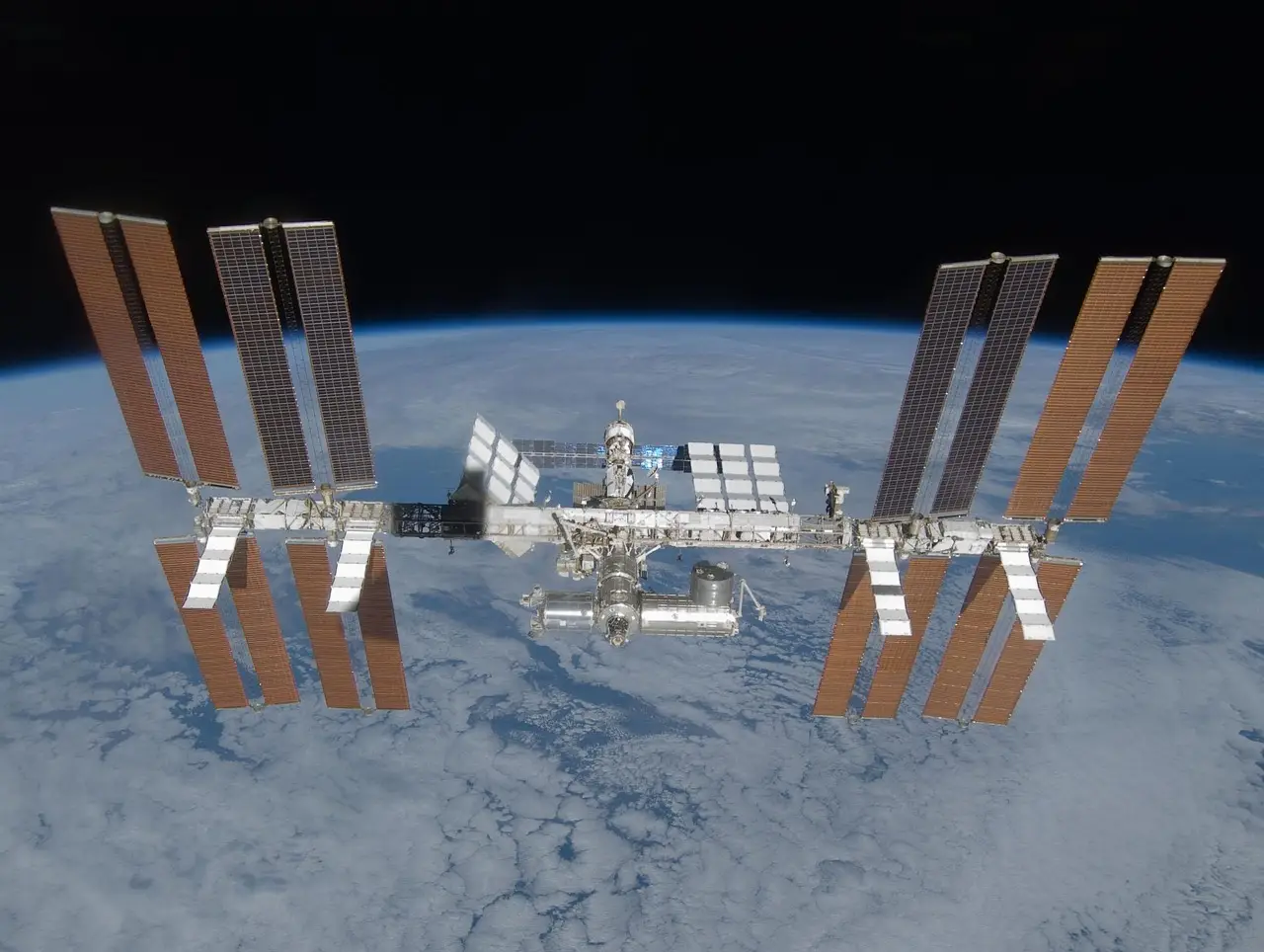
Astronauts Anil Menon of NASA and Joshua Kutryk of the Canadian Space Agency installed the final iROSA solar panel on the International Space Station on Thursday, Nov. 5, closing out a power upgrade that ran for more than five years. The spacewalk, US EVA-101, ended at 20:35 UTC after six hours and 59 minutes, capping a project that began in June 2021 and now leaves the Station with roughly 215 kilowatts of available power.
Why the upgrade at all? The Station's original solar panels, launched aboard Space Shuttle flights between 2000 and 2009, have degraded over two decades in orbit. NASA approved the iROSA program — roll-out solar arrays that are smaller than the originals but each capable of producing eight kilowatts — to shore up the aging power system.
The plan originally called for six units, all installed between 2021 and 2023. Then projections showed the Station needed more juice than that. NASA bought two additional arrays from Redwire for the 2A and 3B power channels on the ISS truss, and those final two units reached orbit aboard Cargo Dragon C211, which docked to the zenith port of the Harmony node on Oct. 15 as part of the CRS-35 mission.
What happened on the two spacewalks?
Menon and Kutryk installed the first new unit on the 2A channel during EVA-100 on Oct. 29. That walk began at 11:57 UTC, with Menon as EV1 — the suit with red stripes — mounted in a foot restraint on the end of the Canadarm2 robotic arm, and Kutryk as EV2, free-floating in an all-white suit.
The groundwork took time. Anne McClain and Nichole Ayers installed the modification kit on the P4 truss during EVA-93 in May 2025, but ran into trouble with the telescoping booms for the two side struts. A second walk, EVA-94 in March 2026 with Jessica Meir and Chris Williams, finished the job using special tools.
One detail deserves attention: the astronauts waited for orbital night to hook up four electrical connections, because power flows through those connectors during orbital daylight and posed a shock risk. They connected three during one night pass, and controllers decided to deploy the array anyway at four hours and 23 minutes into the walk, judging the configuration safe. Menon released two bolts, the array rolled out to its full 18.3-meter length, and the whole deployment took about 12 minutes. EVA-100 wrapped at 19:08 UTC after seven hours and 11 minutes — the 100th US segment spacewalk without the Shuttle present.
How did the final walk go?
EVA-101 began Nov. 5 at 13:36 UTC, targeting the 3B channel on the S6 truss, starboard side. Roles swapped: Kutryk wore the red stripes and rode the arm; Menon floated free. One major difference stood out. The Canadarm2 could not reach the worksite, so the astronauts performed a manual handoff of the array between them.
There was also a small scare. Only half the expected current was flowing through the 3B channel, prompting an inspection and rework of connections during the second night pass. The issue was resolved. The array deployed as before, and the duo finished after six hours and 59 minutes.
The numbers now read: Menon's fifth spacewalk, bringing his total EVA time to 33 hours and 30 minutes; Kutryk's second, giving him 14 hours and 10 minutes. EVA-101 was the sixth spacewalk of Expedition 75, the ninth at the Station in 2026, and the 286th overall for ISS assembly, maintenance, and upgrades. Total ISS spacewalking time now stands at 75 days, 14 hours, and 13 minutes.
What does this change for the Station's future?
NASA says the ISS now has enough power margin for normal operations and science through its planned end of life around 2030. But the exact disposal date — a planned deorbit to Point Nemo in the Pacific — remains an open question. Administrator Jared Isaacman recently told NSF's The Flame Trench he's open to operating the Station longer, saying he doesn't want a gap until a commercial successor is ready.
Fresh panels don't settle old arguments. The hardware now outlasts, on paper at least, the Station's own schedule.
via nasaspaceflight.com (Source)
More from James Calloway
Show full bio
Staff writer covering regulation, policy and their impact on general science news at SciBeat.
346 articles
Nearby plates
- ISS Solar Array Upgrade Advances With Seventh Installation
- Final iROSA array can boost ISS power by as much as 30%
- Space Station's Roll-Out Solar Arrays Add Over 160 Kilowatts
- Voyager 1 Reaches One Light-Day From Earth as Engineers Fight to Keep It Alive
- SpaceX Delivers Brain Models, Heart Tissue and Retina Tech to Space Station