Plate Nº 28 · recorded October 27, 2026
Earth & ClimateReported finding
Giant Antarctic Iceberg A-81 Nears South Georgia After 2,300-Kilometer Drift
Iceberg A-81, roughly 600 square miles, has drifted 2,300 km from Antarctica's Brunt Ice Shelf and is slowing near South Georgia Island, satellite images show.
By Elena Vasquez3 min read594 words
In brief
- Iceberg A-81 measures about 1,550 square kilometers (600 square miles).
- It broke from the Brunt Ice Shelf in January 2023 and reached South Georgia by late October 2026.
- South Georgia lies 2,300 kilometers (1,400 miles) north-northwest of the Brunt Ice Shelf.
- NASA's Terra satellite imaged the slowed berg near the island's underwater shelf on October 20, 2026.
- Brunt has calved three large icebergs since 2021: A-74, A-81 and A-83.
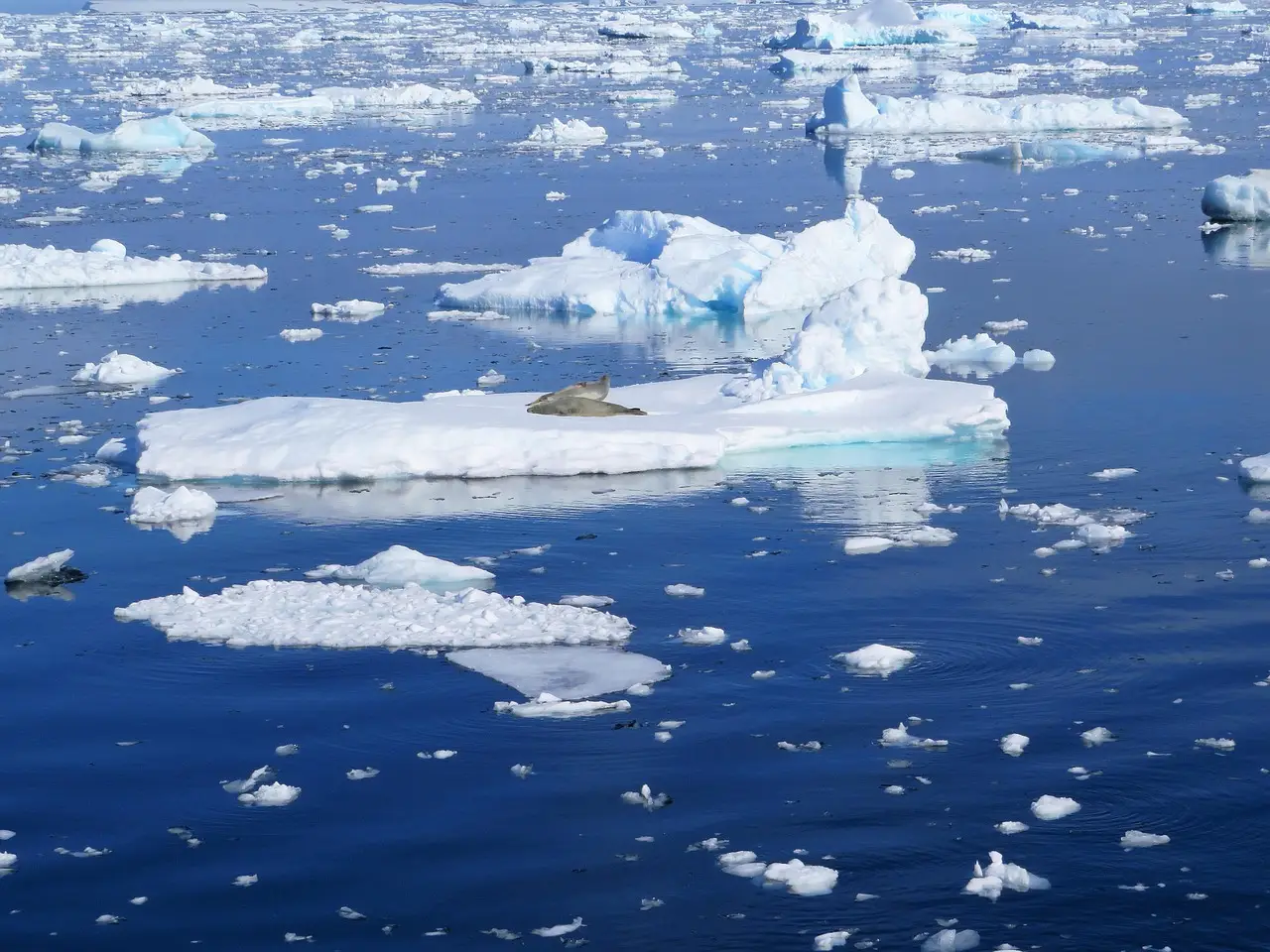
Iceberg A-81, a slab of Antarctic ice measuring roughly 1,550 square kilometers (600 square miles), reached the remote island of South Georgia in late October 2026 after a drift of 2,300 kilometers (1,400 miles) from its birthplace on the Brunt Ice Shelf.
NASA's Terra satellite captured the berg on October 20, 2026, sitting in dark open water just southwest of the snow-capped island, its progress noticeably slowed. Two ice watchers — Jan Lieser of Australia's Bureau of Meteorology and Christopher Shuman of the University of Maryland, retired — say the berg appeared to be bumping along the edge of South Georgia's shallow underwater shelf in the days before the image was taken.
The picture comes from MODIS, the Moderate Resolution Imaging Spectroradiometer, an instrument on Terra that images Earth's surface in moderate detail from orbit.
Why is South Georgia a iceberg trap?
The island has a record of stopping drifting ice dead. In 2025, the massive Iceberg A-23A ran aground on the same underwater shelf and later broke apart. A-81 may face a similar fate, though its exact future remains uncertain.
South Georgia sits in the South Atlantic, directly in the path of icebergs leaving the Weddell Sea, and its shelf rises close to the surface. That shallow ledge catches deep-drafted bergs like a submerged wall.
The takeaway: the island's hidden seafloor ledge is a proven iceberg stopper, and A-81 has just arrived at it.
How did the berg get there?
Some Antarctic icebergs linger near home for decades, running aground or circling the coast on local currents. A-81 took a faster exit along a route well traveled by the region's bergs.
Fast is relative, though. The timeline:
- January 2023: A-81 breaks free from the Brunt Ice Shelf.
- 2023 to May 2026: More than three years riding the clockwise-flowing Weddell Gyre along the Antarctic coast.
- May 2026: The berg reaches the tip of the Antarctic Peninsula.
- Late October 2026: It approaches South Georgia, 2,300 kilometers north-northwest of the Brunt Ice Shelf.
What took the calving so long?
Although A-81 traveled steadily once free, it was slow to be born. A rift in the Brunt Ice Shelf called Chasm 1 stayed roughly stable for about 35 years. Around 2012 it began growing again, and by 2019 the crack was advancing fast enough that a break seemed imminent. The floating glacial ice held on for several more years before finally letting go in January 2023.
Calving is a normal part of an ice shelf's life cycle. Scientists still watch Brunt closely.
Why do scientists watch the Brunt Ice Shelf?
The shelf has shed several large icebergs in quick succession, and it hosts the British Antarctic Survey's Halley Research Station, a major base for Earth, atmospheric and space science since the 1950s.
Recent calving events from Brunt:
- 2021: Iceberg A-74 calved from the North Rift. It has since broken up.
- January 2023: A-81 calved via Chasm 1 and drifted north.
- 2024: Iceberg A-83 calved from the Halloween Crack. It remains intact and is trailing A-81 northward.
A-83 isn't alone on that route. A handful of other icebergs also appear to be clearing out of the Weddell Sea, following the same well-worn path toward warmer waters.
The bottom line: Brunt's recent series of breakoffs is routine ice-shelf behavior, but the pattern matters for the researchers working on it — and for anyone tracking where its ice ends up next.
via modis.gsfc.nasa.gov (Original)
More from Elena Vasquez
Show full bio
Correspondent covering money, funding and market shifts around general science news at SciBeat.
288 articles
Nearby plates
- 76 km² Ice Island Breaks Off Greenland's Petermann Glacier
- Petermann Glacier Loses 76-Square-Kilometer Iceberg in August 2026
- A 76-Square-Kilometer Ice Island Breaks Free From Petermann Glacier
- NASA Satellites Catch a Skull in Antarctic Ice — and a Warning
- Antarctica's 'Doomsday Glacier' May Double Earlier Sea Level Rise Estimates