Plate Nº 12 · recorded October 27, 2026
Earth & ClimateReported finding
Lake Powell Rises Over 10 Feet, But Still 172 Feet Below Full Pool
October floods lifted Lake Powell more than 10 feet off its record low of 3,516.62 feet, but the reservoir still sits about 172 feet below full pool for 40 million water users.
By Marcus Bennett4 min read718 words
In brief
- Lake Powell rose more than 10 feet in one week, reaching 3,527.51 feet on October 27, 2026, after a record low of 3,516.62 feet in September.
- Full pool is 3,700 feet, last reached in 1983; capacity exceeds 23 million acre-feet.
- Lake Mead and Lake Powell hold nearly 60% of the Colorado River Basin's water for some 40 million people.
- A July 2026 Bureau of Reclamation report warned Lake Powell could reach dead pool by spring 2027.
- The San Juan River crested at a historic 21 feet during the October flooding.
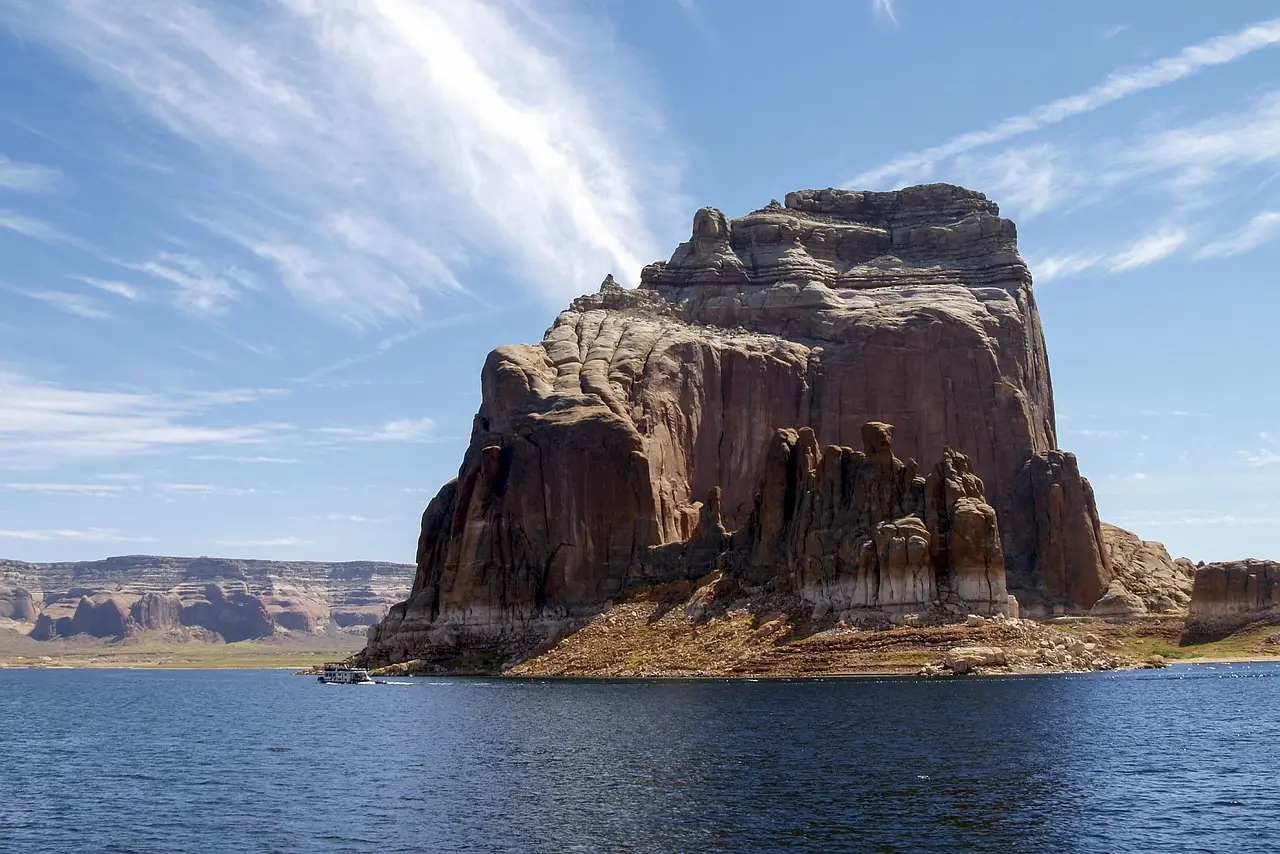
Lake Powell has risen more than 10 feet in a single week after heavy October rains flooded the Four Corners region, climbing from a record low of 3,516.62 feet to 3,527.51 feet as of October 27, 2026.
The recovery is real but modest. Full pool sits at 3,700 feet — a level the reservoir has not reached since 1983. Even with inflows still arriving from upstream rivers, the lake remains roughly 172 feet below capacity.
The rains that delivered the water came at a steep cost. Last week's storms brought major flooding to Hurricane, Utah, and to the San Juan River. WeatherNation reported on October 26 that the San Juan surged to a historic crest of 21 feet, overflowing its banks and leaving multiple communities underwater. KSL meteorologist Matthew Johnson wrote that an estimated 2 inches of rain fell between roughly 6:45 and 9:00 a.m. on October 22 on the headwaters of Gould Wash — enough to send a flood wave into the town of Hurricane.
Takeaway: a week of destructive storms bought Lake Powell about 10 feet of water, and forecasters expect another system this week.
Why did Lake Powell fall so low in the first place?
Lake Powell is not a natural lake. Workers completed Glen Canyon Dam on the Colorado River in 1963, creating a reservoir that stretches from Arizona into Utah inside the Glen Canyon National Recreation Area. At full capacity it ranks as the second-largest reservoir in the United States, behind Lake Mead, and holds more than 23 million acre-feet of water — about 28 billion cubic meters.
Several forces have drained it:
- Rising demand. A growing population draws on the Colorado River downstream, mostly for farming and, secondarily, drinking water.
- Climate change. Hotter weather speeds evaporation, cuts precipitation and shrinks the mountain snowpack that feeds the river.
- A dry winter. The 2025–2026 winter was exceptionally dry in the region, a major driver of this year's record low of 3,516.62 feet, set in September 2026.
Takeaway: long-term overuse and heat, plus one very dry winter, pushed the lake to its lowest point ever measured.
What is 'dead pool' and why does it matter?
Dead pool is the point at which water in a reservoir drops so low it can no longer flow downstream from the dam. Reaching it would cut off water for people and farmland downstream. Glen Canyon Dam also houses a turbine at its base; if levels fell far enough, the turbine would lose its ability to generate power.
A July 2026 report from the Bureau of Reclamation warned that Lake Powell could hit dead pool by spring 2027. Whether October's rains create enough of a cushion against that date remains an open question.
The stakes extend far beyond one reservoir. Lake Mead and Lake Powell together hold nearly 60% of the Colorado River Basin's water, and about 40 million people rely on it. Both lakes currently sit at their lowest levels in roughly 70 years. A July report put it plainly: "Lake Powell and Lake Mead essentially comprise one gigantic reservoir, separated into two parts by the Grand Canyon."
Takeaway: two linked reservoirs supply water for 40 million people, and one of them faced a projected dead-pool date in spring 2027.
What does El Niño change?
The rain may not be over. The region sits in an El Niño year — very likely a supercharged one — which could deliver more precipitation in the coming weeks and months. The monsoon season in the American Southwest has just ended, yet the El Niño rains appear to be making their biggest impact now.
More rain, however, does not automatically mean more stored water. Rain falling on the arid Southwest often runs off hard, packed ground rather than soaking in, which triggers flash flooding instead of recharging rivers and lakes. NOAA's U.S. Drought Monitor map, with data through October 20, 2026, still shows large areas of the western United States in short- and long-term drought.
Takeaway: El Niño may bring more storms, but bone-dry soil turns much of that water into flood risk rather than reservoir recovery.
Ten feet of gain against decades of loss: Lake Powell's climb is a cushion, not a comeback.
via colorado.edu (Original)
More from Marcus Bennett
Show full bio
News editor covering regulation, policy and their impact on general science news at SciBeat.
295 articles
Nearby plates
- Lake Powell Hits Record Low as Snow Drought Strains the Colorado River
- Elephant Butte Reservoir Falls to 1.4% Capacity, Its Lowest Level Since 1971
- Some rivers lost flow between 1951 and 2020 even as rainfall rose
- Hot Droughts Triple Extreme Downpour Frequency, Study Finds
- New Landslide Type Sends Permafrost Slabs Downhill