Recorded November 22, 2026
Space & AstronomyReported finding
Independent Check Confirms First Black Hole Image and Einstein's Relativity
A CSIRO team's machine-learning method GenDIReCT independently reproduced the 2019 Event Horizon Telescope image of M87*, confirming the black hole's ring and Einstein's general relativity.
By Nathan Brooks3 min read608 words
In brief
- The verification study was published in Nature on Wednesday, Nov. 11.
- M87* lies 55 million light-years away and has a mass about 6.5 billion times that of the sun.
- The EHT released the first black hole image in 2019 using an Earth-sized telescope network.
- GenDIReCT's model had no prior knowledge of what a black hole looks like, making it the first independent validation.
- Einstein's general relativity dates to 1915 and predicted black holes and their glowing plasma rings.
The first image of a black hole ever captured has passed its first truly independent verification, published Wednesday (Nov. 11) in the journal Nature. An Australian team reproduced the famous ring of M87* from raw data alone — and, in doing so, handed Einstein's general relativity another convincing win.
The original image, revealed in 2019, shows the supermassive black hole at the heart of the galaxy Messier 87, located 55 million light-years away. The object, designated M87*, weighs in at around 6.5 billion times the mass of the sun — roughly 6.5 billion suns compressed into a single object.
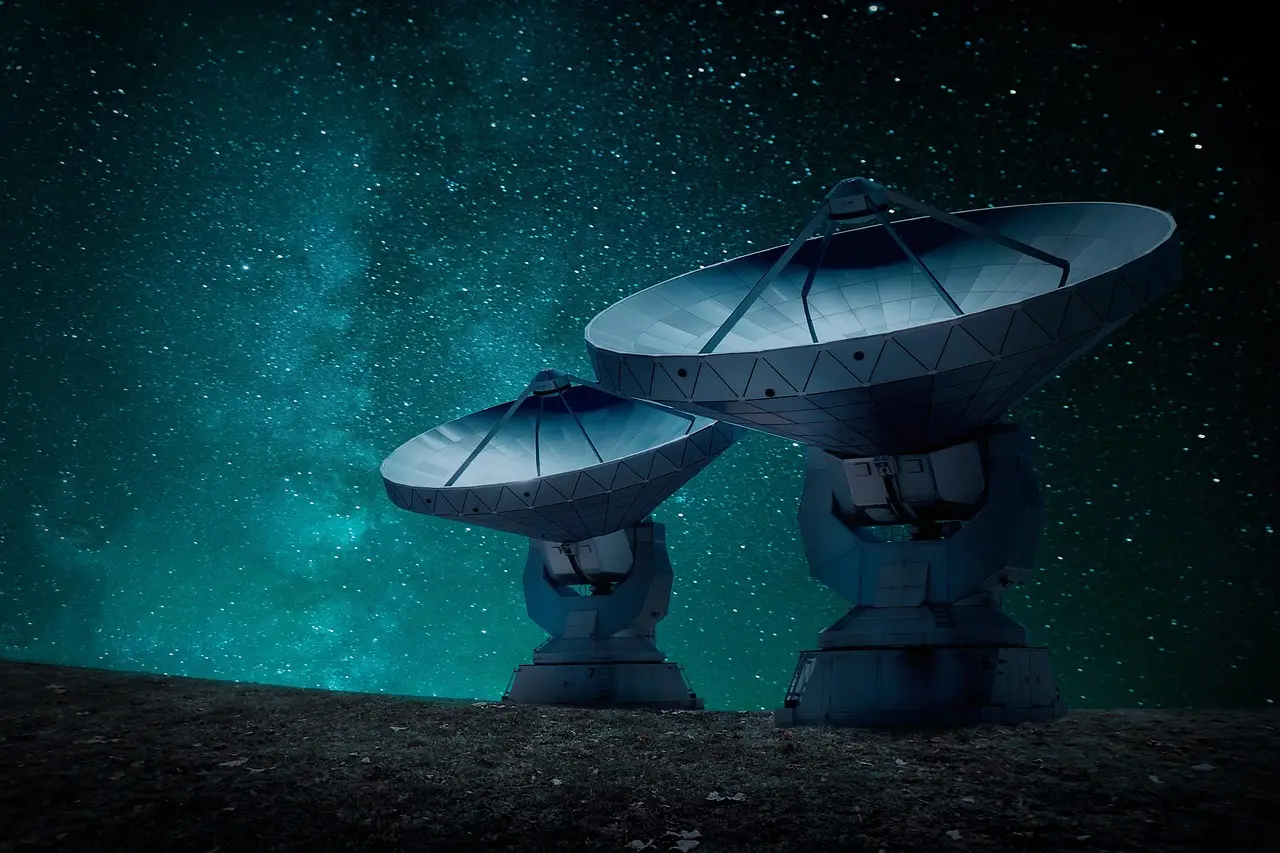
That achievement came from the Event Horizon Telescope (EHT), a global network of telescopes linked into one Earth-sized interferometer. But interferometer images don't come straight from a lens; they're reconstructed from data, and skeptics could reasonably ask how much the final picture depended on processing choices and atmospheric interference.
Why did the image need verifying?
Capturing M87* from Earth is absurdly hard. Team leader Samuel Lai, a researcher with Australia's Commonwealth Scientific and Industrial Research Organisation (CSIRO), put it plainly.
"It is like standing in your backyard and trying to take a photo of a doughnut on the moon," Lai said in a statement sent to Space.com via email.
Lai and his small team built a machine-learning technique called GenDIReCT. It extracts information about the black hole's structure while filtering out interference caused by observing M87* through Earth's atmosphere. It also corrects for biases introduced by stitching together telescopes into a single planet-scale instrument.
Crucially, the model started blind. "When we applied it to the original EHT dataset, we found a black hole almost identical in size and shape as the historic EHT image," Lai said. "Importantly, our model had no idea what a black hole looked like when we applied it to the M87 data. This is the first truly independent validation of the EHT image, an important step in the scientific process."
What does this mean for Einstein?
Einstein published general relativity in 1915, reshaping how we understand gravity. In his framework, objects with mass curve spacetime itself, and gravity arises from that curvature — the greater the mass, the more extreme the bend.
Taking that to its extreme, scientist Karl Schwarzschild solved Einstein's equations and found a region of infinite curvature: a singularity, wrapped in a boundary not even light can escape. That boundary, the Schwarzschild radius, became known as the event horizon. Black holes were effectively born on paper in 1915, decades before any were discovered and over a century before the EHT saw one.
General relativity also predicted what the neighborhood of an event horizon should look like: a ring of superheated, glowing plasma with the black hole's shadow cast upon it. Scientists were astounded at how closely the 2019 image matched that prediction, and the new verification solidifies the result further.
Laurent Loinard, Director of the EHT Collaboration, welcomed the check. "Independent validation is at the heart of the scientific process, and it is especially valuable for results as novel as those of the EHT," Loinard said. "Studies like this strengthen our confidence in what we have learned about black holes, and enrich the toolkit available to the whole community."
Could the technique have everyday uses?
Possibly. The CSIRO-developed method could find "down-to-Earth" applications such as improving medical imaging and mapping earthquakes, though these remain prospective uses rather than deployed tools.
For now, the result stands as a rare double confirmation: one instrument's landmark image, and one 110-year-old theory, both holding up under independent scrutiny.
via space.com (Source)
More from Nathan Brooks
Show full bio
Market editor covering companies, deals and strategy in general science news at SciBeat.
563 articles
Nearby plates
- Independent Check Confirms First Black Hole Photo Got It Right
- Independent Method Confirms the First Black Hole Image of M87*
- AI and the Largest 2D Map of the Universe Uncover 70 New Gravitational Lenses
- Euclid Telescope Logs Nearly a Billion Cosmic Objects in First Big Data Drop
- Faint Young Stars Suggest Messier 74 Is Nearly Twice as Large as Thought