Plate Nº 54 · recorded November 17, 2026
Space & AstronomyReported finding
Japan's Hayabusa-2 Changes Course Over Aging Engine Trouble
Japan's Hayabusa-2, plagued by engine malfunctions after 12 years in space, drops its 2031 asteroid target for a difficult 2028 flyby of a tiny dark space rock.
By Elena Vasquez3 min read616 words
In brief
- Hayabusa-2 abandoned its planned 2031 arrival at asteroid 1998 KY26, about 300 million km from Earth, after engine malfunctions.
- The probe will instead fly by asteroid 2015 BM510 in April 2028.
- The new target is 17–74 meters wide and rotates every 49 minutes.
- In July the probe made the closest asteroid approach ever recorded, passing 400 meters from a near-Earth asteroid.
- Hayabusa-2 returned pristine samples from asteroid Ryugu to Earth in 2020.
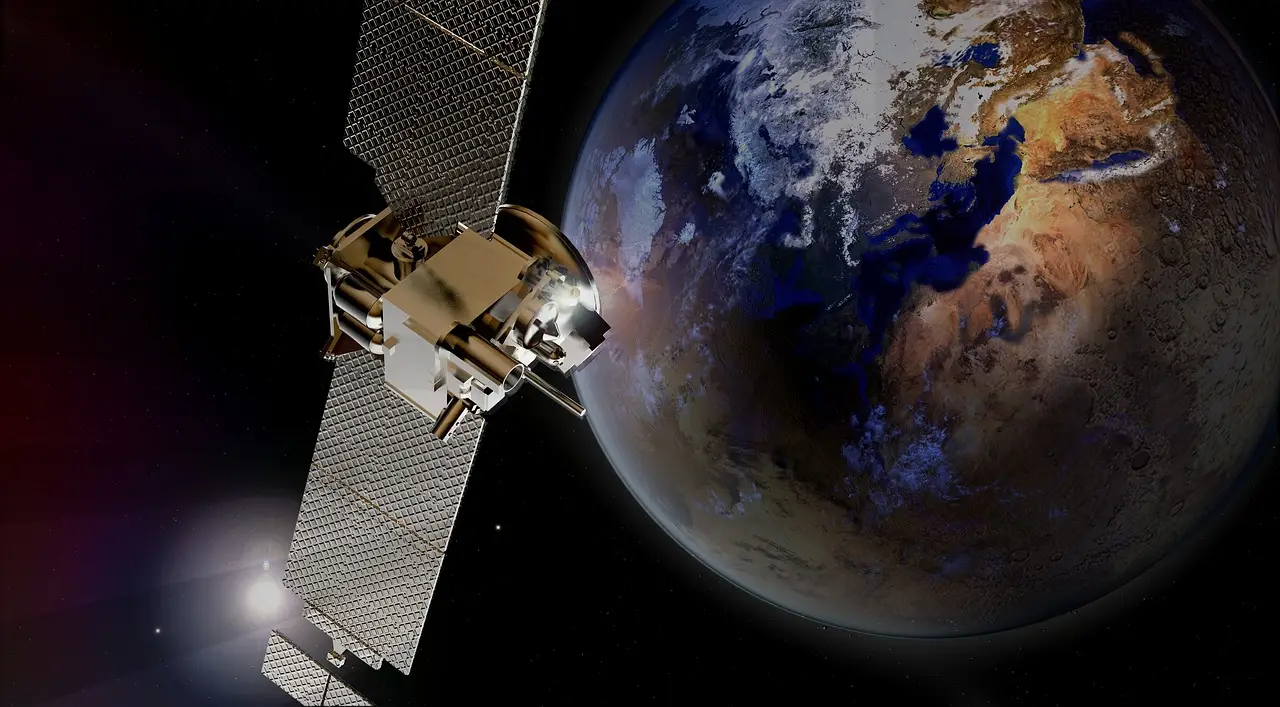
Japan's Hayabusa-2 probe has abandoned its planned 2031 rendezvous with asteroid 1998 KY26 after repeated malfunctions in its main engines, officials said Tuesday. The 12-year-old spacecraft will now attempt a fast flyby of a different small asteroid, 2015 BM510, in April 2028.
The Japan Aerospace Exploration Agency (JAXA) framed the revision as a safety call, not a failure. "The deterioration of the onboard equipment... is becoming increasingly evident," Yuya Mimasu, team leader of the extended mission, told reporters. With the main engines misbehaving again and again, "we decided to revise the plan to one that could be safely implemented," he said.
What has Hayabusa-2 already achieved?
The unmanned probe earned its place in space history before this detour. In 2020 it returned pristine materials from the asteroid Ryugu to Earth — dust and rock grains that scientists have mined for clues about the origin of life.
The extended mission added another record. In July, Hayabusa-2 flew within 400 meters (1,312 feet) of a near-Earth asteroid, the closest approach ever recorded in such a mission, according to JAXA.
From there the plan was ambitious: a journey to 1998 KY26, an asteroid that would sit roughly 300 million kilometers (186 million miles) from Earth when the probe arrived in 2031. That leg is now off.
Why did the mission change targets?
Age is the short answer. Hayabusa-2 launched 12 years ago, and the wear is showing in hardware that was never designed to run this long.
The probe's main engines have suffered repeated malfunctions, according to Mimasu. Rather than gamble a distant, engine-intensive rendezvous on failing equipment, the team chose a closer, faster encounter it can realistically pull off.
A flyby means the probe will pass close to its target at high speed rather than slowing down to orbit or land — a less demanding maneuver for tired machinery.
How hard is the new flyby?
By the team's own assessment, extremely. The new target, asteroid 2015 BM510, is small and reflects little sunlight, making it hard to spot and track.
"Because it is a dark, small asteroid... it will be one of the world's most difficult flyby missions," Mimasu said.
The numbers explain why:
- Diameter: between 17 meters (56 feet) and 74 meters (243 feet)
- Rotation: one full spin every 49 minutes
- Encounter window: April 2028
A dim object a few dozen meters across, tumbling every 49 minutes, gives the probe's cameras and instruments a narrow, fast-moving target.
Why does a small dark rock matter?
Beyond the engineering challenge, the revised mission has a practical payoff, Mimasu said. The data can support "future planetary defense" — missions designed to deflect asteroids that might otherwise collide with Earth.
Small near-Earth asteroids like 2015 BM510 are exactly the class of object that planetary defense researchers worry about, because they are numerous, hard to detect and capable of regional damage if they strike. Observing one up close, even at flyby speed, helps scientists understand how such bodies behave, rotate and reflect light.
What happens next?
Hayabusa-2 now charts a course for the 2028 encounter, running on hardware its engineers never expected to still be using. JAXA has not detailed a backup plan if the engines degrade further, and flybys of dim, fast-spinning targets carry real risk of a miss.
Still, the probe's track record — a sample return from Ryugu and a record-close asteroid approach in July — gives the team grounds for confidence. In plain terms: a 12-year-old spacecraft with failing engines is trading a far-off prize for a nearer, harder one, and it may still teach us how to protect Earth.
via phys.org/rss-feed/ (Source)
More from Elena Vasquez
Show full bio
Correspondent covering money, funding and market shifts around general science news at SciBeat.
503 articles
Nearby plates
- Europe's Hera Spacecraft Begins Close Investigation of NASA-Impacted Asteroid
- NASA Joins Japan's MMX Mission to Bring Home a Piece of Phobos
- Hera spacecraft will fire 3 thrusters for 93 minutes to brake toward asteroid
- Simulated collisions show how Phobos could preserve Martian rocks
- NASA Details Its Role in Japan's Mission to Mars's Moons