Plate Nº 33 · recorded November 10, 2026
Space & AstronomyReported finding
JWST's Little Red Dots May Be Black Holes Older Than Stars
A June Physical Review Letters study models QSO1, a Little Red Dot 13.1 billion light-years away, as a primordial black hole that grew by swallowing gas.
By Nathan Brooks3 min read682 words
In brief
- The study, published in June in Physical Review Letters, examined QSO1, a Little Red Dot 13.1 billion light-years from Earth.
- QSO1 is seen as it was just 700 million years after the Big Bang and is composed almost entirely of hydrogen and helium.
- Primordial black holes were first proposed by Stephen Hawking in the 1970s; none have been confirmed.
- Of three modeled scenarios, the most likely has a smaller primordial black hole growing to QSO1's size by consuming gas and energy.
- The team next plans to study the roughly 100 other Little Red Dots observed by JWST.
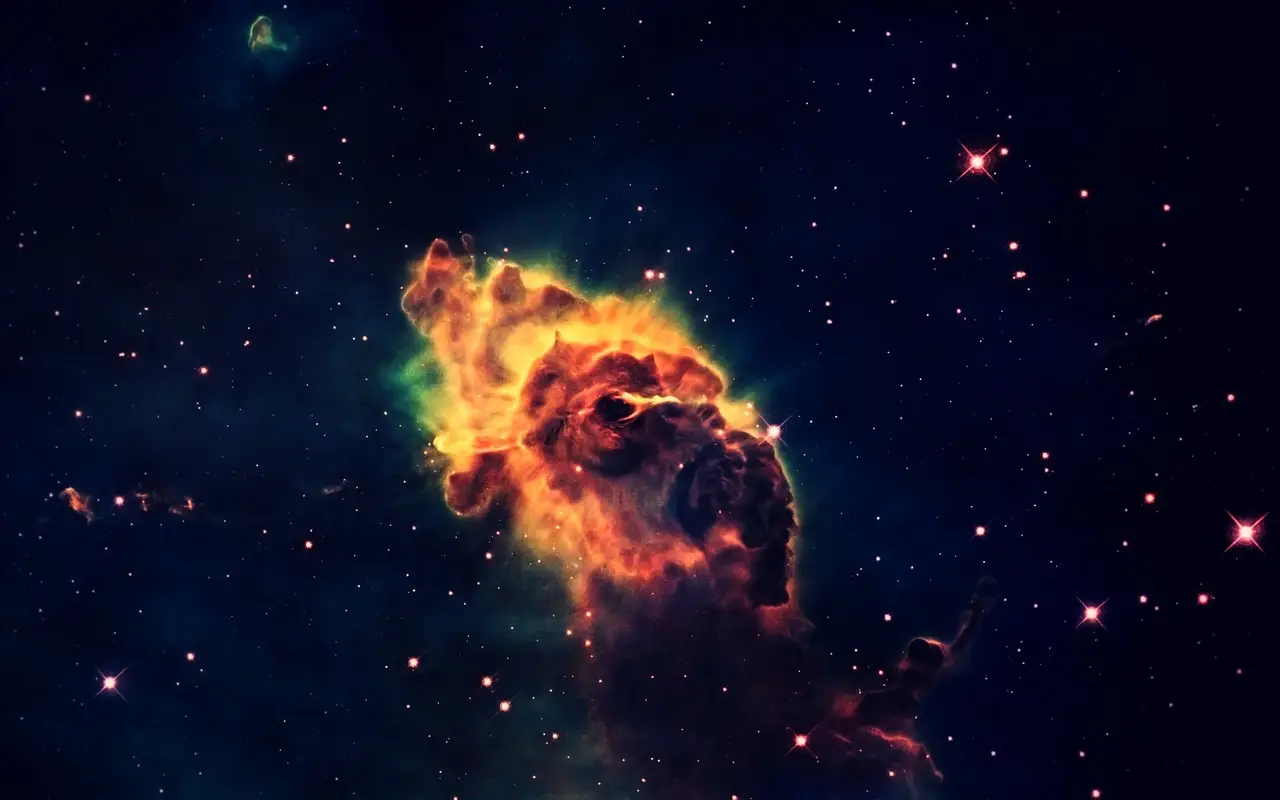
A cosmic object 13.1 billion light-years from Earth may be one of the universe's oldest black holes — one born before the first stars ever lit up. That's the conclusion of a study published in June in the journal Physical Review Letters, which used James Webb Space Telescope (JWST) data to test whether a mysterious "Little Red Dot" could host a so-called primordial black hole.
"The door was open on this theory — that Little Red Dots could be primordial black holes," team member Loris Del Grosso of Johns Hopkins University said in a statement. "We've now cracked it open a little farther by showing some scenarios are more likely than others."
What are Little Red Dots?
Ever since NASA's JWST began observing the early universe, it has produced almost as many surprises as answers. One of the biggest is a class of compact red objects nicknamed Little Red Dots — cosmic bodies that seem to vanish entirely before the universe reaches two billion years of age.
The new research suggests these objects may be connected to primordial black holes. Unlike ordinary black holes, which form when a massive star dies and collapses, primordial black holes would have been born from fluctuations in the density of matter just after the Big Bang, in the earliest moments of cosmic history.
"A black hole is an object born from the gravitational death of a star. Primordial black holes are a very different story," study team member Valerio De Luca, of Johns Hopkins University's Department of Physics and Astronomy in Maryland, said in a statement.
"They come from the physics of the early universe that predates the first stars, when the universe was expanding exponentially in time and space. So the mechanisms for creating primordial black holes are different," De Luca added.
If they exist, primordial black holes would predate stars, galactic dust particles, and every element heavier than hydrogen and helium.
Why QSO1 stood out
Scientists have theorized about primordial black holes since Stephen Hawking first proposed them in the 1970s, but no hard evidence has surfaced. A key problem: telling a primordial black hole apart from a "traditional" astrophysical one, which forms from a supernova.
"Little Red Dots could surround astrophysical black holes, and most probably many of them do, but they could also be primordial black holes, if primordial black holes exist," De Luca said. "So the question becomes, Which ones are primordial and how can we tell?"
The team focused on a Little Red Dot called blackAbell 2744-QSO1, or QSO1, seen as it was just 700 million years after the Big Bang. What makes it unusual is its composition: it's almost entirely hydrogen and helium, the universe's first elements. That could make it more unspoiled and primordial than other Little Red Dots.
What did the models show?
The researchers modeled how a Little Red Dot like QSO1 could form from a primordial black hole. The circumstances would have to be very specific, because primordial black holes face strict limits from cosmological observations.
"There are constraints on primordial black holes from cosmological observations," Del Grosso said. "There can only be so many primordial black holes in the universe, for example, and there cannot be too many of them in a given cluster."
After considering three possible scenarios, the team found the most likely one is a smaller primordial black hole consuming surrounding gas and energy until it grew to QSO1's size.
What comes next?
The findings are preliminary — a modeled result for a single object, not a confirmed detection. Next, the team plans to examine the other 100 or so Little Red Dots JWST has spotted, to determine how many could have started life as primordial black holes.
A confirmed case would be a landmark. "We don't have a clear understanding of what happens in the early universe right after the Big Bang," De Luca concluded. "If primordial black holes do exist, then something had to happen to make them in the first place, which would be a groundbreaking discovery in physics."
via space.com (Source)
More from Nathan Brooks
Show full bio
Market editor covering companies, deals and strategy in general science news at SciBeat.
325 articles
Nearby plates
- JWST's Little Red Dots May Be Black Holes Growing Faster Than Today's
- Webb’s “little red dots” may hide newborn supermassive black holes
- Early-Universe Star Collisions Can Build 100,000-Sun Stars
- Early star collisions may seed supermassive black holes
- Primordial black holes could shift into five dimensions, math suggests