Plate Nº 79 · recorded November 11, 2026
Space & AstronomyReported finding
Webb’s “little red dots” may hide newborn supermassive black holes
A 2026 simulation study links Webb’s “little red dots” to 10-million-solar-mass black holes forming within dense gas disks in compact, ancient galaxies.
By James Calloway4 min read806 words
In brief
- JWST observations have revealed hundreds of compact, bright “little red dots.”
- The proposed black holes weigh about 10 million times the Sun’s mass.
- Each simulated host contains about 100 million stars within roughly 500 light-years.
- The model targets black holes formed less than 1 billion years after the Big Bang.
- The paper was published in The Astrophysical Journal Letters in 2026.
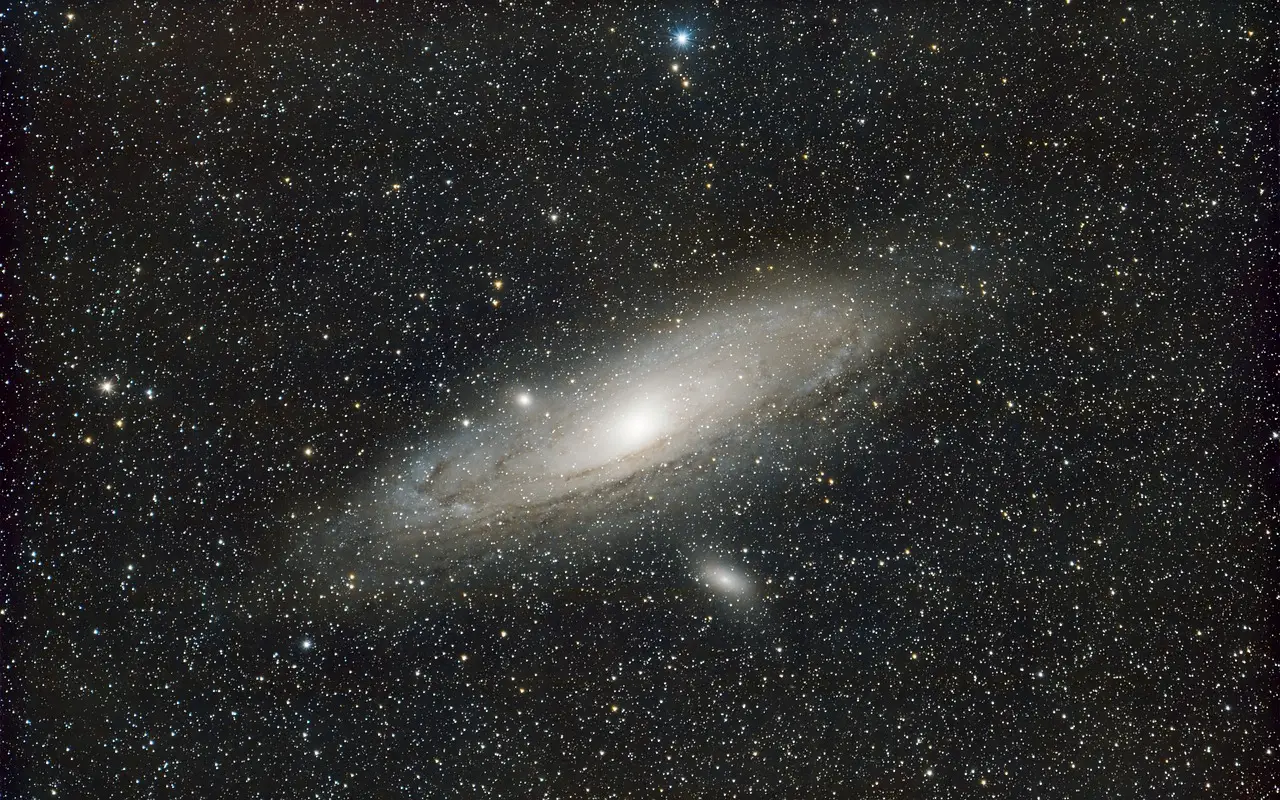
A 2026 simulation study gives Webb’s mysterious “little red dots” a plausible origin: primeval, or very early, galaxies with central black holes of about 10 million times the Sun’s mass, still wrapped in the dense gas that made them.
That is a model-based explanation, not a confirmed identification. The team reproduced several traits that have troubled astronomers, offering a route by which some of the universe’s largest black holes formed less than a billion years after the Big Bang. Promising, still not proof.
By James Calloway
What are Webb’s “little red dots”?
Since Webb began looking deeper into the cosmos than ever before, astronomers have found hundreds of compact, bright objects that appear as tiny red specks in the early universe. They resemble nothing predicted by existing theories, and their compact size clashes with their extraordinary brightness.
Dr. Daniel Whalen, lead author from the University of Portsmouth’s Institute of Cosmology and Gravitation, said:
“LRDs have been one of the most surprising discoveries made by the James Webb Space Telescope. They are compact, only a few hundred light-years across, but are as bright as much larger galaxies, and their unusual V-shaped spectra have defied the usual astrophysical explanations.”
Whalen also noted the lack of detectable X-ray and radio emissions, which left astronomers struggling to identify the objects. A spectrum shows how light is distributed across wavelengths; the dots’ unusual V-shaped pattern has resisted standard explanations.
How could gas hide a black hole?
Using advanced cosmological simulations—computer models that follow possible structures in the universe—the team found that LRDs are likely primeval galaxies hosting massive black holes produced by the collapse of supermassive primordial stars. The black holes remain inside enormous disks of gas that created them, hiding much of their activity from view.
The simulations produced several specific features:
- Black-hole mass: Each central black hole has a mass of around 10 million times that of the Sun.
- Gas shield: Dense surrounding gas traps high-energy X-rays while allowing some ultraviolet, visible and infrared light to escape.
- Blue component: A large neighboring cluster of stars in the small galaxy produces the blue portion of the spectrum, explaining another persistent feature of LRDs.
- Crowded host: The simulated systems contain dense clusters of roughly 100 million stars within a region only about 500 light-years across, matching what astronomers observe in real LRDs.
Together, those features naturally recreate the unusual light signatures detected by Webb. The model does not require a naked, flaring black hole. Its gaseous covering conceals much of the activity while selected light escapes, producing the combination of brightness, color and spectrum that observers recorded.
How does the model fare against older ideas?
The new explanation competes with several earlier possibilities:
- Compact collections of stars
- Heavily obscured black holes
- Supermassive stars
- Hypothetical exotic objects called “black hole stars”
None of those ideas fully explained the objects’ formation, how common they are, their lifespan or their unusual spectral signatures, according to the study’s account.
The new model successfully reproduces the properties of a wide variety of LRDs observed by Webb, including some of the most distant and extreme examples ever found. That is a broader match, though a good fit is not a unique fingerprint. No direct detection of a black hole inside an LRD is reported here; the evidence described is the agreement between simulated and observed properties.
Whalen framed the larger implication this way:
“What makes this discovery so exciting is that we may be witnessing the birth of the first supermassive black holes. For decades, simulations have predicted that these objects should exist, and now the James Webb Space Telescope may finally be allowing us to see them.”
His wording carries the caution. The simulations show that such objects can exist and resemble LRDs. They do not, by themselves, establish that every red dot Webb has found contains a newly formed black hole.
What does this change for the search for early black holes?
For astronomers studying the first supermassive black holes, the change is concrete: LRDs become a candidate population for observing their birth rather than an unidentified class of unusually bright red sources. The proposed mechanism also supplies numbers to check, including a black-hole mass near 10 million Suns and a host galaxy containing about 100 million stars within roughly 500 light-years.
The result remains a simulation-backed interpretation. Until observations confirm the concealed black holes and distinguish them from competing explanations, the dots remain candidates, not settled discoveries. The study narrows the mystery; it does not close it.
The findings appear in Daniel J. Whalen et al., “Little Red Dots are Direct-collapse Black Hole–forming Galaxies,” published in The Astrophysical Journal Letters in 2026. The paper’s DOI is 10.3847/2041-8213/aeb37a.
via phys.org/rss-feed/ (Source)
More from James Calloway
Show full bio
Staff writer covering regulation, policy and their impact on general science news at SciBeat.
346 articles
Nearby plates
- JWST's Little Red Dots May Be Black Holes Growing Faster Than Today's
- JWST's Little Red Dots May Be Black Holes Older Than Stars
- Early-Universe Star Collisions Can Build 100,000-Sun Stars
- Webb Captures a Turbulent Star Nursery 161,000 Light-Years Away
- Early star collisions may seed supermassive black holes