Plate Nº 92 · recorded November 13, 2026
Biology & EvolutionReported finding
Largest mutation study challenges claim vital genes mutate less
A 2026 analysis of spontaneous mutations in E. coli and baker’s yeast found no evidence that vital genes change less often, challenging a claim first proposed in 1972.
By James Calloway4 min read850 words
In brief
- A 2026 PLOS Biology paper found no lower mutation rates for important genes in E. coli or baker’s yeast.
- The dataset was the largest collection yet of spontaneous mutations in the two microorganisms.
- Three separate tests found no evidence that natural selection had substantially skewed the data.
- The disputed claim dates to 1972 and resurfaced in 2023.
- Genes copied later during DNA replication tended to mutate more frequently.
By James Calloway
A 2026 analysis of the largest collection yet of spontaneous mutations in two microorganisms found no lower mutation rates for important genes.
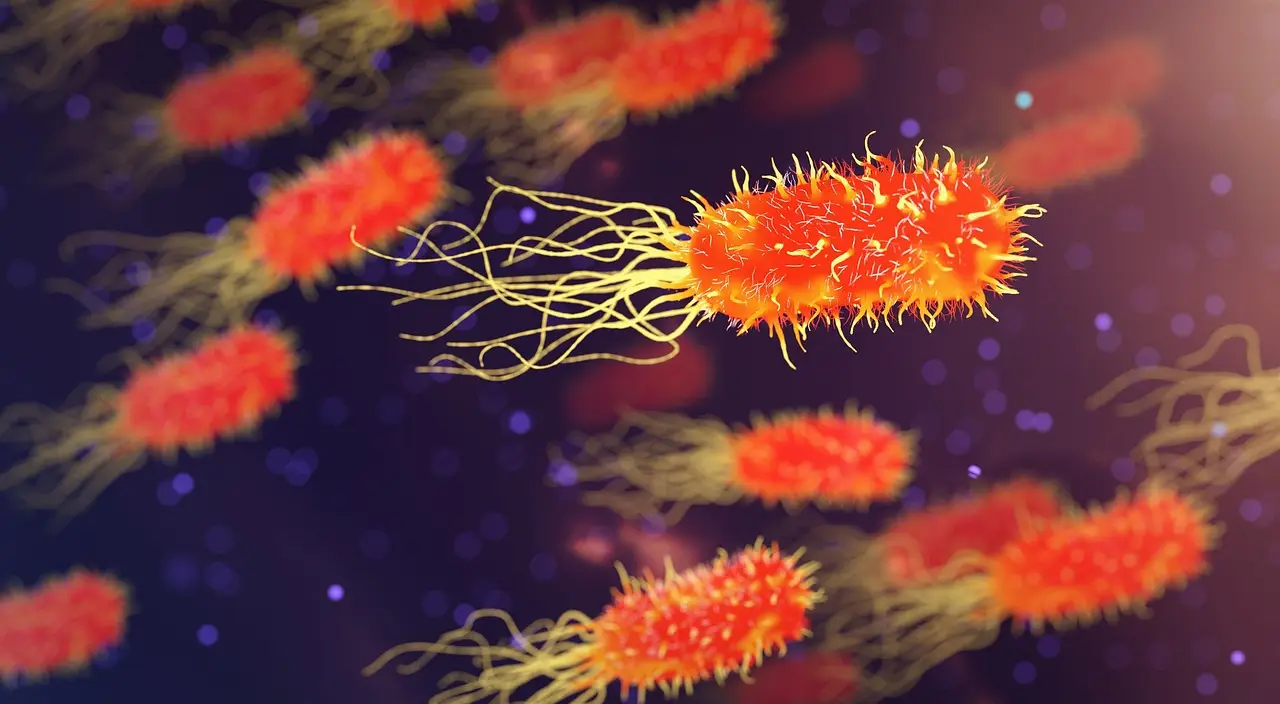
The organisms were the bacterium Escherichia coli, commonly called E. coli, and the single-celled fungus baker’s yeast, Saccharomyces cerevisiae.
The study, published in PLOS Biology, tests a claim first proposed in 1972: natural selection may protect genes essential to survival by reducing their mutation rates. Dr. Sofia Radrizzani, who co-wrote the paper as part of her Ph.D., and Professor Laurence D. Hurst, both from the University of Bath’s Center for Evolution, conducted the research.
What did the 2026 study find?
Dr. Sofia Radrizzani said: “The claim that mutation is slower for important genes is a triumph of hype over substance.” The study found no support for that claim in either microorganism tested.
Hurst said: “Analyze the data any which way and we found nothing. In neither species did these key genes have a lower mutation rate.”
The dispute is much older than the paper. The idea first surfaced in 1972 and returned in a prominent form in 2023. Radrizzani described it as an old suggestion routinely reinvented in various forms. The new study tests the evidence behind that repeated claim.
The case for protecting important genes
Classical evolutionary theory treats evolution as a two-step process. Mutation generates genetic variation, and natural selection then favors some variants over others. Selection works like a sieve: it traps larger objects while letting finer ones through.
Darwin’s finches, first encountered by Charles Darwin on the Galápagos Islands in 1835, provide a familiar example. Random mutation generates beaks of different sizes. When conditions favor particular foods, birds whose beaks suit those foods are more likely to survive and reproduce, making the traits more common over generations.
Some researchers have proposed that mutation is not as random as the classical picture assumes. In their account, genes involved in copying DNA or maintaining basic cellular machinery receive protection, while genes where mutations could aid adaptation may change more often. Examples include bacterial antibiotic resistance and changes in beak dimensions.
That protection idea sounds compelling: mutations in an important gene can cause serious harm or genetic disease, so a lower mutation rate might benefit the organism. The snag is quantitative. Individual genes already mutate at very low rates, and lowering those rates further would bring little benefit. That makes it difficult for natural selection to favor such a system.
How earlier studies may have been misled
Hurst said harmful mutations should disappear rapidly when they occur in more important genes. Their disappearance before measurement can make those genes look as though they mutate less often. He called these missing events “ghost mutations.”
Previous studies may therefore have underestimated how often important genes mutate. A mutation removed before anyone analyzes it leaves no trace in the observed data, so researchers can mistake selection’s filtering for a lower underlying mutation rate.
How the researchers tested the claim
The researchers used mutation-accumulation experiments in E. coli and baker’s yeast. These experiments minimize natural selection’s effects. Three separate tests found no evidence that selection had substantially skewed the results.
Radrizzani described the dataset as the largest and cleanest sample of mutations assembled to date. That distinction matters for a claim about mutation itself, rather than about which mutations survive long enough to count.
The team then compared mutation rates with experimental evidence showing what happens when individual genes are removed. Some genes are essential, meaning that removing them kills the cell; others have little or no effect when removed. In neither species did the key genes show a lower mutation rate.
They also tested two other measures of importance: how much protein a cell produces from a gene, and the strength of natural selection acting on it over evolutionary time. Genes making more abundant proteins did not have lower mutation rates. Neither did evolutionary history predict mutation frequency. None of the proposed importance-based measures predicted which genes would have high or low mutation rates.
The study did identify known structural influences. Genes copied later during DNA replication tended to mutate more frequently. Those differences did not support the idea that a gene’s importance determines its mutation rate.
What does this change?
For scientists studying mutation and selection, the practical conclusion is that gene importance alone cannot predict mutation rate in the two microorganisms tested. Models that retain the protection idea would need to explain both ghost mutations and the new results.
Scope still matters. The study tested E. coli and baker’s yeast, so it does not settle the question for every organism. It also does not show that every gene mutates at the same rate; the researchers did find structural differences. Within their data, however, the proposed exception to the conventional evolutionary model did not hold up. Hurst said the findings provide no grounds for a shift in paradigm.
Publication: Sofia Radrizzani et al., “The importance of genes does not predict their mutation rate,” PLOS Biology (2026). DOI: 10.1371/journal.pbio.3004089.
via phys.org/rss-feed/ (Source)
More from James Calloway
Show full bio
Staff writer covering regulation, policy and their impact on general science news at SciBeat.
352 articles