Recorded November 27, 2026
Earth & ClimateReported finding
Latin America urban mobility lagged pre-pandemic levels into 2022
More than 170 million Facebook mobility records show dense urban areas in Argentina, Chile and Colombia stayed below pre-pandemic levels two years in, with affluent areas lagging furthest behind.
By James Calloway4 min read760 words
In brief
- More than 170 million anonymized Facebook mobility records analyzed from April 2020 to May 2022
- Colombian movement remained 25%–50% below pre-pandemic levels, with the longest-lasting declines in the most affluent areas
- The wealthiest third of communities in Argentina, Chile and Colombia had not returned to pre-pandemic mobility by May 2022
- Dense urban areas saw sharper declines and slower recovery than less densely populated ones in all three countries
- Study published in Nature Communications (2026) by the University of Liverpool's Geographic Data Science Lab
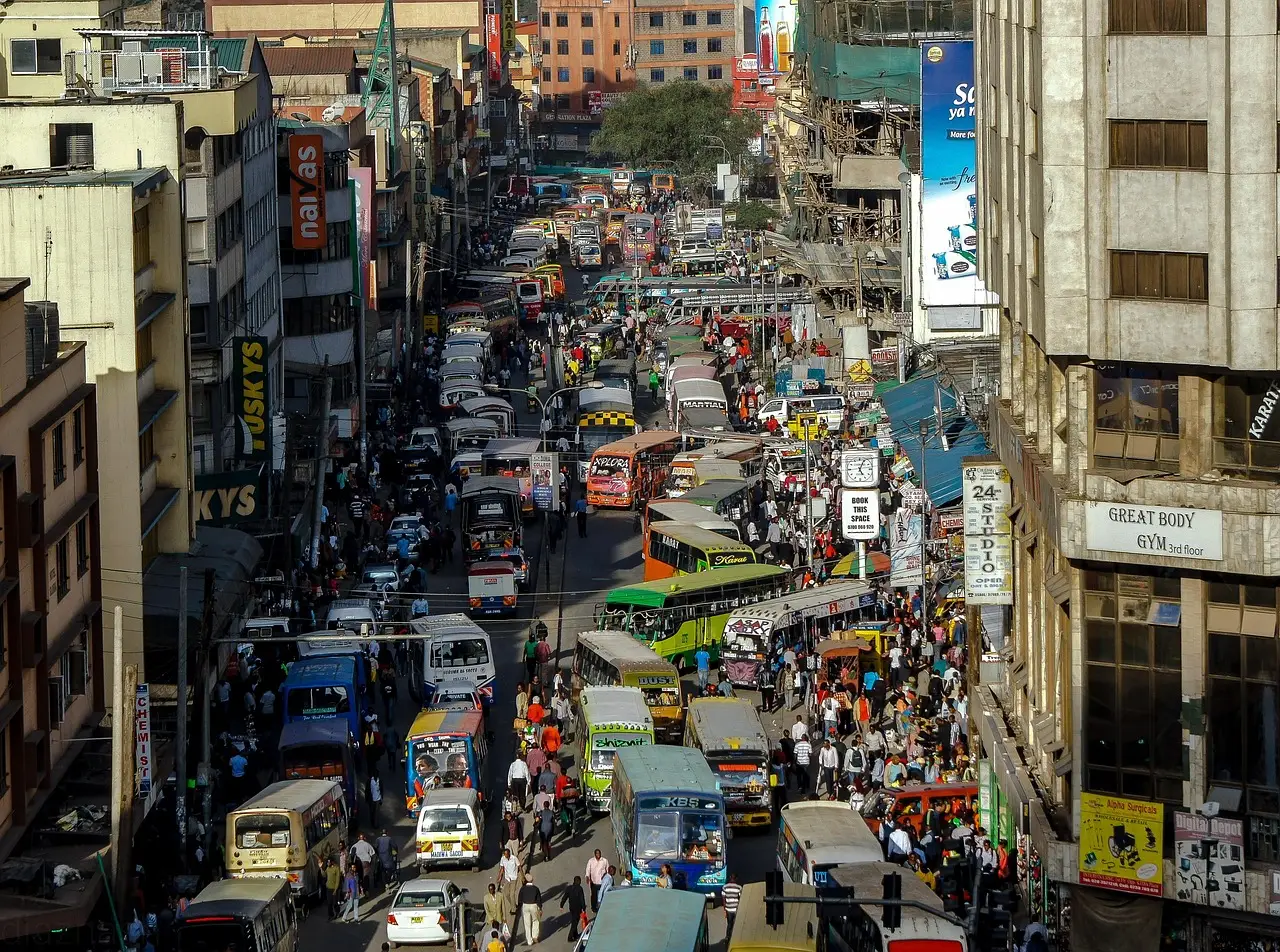
More than 170 million anonymized Facebook mobility records show that movement in dense urban areas across Argentina, Chile and Colombia stayed below pre-pandemic levels two years after COVID-19 hit, and the wealthiest neighborhoods recovered slowest.
Researchers at the University of Liverpool's Geographic Data Science Lab, which combines geographic data science with statistical modeling, published the analysis in Nature Communications (2026). Their paper, "Sustained changes to urban mobility after COVID-19 reinforced socioeconomic inequalities in Argentina, Chile and Colombia," draws on anonymized, aggregated records supplied through Meta's Data for Good initiative, covering April 2020 to May 2022.
What did the researchers actually measure?
Everyday movement inside each country's borders. The team compared mobility levels with prepandemic baselines, then checked how those patterns lined up with population density and deprivation, analyzing each of the three countries separately.
- 170 million-plus anonymized, aggregated Facebook mobility records
- April 2020 through May 2022, covering Argentina, Chile and Colombia
- Mobility compared against prepandemic baselines, then against population density and deprivation
- Movement assessed within national borders, with each country analyzed separately
Two findings dominate. Across all three countries, mobility declined more sharply and recovered more slowly in densely populated areas than in less densely populated communities. And in Colombia, movement stayed 25%–50% below prepandemic levels, with declines that persisted longest in the most affluent areas.
Where the gap opened widest
By May 2022, the wealthiest third of communities in all three countries had yet to return to prepandemic mobility levels, while recovery elsewhere had moved further along.
Mobility did rise gradually across most areas. What didn't change was the ranking. Differences established in the early stages of the pandemic persisted across the full two-year window, which suggests the initial disruption left a lasting mark on how people moved.
What the authors say
Dr. Carmen Cabrera, a senior lecturer in geographic data science at Liverpool and the study's lead author, put it this way: "Major global shocks such as the COVID-19 pandemic can deepen existing inequalities in how people move around."
She added that mobility "remained disrupted in multiple Latin American countries two years after the pandemic began, especially in densely populated urban cores and affluent areas," and that the early disparities held on: "Although mobility increased at broadly similar rates across different communities, some of the disparities that emerged early in the pandemic remained."
Francisco Rowe, a population data scientist and leader of the Geographic Data Science Lab, framed the stakes for planners: "Our findings have important implications for how cities prepare for and respond to future disruptions."
He also pointed out that "People do not all have the same freedom to reduce their travel." Policies that support remote work and digital access, he said, "must therefore be matched by investment in affordable, reliable and accessible transportation and services for those who need them."
What does this change for people who still travel every day?
Plainly: cities have to pay for the trips that remote work doesn't cancel. That is the practical test the study raises, and the data show how wide the gap sits — wide enough, in Colombia's case, to leave a quarter to a half of pre-pandemic movement missing in the places where it lasted longest.
The study's own answer is the second half of Rowe's point: affordable, reliable, accessible transport for the residents who cannot shrink their travel. Skip that, and the split the researchers document becomes a planning problem, not a curiosity.
What the data can't tell us
Caveats first. Facebook users don't fully represent the wider population, and the researchers say they took steps to minimize biases stemming from that gap. The dataset also stops in May 2022, while the paper appears in 2026, so the numbers describe a moment several years back rather than today's streets.
And the records capture movement itself, not the reasons behind it. They show where people traveled less and where they traveled more. They don't explain why.
What they do show, consistently across three countries and more than two years of records, is that the pandemic's first shock left a lasting mark on daily mobility — widest in dense urban cores, and longest-lasting in the wealthiest districts. The DOI is 10.1038/s41467-026-79361-4.
The claim is narrower than "the pandemic rewrote Latin American life," and harder to dismiss. In three countries, movement two years in had not returned to where it started, and the neighborhoods with the most resources stayed down the longest.
via phys.org/rss-feed/ (Source)
More from James Calloway
Show full bio
Staff writer covering regulation, policy and their impact on general science news at SciBeat.
625 articles
Nearby plates
- Tracking 4,581 Animals Reveals a Hidden Human Effect on Wildlife
- App data improved French vote-share model fit by 28% in 2024
- Detroit-area park visits halve at 2 miles, study of 20 metros finds
- GTA V simulations map two sea-level rise futures for Los Santos
- Majority-Asian neighborhoods have 4.2 times the odds for a data center