Recorded November 27, 2026
Earth & ClimateReported finding
Magma-salt tests unify three iron ore formation models
Lab tests at 1,000–1,200°C suggest magma, molten salt and hot fluids can work together to form iron oxide-apatite deposits, offering a unified model for mineral exploration.
By Nathan Brooks3 min read684 words
In brief
- Piston-cylinder experiments ran at 0.4 GPa and 1,000–1,200°C.
- A 2026 Geology paper identifies three cooperating ore-forming processes.
- El Laco in Chile is cited as an example of the process 2 million years ago.
- Global iron ore production is about 2.5 billion metric tons annually.
- Australia, Brazil, China and India produce more than three-quarters of the world's iron ore.
What did the experiments show?
A 2026 Geology study found that three processes once treated as competing explanations can operate together to form iron oxide-apatite, or IOA, deposits. The work brings together magmatic immiscibility, meaning magma separating into portions that do not mix, salt melts and hydrothermal fluids, meaning hot water carrying dissolved minerals.
Researchers from the Institute of Geology and Geophysics at the Chinese Academy of Sciences led the project with the Research School of Earth Sciences at the Australian National University. They used piston-cylinder equipment, a laboratory device that compresses samples, at 0.4 gigapascals and temperatures of 1,000 to 1,200 degrees Celsius.
The pressure was close to conditions deep in Earth's crust where commercial-scale iron ore deposits form. Their experiments suggested one integrated system and offered a simple explanation for a common field observation: IOA deposits tend to occur with evaporite, or salt-bearing sedimentary rock, and sedimentary rocks containing iron oxides and phosphorus.
"Previous experimental work typically tested one ore-forming process at a time," said lead author Dr. Shengchao Yan. "Our work shows that magmatic immiscibility, salt melts and hydrothermal fluids can all operate together, driven by magma interacting with evaporite-bearing wall rocks."
How does the salt-lake scenario fit?
Experimental geologist Dr. Michael Anenburg from ANU said: "Many disagree on how they form. But what if various forces were at work simultaneously?" He used a hypothetical ancient volcano erupting through a salt lake, neither of which exists today, and said their interaction may have produced valuable mineral deposits.
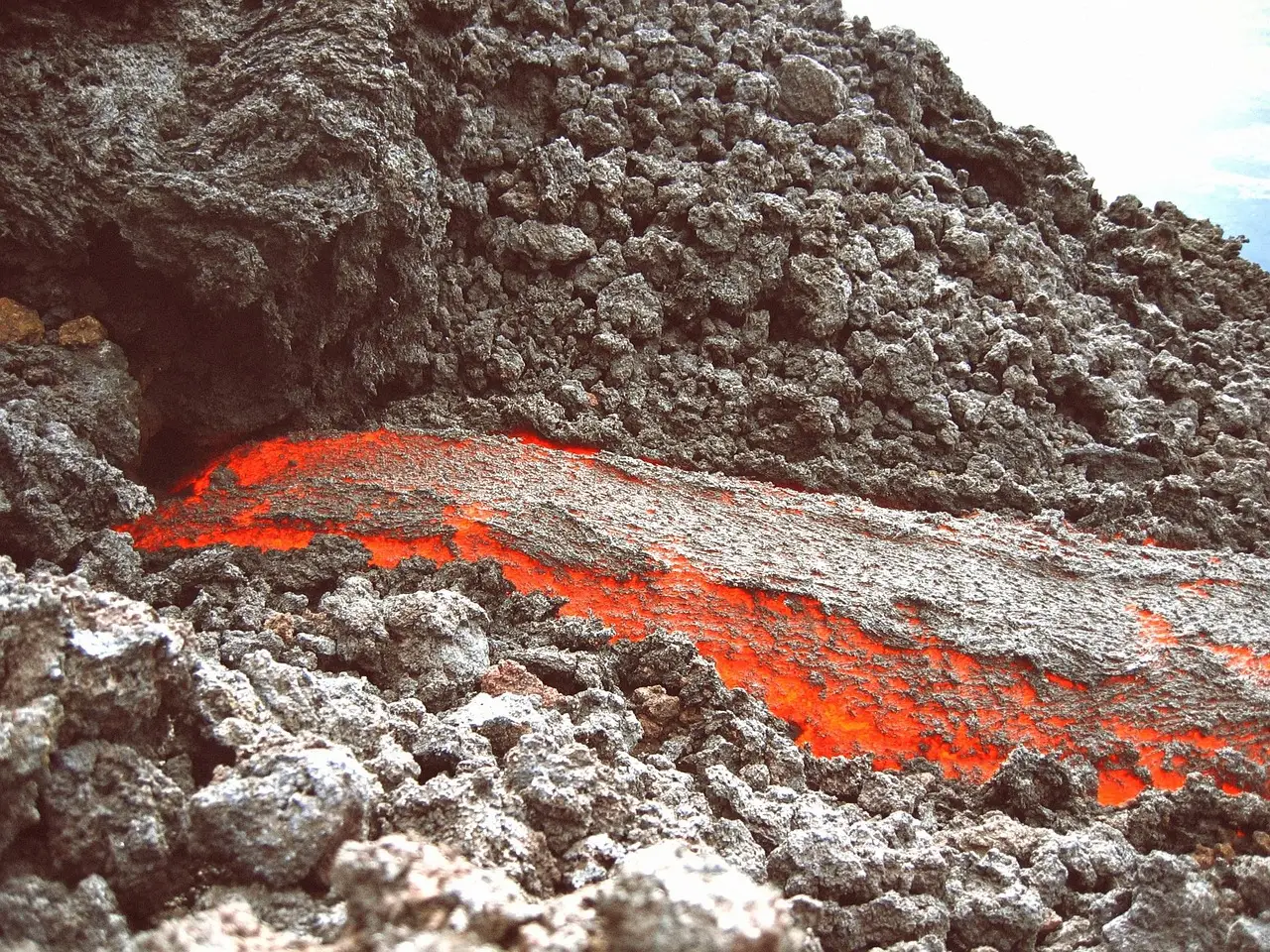
"These geological events also occurred around the world in different geological times—2 million years ago at El Laco in Chile, for example," Anenburg said. El Laco sits in the high Andes of northern Chile's Antofagasta Region and contains massive ore bodies formed from iron-rich magnetite, an iron oxide mineral, in lava flows and from pyroclastic deposits, fragmented volcanic material.
What does the unified model resolve?
Geologists have debated how IOA deposits form for decades. Existing models each describe one isolated ore-forming mechanism, and no single hypothesis explains all the geological features found in natural deposits.
The new framework connects those competing accounts through magma reacting with salt-rich wall rock and iron oxide-rich, phosphorus-bearing sediment. The authors say this advances understanding of critical mineral deposits and can reduce risk in global exploration for IOA systems.
The findings do not mean most iron ore comes from IOA deposits; most does not. Nor do they explain the origin of Kiruna and nearby deposits in Sweden, which dominate the region's sovereign supply. Their formation remains unknown, and the new framework offers a testable model rather than a universal explanation.
Why does iron ore formation matter?
Annual global iron ore production reaches roughly 2.5 billion metric tons, or 2.8 billion tons. Australia, Brazil, China and India contribute more than three-quarters of that output.
Most of the material becomes steel for buildings and infrastructure, tools and machinery, the automotive industry and energy systems. IOA deposits could add geographic diversity to iron ore supply, even though most iron ore does not come from this deposit type.
Concentrated rare earth metals in iron-rich volcanic rocks could also help meet demand for new energy systems, industrial and military uses and consumer products. Better knowledge of how these deposits form may assist future exploration, production and development.
How strong is the finding?
The reported evidence comes from laboratory piston-cylinder tests at one pressure and a 1,000-to-1,200-degree temperature range. That supports the combined mechanism as a coherent explanation, while leaving its fit across individual natural deposits subject to field evidence.
The study treats different ore-forming routes as partners rather than mutually exclusive theories. Its main practical claim is that magma, salt melts and hydrothermal fluids should be considered together when geologists target IOA deposits.
The paper, "Reactions among magmas, evaporites, and iron oxide-phosphate-rich strata promote iron oxide-apatite (IOA) deposit formation," appeared in Geology in 2026. Its DOI is 10.1130/g54875.1.
via phys.org/rss-feed/ (Source)
More from Nathan Brooks
Show full bio
Market editor covering companies, deals and strategy in general science news at SciBeat.
624 articles
Nearby plates
- Deep-Earth Magma Can Store Hidden Oxygen, Study Finds
- Superheated Magma Stays Fluid for Hours, Fueling Towering Lava Fountains
- 3.1-Billion-Year-Old Rocks Show Water Fueled Early Volcanoes
- Shock Tests Show Why Ancient Grains Do Not Tell Simple Tales
- Low-Viscosity Lava Offers Clues to Mars’s Ancient Interior