Plate Nº 46 · recorded November 13, 2026
Chemistry & MaterialsReported finding
Lemon-waste bioplastic is more flexible than commercial PHBV
A 2026 Polymers study found that lemon-residue PHBV was more flexible than Enmat Y1000, with orotic acid improving crystallization, though the summary gives no cost or scale data.
By James Calloway4 min read734 words
In brief
- The 2026 Polymers paper used lemon-industry by-products as carbon sources for Haloferax mediterranei PHBV production.
- HFX PHBV was compared with commercial Enmat Y1000 under identical conditions.
- HFX PHBV showed greater flexibility, lower crystallinity and high hydroxyvalerate content than the benchmark.
- Orotic acid was the most effective of three nucleating agents at enhancing crystallization kinetics.
- The paper appeared in Polymers in 2026 under DOI 10.3390/polym18030340.
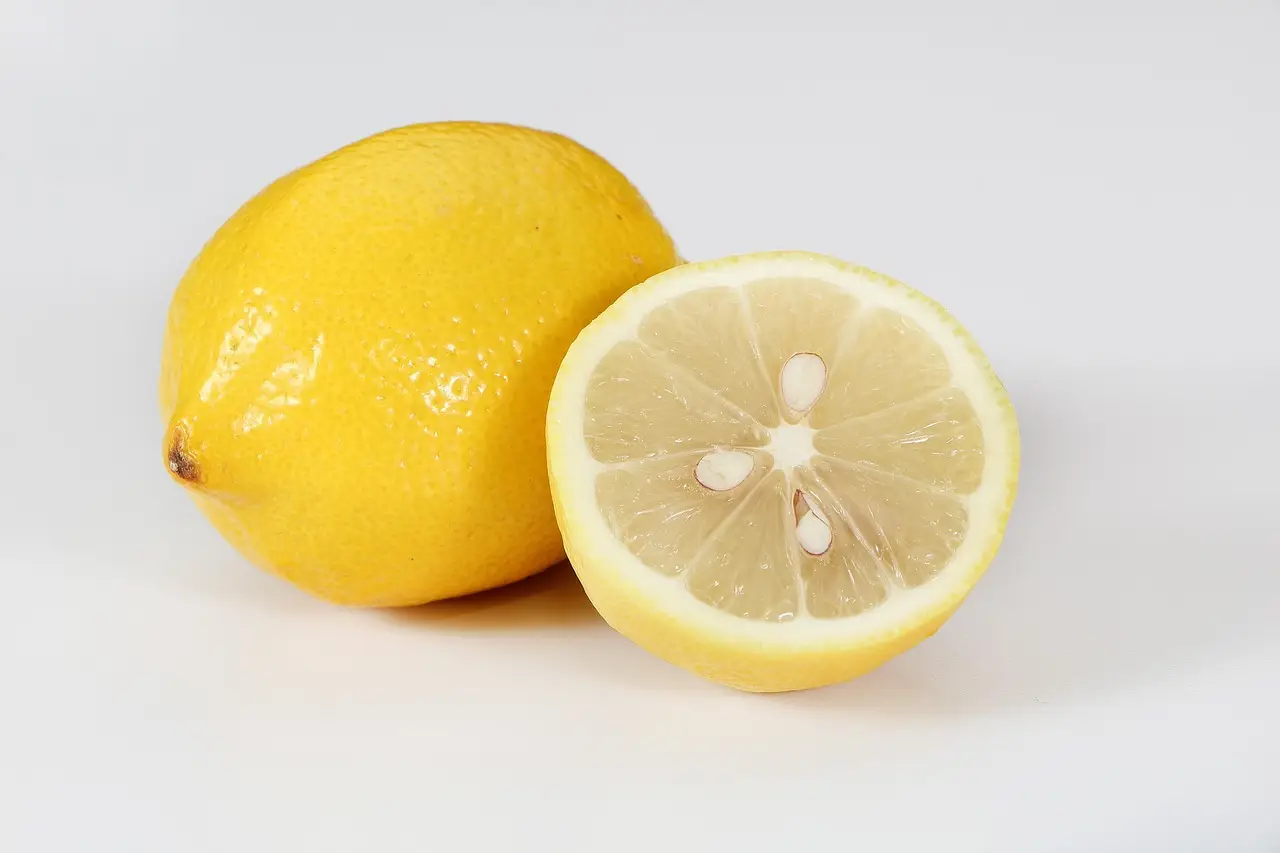
A 2026 Polymers study reports that PHBV bioplastic produced from lemon-industry residues was more flexible than a commercial PHBV benchmark, though the available summary gives no numerical margin, cost estimate or scale-up result.
Using lemon by-products as carbon sources, Salvador García-Chumillas and colleagues produced HFX PHBV with Haloferax mediterranei, a salt-loving archaeon, which is a type of microorganism. In a comparison under identical conditions, HFX PHBV showed greater flexibility, lower crystallinity and a high hydroxyvalerate content, which the team linked to better ductility, or the ability to deform without breaking.
The wording deserves care. This is one commercial reference and one comparison. It does not show superiority over every commercial plastic or every use. The summary also omits the size of the flexibility difference, the test sample size and any statistical significance.
The production route
Carbon from lemon-processing residues fed the microorganisms, which produced PHBV, a type of polyhydroxyalkanoate made through microbial synthesis. The researchers then supplemented the resulting HFX PHBV with nucleating agents, additives that encourage a polymer to form orderly regions called crystals.
The study used three nucleating agents:
- Orotic acid: The most effective at enhancing “crystallization kinetics,” meaning the speed at which crystalline regions develop.
- Boron nitride: One of the three nucleating agents included.
- Theobromine: The third nucleating agent included.
The study reports that incorporating these agents improved crystallization behavior and mechanical stiffness, which the authors say could broaden the potential application range. Stiffness and flexibility measure different things, so greater flexibility in the final comparison does not contradict the stiffness result. The summary provides no separate stiffness, crystallization or composition figures for each additive.
The benchmark test
The researchers compared HFX PHBV with Enmat Y1000, a commercial PHBV grade, under identical conditions. HFX PHBV registered greater flexibility, lower crystallinity and high hydroxyvalerate content. Hydroxyvalerate is one of PHBV’s molecular building blocks, and the team associated its higher content with increased ductility.
Crystallinity describes how much of a polymer packs into ordered regions. Less crystallinity can leave chain segments more mobile, offering a plausible explanation for the extra flexibility. That explanation rests on the reported composition and comparison; the summary supplies no raw mechanical data with which to test it.
Salvador García-Chumillas and colleagues report: “an efficient PHBV production process based on waste valorization,” yielding a biopolymer with “competitive physicochemical properties relative to a commercial standard.” Waste valorization means converting a waste stream into something more useful. The wording is strong, but the benchmark was one grade under the study’s chosen conditions.
What does this change for plastic makers?
For manufacturers, the immediate change is a potential new feedstock route, not permission to swap commercial PHBV for HFX PHBV tomorrow. The study gives developers a waste-derived formulation with greater flexibility than the named benchmark and competitive physicochemical properties, according to the authors. It does not establish cost parity, production capacity or drop-in compatibility.
Several basic commercial questions remain unanswered in the summary:
- The amount of lemon residue required per batch
- The achievable yield and processing time
- The material’s behavior and disposal options after use
None of those figures or tests appears in the source account, so the result should not be read as a commercial-readiness certificate. Calling the process efficient is promising; showing exactly how efficient remains the next test.
The research team included ANIPH’s coordinator at CETEC and partners from the companion projects Viss and PHAntastic. Their paper, “Exploring Lemon Industry By-Products for Polyhydroxyalkanoate Production: Comparative Performances of Haloferax mediterranei PHBV vs. Commercial PHBV,” appeared in Polymers in 2026 under DOI 10.3390/polym18030340.
The authors frame the approach as an integrated response to plastic pollution and food waste: a food-industry residue becomes feedstock for microbial polymer production. That logic is appealing. It is not, however, a completed life-cycle analysis. The summary does not compare carbon emissions, land use, water use, energy demand, biodegradation or pollution at every stage, so “bioplastic” should not be mistaken for proof of a smaller environmental footprint.
The credible takeaway is modest but useful: in this study, lemon-industry by-products served as carbon sources for PHBV production, and the agent-treated HFX material showed greater flexibility than Enmat Y1000. The result supports further testing of that route, not wholesale substitution of commercial PHBV. Everything beyond that—scale, price, environmental advantage and end-of-life performance—remains open.
via phys.org/rss-feed/ (Source)
More from James Calloway
Show full bio
Staff writer covering regulation, policy and their impact on general science news at SciBeat.
357 articles
Nearby plates
- One 'Biodegradable' Plastic Hit 99.9% Breakdown in 17 Days. Another Stalled at 2.7% in 320
- New polystyrene is half plant-based and designed to fall apart for recycling
- Hemp waste cellulose boosts biodegradable film strength by 26%
- Molten Salt Process Turns Plastic Bags Into Gasoline at Oven Temperatures
- 3D-Printed Bioreactor Turns Waste Methane Into Chemicals With 10x Efficiency