Recorded November 27, 2026
Biology & EvolutionReported finding
Mammals Took 100 Million Years, and a U-Turn, to Stand Upright
Harvard simulations spanning 300 million years show mammals' shift to upright limbs was no straight line — it included a temporary reversal to sprawled, reptile-like stances.
By Elena Vasquez4 min read885 words
In brief
- The mammalian shift from sprawled to erect limbs took over 100 million years, with a temporary reversal around the Permian extinction 251 million years ago.
- Harvard researchers simulated four fossil species, including Dimetrodon (~290 million years ago) and early mammal Vincelestes (~129 million years ago).
- The study, published in Science Advances, marks the first use of these advanced simulations on quadrupedal mammals and their ancestors.
- Roughly 6,500 land mammal species exist today, diversifying after the dinosaurs' extinction 66 million years ago.
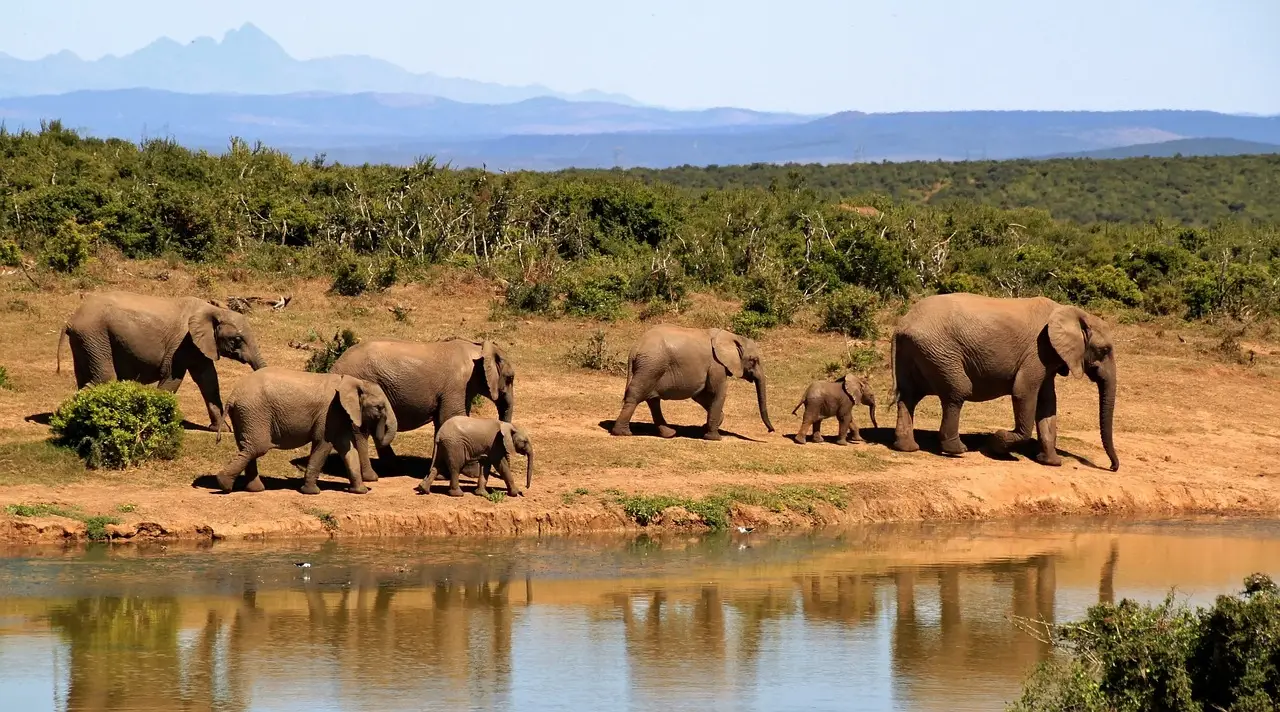
Mammals and their ancestors needed more than 100 million years, and at least one evolutionary U-turn, to shift from lizard-style splayed limbs to the upright posture of a modern horse. That's the central finding of a Harvard-led study published in Science Advances, built on the most advanced computer simulations yet attempted for extinct species.
The research upends a long-standing picture of steady, one-way progress. "We often think of these major evolutionary transitions as kind of a linear, progressive march," said lead author Peter Bishop, a postdoctoral fellow at Harvard's Museum of Comparative Zoology. "This research is really blowing that out of the water."
Along the way, the mammalian lineage temporarily reversed course, reverting to more reptile-like, sprawled stances during the Mesozoic Era — the dinosaurs' heyday.
What did the team actually simulate?
The study focused on synapsids, a diverse group of four-legged animals that appeared more than 300 million years ago and eventually gave rise to mammals' ancestors. They're sometimes mislabeled "mammal-like reptiles," but they sat on a separate branch of the tree of life from reptiles and dinosaurs.
The team, headed by Stephanie Pierce — curator of vertebrate paleontology at the museum and a professor in Harvard's Department of Organismic and Evolutionary Biology — built "whole-animal" biomechanical models. Each simulation drew on tens of thousands of variables covering bone anatomy, fossil footprints, muscle sizes, joint angles, and biomechanical experiments on living species.
The models applied physics to find the most energy-efficient ways for each animal to move. They used dynamic equations of motion based on the same mathematics NASA uses for rocket trajectories. These simulations once demanded supercomputers, but recent mathematical shortcuts now let them run on laptops.
This class of simulation had previously been applied only to bipedal dinosaurs and hominins — extinct human relatives. This study marks its first use on quadrupedal mammals and their precursors.
Bishop noted an imbalance the work aims to fix: "The fossil record that documents the origin and evolution of the mammalian body plan is exceptionally rich. It rivals that of the dinosaurs, yet our understanding of this part of the animal tree of life is so lacking compared to the dinosaurs."
Which animals were examined?
The researchers modeled four fossil species, each capturing a key stage of synapsid evolution:
- Dimetrodon, the sail-backed icon from roughly 290 million years ago
- Lycaenops, a "wolf-faced" saber-toothed carnivore from about 260 million years ago
- Massetognathus, a robust-jawed herbivore that lived around 236 million years ago
- Vincelestes, a small, mobile early mammal from about 129 million years ago
Two living species anchored the analysis: Salvator, a sprawled-stance lizard, and Didelphis, an erect-limbed opossum. Co-author Richard Blob of Clemson University supplied locomotion data for those modern animals. The simulations weren't told what postures to expect — they reconstructed gaits purely from anatomy and efficiency. When tested on the living species, the predicted gaits matched reality, validating the method.
What does the study change?
Two old assumptions take a hit.
First, the simulations cast doubt on the idea that some early synapsids combined erect hindlimbs with sprawled forelimbs. The models showed such mixed postures would carry steep energetic costs, making them unlikely. No living animal moves that way, and no fossil footprints record it.
Second, and more surprising: the march toward erect posture wasn't a march at all. The study confirms a documented progression from Dimetrodon to Lycaenops. But both Massetognathus and Vincelestes reverted to more sprawled postures. That reversal appears to coincide with the Permian mass extinction 251 million years ago, and the authors hypothesize that surviving synapsids briefly gained an advantage from more reptile-like stances.
"They aren't always these linear shifts," Bishop said of major evolutionary transitions. "They can be a lot more complex than we might give them credit for."
The study also found a "marked decoupling" between anatomical form and function, especially in Massetognathus and Vincelestes. Small bones can evolve at different rates and point in different directions while the whole animal keeps functioning — a single symphony of motion, as Pierce put it. "Small anatomical changes can accumulate over millions of years, appearing to trend toward the modern mammalian form without necessarily producing major functional implications," she said.
Some changes previously read as adaptations for walking or running, the authors suggest, may instead reflect climbing or burrow-digging. "There's a good chance of being wrong if you take a myopic look at just one part of the body," Bishop warned.
Why does it matter now?
The postural transformations mapped in the study set the stage for the mammalian boom after the dinosaurs died out 66 million years ago. The era since — the Cenozoic, sometimes called the "Age of Mammals" — has produced roughly 6,500 land mammal species, from the Etruscan shrew to the 10-ton African bush elephant.
"Dimetrodon might not look like a human, but it is part of the story of how we got here," Pierce said. "Without these animals changing their body plans through hundreds of millions of years of evolutionary history, we would not have had the explosive radiation in the Cenozoic."
The takeaway: evolution's road to the upright mammal ran crooked, with reversals and detours, and reading a single bone can mislead.
via phys.org/rss-feed/ (Source)
More from Elena Vasquez
Show full bio
Correspondent covering money, funding and market shifts around general science news at SciBeat.
659 articles
Nearby plates
- Ancient DNA reveals extinct yak relative hidden in Siberian bones
- No 'Lizard Brain': Evolution Trades Brain Wiring Styles, Study Finds
- Animals May Have Evolved 200 Million Years Earlier Than Thought
- Why Snake Embryos Twist Into Right-Handed Spirals: A Gut Explains It
- Study backs a mostly underwater life for giant Spinosaurus