Plate Nº 67 · recorded October 30, 2026
Biology & EvolutionReported finding
Study backs a mostly underwater life for giant Spinosaurus
Yale’s limb-based analysis suggests Spinosaurus spent most of its time submerged. Early marine reptiles still went ashore, showing that fossils do not always reveal a fully aquatic life.
By James Calloway5 min read990 words
In brief
- The study used more than 11,000 fossil measurements, photographs and CT scans.
- Models predicted soft-tissue flippers and aquatic habits with more than 90% accuracy.
- Spinosaurus lived about 113 million to 94 million years ago and was inferred to spend most of its time submerged.
- Mesosaurs lived about 290 million to 274 million years ago and regularly moved between water and land.
- The paper appeared in Current Biology in 2025, volume 35, issue 24, page 5982; Yale released it October 25, 2026.
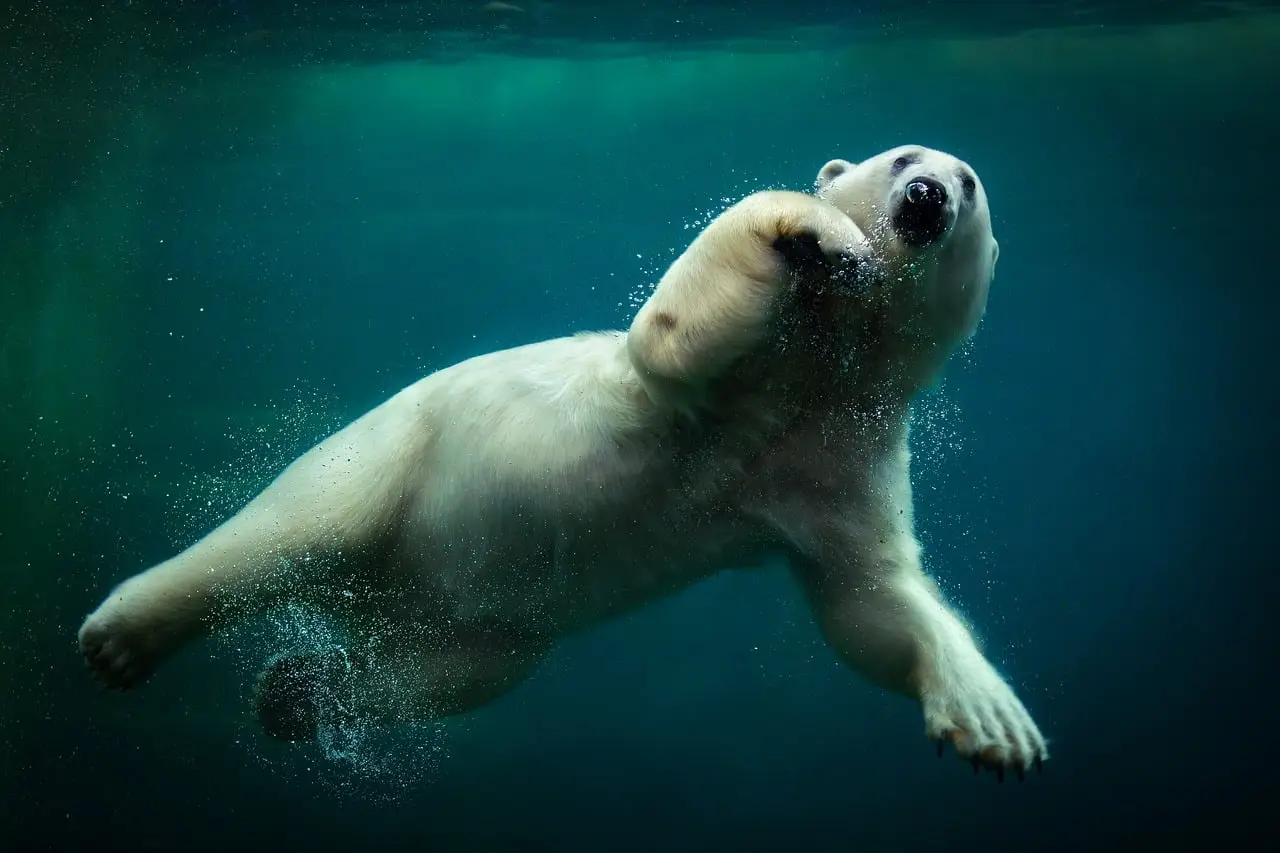
More than 11,000 fossil measurements underpin a Yale University study that supports a mostly underwater life for Spinosaurus and regular returns to land among Paleozoic marine reptiles.
That support has boundaries. The study does not establish exactly how Spinosaurus hunted, and its survey of Paleozoic marine reptiles—the reptiles living before dinosaurs appeared—found none that was completely aquatic. Instead, the researchers used preserved limb proportions to estimate habitat use.
The study asks whether limb proportions can reveal soft-tissue flippers and aquatic habits in extinct amniotes, the evolutionary branch that includes reptiles and mammals.
Published as “Limb proportions predict aquatic habits and soft-tissue flippers in extinct amniotes,” the paper appeared in Current Biology in 2025, volume 35, issue 24, page 5982. Its DOI is 10.1016/j.cub.2025.10.068. Yale University dated its release October 25, 2026.
What does this change for Spinosaurus?
It strengthens the case for a water-centered life, but not a complete hunting script. Spinosaurus lived approximately 113 million to 94 million years ago in what is now northern Africa, and scientists broadly agree that water shaped its life.
One interpretation pictures a predator much like a seal or penguin, repeatedly submerging to pursue prey. Another resembles a modern heron, walking along shorelines and searching in shallow water. The fossil evidence has not cleanly separated those lives.
Lead author Caleb Gordon said: “Our results shed new light on how much time Spinosaurus spent submerged, which could support the underwater hunting view. We confidently recovered highly aquatic habits for Spinosaurus, indicating that it spent the vast majority of its time submerged in the water.”
That supports an aquatic habit, not certainty about every behavior. The researchers did not determine whether Spinosaurus mainly chased prey, ambushed it, or did something else underwater.
From bones to behavioral estimates
Researchers examined hundreds of fossil and modern specimens at the Yale Peabody Museum and dozens of institutions worldwide. Their new dataset includes more than 11,000 measurements, photographs, and CT scans, or three-dimensional X-ray images.
The team combined traditional paleontology with machine-learning models that account for evolutionary relationships. It trained models on living animals, allowing them to learn links between limb proportions and known aquatic or land-based lifestyles.
The researchers then used those patterns to infer how extinct species used aquatic environments and to predict soft-tissue swimming adaptations that rarely survive as fossils. Forelimb proportions proved especially useful.
The team reports more than 90% accuracy in predicting whether an animal possessed soft-tissue flippers and whether its habits were highly or fully aquatic. That is strong performance, but fossils rarely preserve soft tissues, and the available skeletal clues often conflict.
A radar method aimed at fossils
One statistical component came from 1940s naval work during World War II. The original method estimated the probability that a blip on a radar screen was an enemy plane; Gordon adapted it to estimate whether an extinct animal had limbs modified for swimming.
That approach could assess the likelihood of specialized swimming adaptations even when direct evidence was absent. The researchers say it may help examine when human ancestors began walking on two legs and when dinosaur ancestors of birds evolved flight.
The method supplies probabilities, not a recorded day in an extinct animal’s life. Its usefulness therefore depends on the quality of fossil measurements and the behavior represented in modern training animals.
The reptiles that still needed land
Mesosaurs were small marine reptiles that lived between 290 million and 274 million years ago in regions now forming parts of South Africa and eastern South America. Their live birth had been interpreted as evidence of a fully aquatic life, but their limbs tell a more mixed story.
The analysis suggests that mesosaurs regularly moved between aquatic and terrestrial environments. Gordon said: “They spent a lot of time on land, like a modern-day alligator or platypus does. Mesosaurs didn’t completely leave the land behind.”
In the broader survey, the researchers report that all Paleozoic marine reptiles continued to return to land regularly. None evolved a completely aquatic lifestyle; even the most water-adapted species remained amphibious, living in both water and land.
That conclusion is still inferred from skeletal proportions. It does not directly count how often each species visited shore.
Why repeated adaptations matter
Dozens of major groups of mammals and reptiles returned to water during evolution. Separate lineages developed flippers and related traits, a repeated pattern called convergent evolution, which can reveal common environmental pressures and limits on adaptation.
Traditional fossil interpretation often relies on a preferred set of features, especially when specimens are incomplete or anatomy points in different directions. Senior author Bhart-Anjan Bhullar described the task as precise and delicate, and argued that combining living-animal data, evolutionary family histories and fossils reduces subjectivity.
The method can turn disputed features into testable predictions. It cannot recover missing behavior without limits, so disagreement is likely to remain wherever fossil evidence stays thin.
The team behind the estimate
- Caleb M. Gordon led the study, completed his doctorate at Yale’s Graduate School of Arts and Sciences in 2026, and is now a postdoctoral researcher at the Florida Museum of Natural History.
- Bhart-Anjan S. Bhullar is a Yale associate professor of Earth and planetary sciences and an associate curator of vertebrate paleontology and vertebrate zoology at the Peabody Museum.
- Co-author Jacques A. Gauthier is a Yale professor of Earth and planetary sciences and curator-in-charge for vertebrate paleontology at the Peabody Museum.
- Lisa S. Freisem is a doctoral student at Yale’s Graduate School of Arts and Sciences.
- Christopher T. Griffin is an assistant professor of geosciences at Princeton University and formerly a Yale postdoctoral fellow.
Support came from the Yale Institute of Biospheric Studies, the International Union for Conservation of Nature’s Crocodile Specialist Group, and the National Science Foundation.
The bones tilt toward water, not certainty.
via yale.edu (Original)
More from James Calloway
Show full bio
Staff writer covering regulation, policy and their impact on general science news at SciBeat.
346 articles
Nearby plates
- "Lizzie" Fossil Loses Its Crown: Not the Oldest Reptile After All
- Armored amphibian fossils show a life far from freshwater
- 240-Million-Year-Old Tanzania Fossil Reshapes Dinosaur Timeline
- A 245-Million-Year-Old Reptile Fossil Keeps Its Stomach, Liver and Gut
- First Diplodocus Ever Found Outside North America Came From Spain