Plate Nº 97 · recorded November 10, 2026
Biology & EvolutionReported finding
Methane-Eating Microbes Grow Nanowires That Carry Electric Current
Radboud University researchers show methane-eating archaea transmit electricity through self-made nanowires, and grow them at 95% purity for the first time.
By Elena Vasquez4 min read754 words
In brief
- ANME archaea divide every 5 days on lab electrodes versus once a month in nature.
- Researchers achieved a 95% pure ANME culture for the first time.
- The nanowires are OmcZ-type cytobrane structures confirmed under special microscopy (study published in Nature Communications, 2026).
- Practical electricity generation from methane via microbes is estimated at about 20 years away.
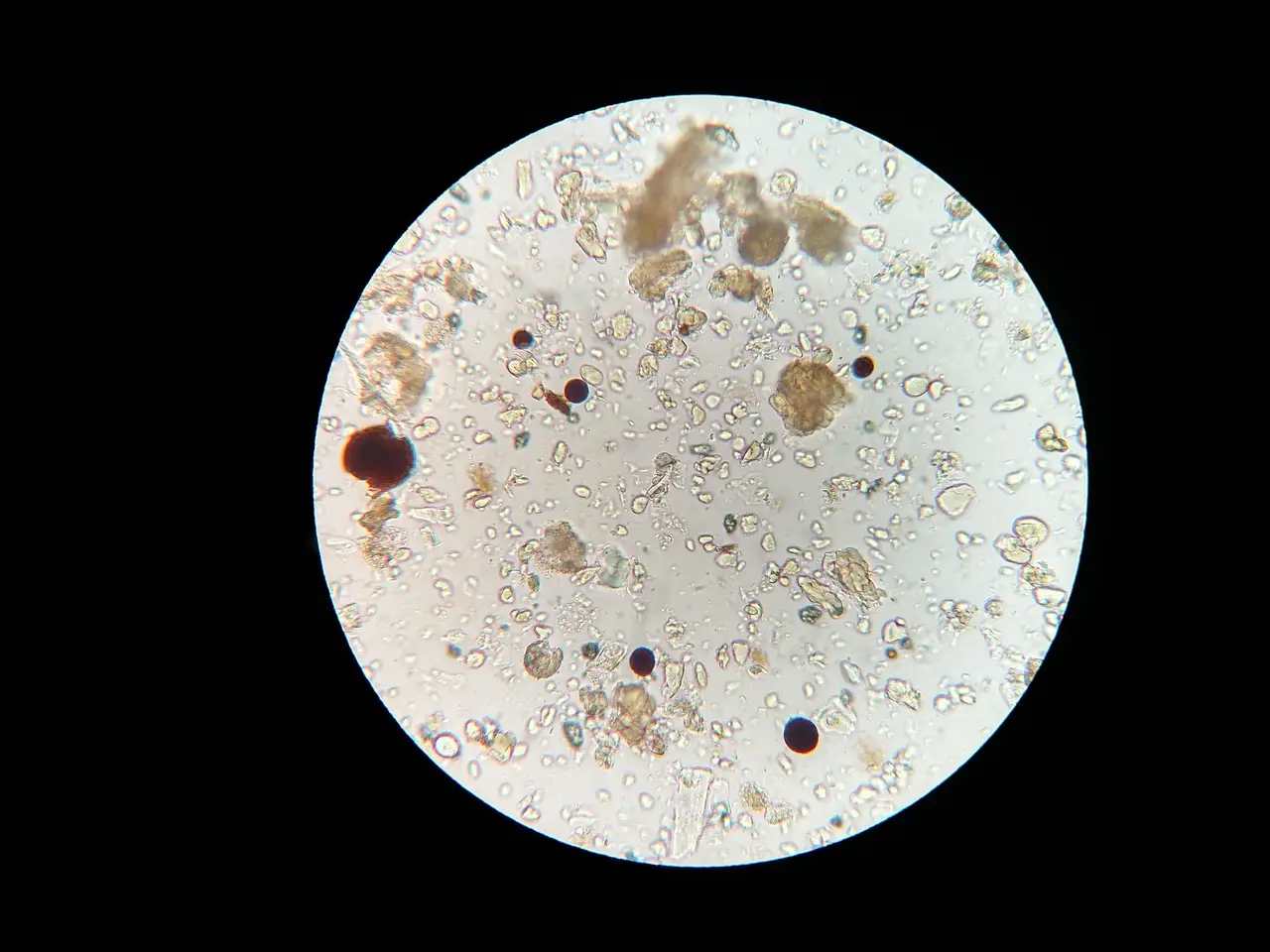
Microbes that eat methane can build their own electric cables, researchers at Radboud University report in Nature Communications. The nanowires — protein strands thinner than a cell — carry the electrons the organisms generate straight to an electrode. The team also achieved something nobody had done before: growing these microbes at 95% purity in the lab.
The microorganisms in question are anaerobic methanotrophic archaea, or ANME — single-celled organisms that live without oxygen and consume methane. Microbiologist Cornelia Welte showed four years ago that ANME can convert methane into electricity. What she couldn't show then was how. The new study supplies the missing mechanism: the microbes sprout electrically conductive nanowires that transmit their electrons outward.
"We have been searching for these answers for so long, and now we can see that these microorganisms feed electricity back to an electrode via their self-made nanowires," Welte said. "We already strongly suspected this would be the case, and have now been able to visualize it beautifully under a special microscope."
What did the nanowire discovery reveal?
Other microorganisms were already known to build nanowires. Whether ANME did the same was an open question until now. Under the microscope, the researchers watched the archaea channeling electricity through strands the study identifies as OmcZ-type cytochrome nanowires — wires built from proteins that shuttle electrons.
The structural detail matters for the field. Knowing the wire's type and architecture gives other labs a concrete target for studying, and eventually engineering, biological electron transfer.
In plain terms: these microbes don't just break down methane, they export the energy as electricity they physically deliver through their own wiring.
Why do the microbes grow so fast on electrodes?
ANME, it turns out, love an electrode carrying a small voltage. In the lab setup, the organisms grow in a small vessel of water, feed on methane, and attach themselves to the electrode, where they multiply and send electrons across. That current is tiny, but it's measurable — and it flows.
The growth numbers are striking. "ANME divide once a month when they're out in ditches and trenches, but on the electrodes in our lab, they divide once every five days," Welte said. "So that works very well."
Six times the natural growth rate, on a surface the microbes apparently find comfortable. Speed matters because slow-growing cultures have long been one of the biggest obstacles to studying these organisms.
What does the pure culture unlock?
The team didn't just grow the ANME fast. They grew them at 95% of the total microbial community — a first. Earlier attempts left researchers with mixed populations, where the methane-eaters were a small minority buried among other microbes.
"If you have such a pure culture, you can study these microorganisms much more effectively than when everything is growing together," Welte said. The achievement came through collaboration with several partners, including researchers from Yale.
In short: a clean culture means clean experiments, and clean experiments mean faster answers about how ANME actually work.
Could this actually produce energy?
Welte is careful here, and her caution is the story. In theory, the microbes can convert methane to electricity with a small applied voltage, more efficiently than an electrolyzer — a device that uses electricity to drive chemical reactions such as splitting water.
But practical application is roughly 20 years away by her estimate. "For now, we are mainly looking at how these ANME work at a fundamental level," she said.
The current the organisms generate could eventually be used to produce hydrogen, though Welte calls that a long way off. And the technique faces a hard economic barrier today. "At present, the technique is still far too expensive and complex," she said. "Hopefully, it can be made more efficient in the future. With this research, we've taken another small step in that direction."
Her longer-term argument is about resources. "As natural resources run out, we will have to find new, energy-efficient ways to generate electricity," Welte said. "This could be achieved by using microorganisms."
That's a hypothesis, not a promise — one preliminary study on cultured archaea doesn't build a power plant. Still, the mechanism is now confirmed, the culture problem is solved, and the field has its clearest look yet at how a methane-eating cell wires itself to the world.
The study appears as Martijn Wissink et al., "Electrode-associated growth reveals structure of OmcZ-type cytochrome nanowires in anaerobic methanotrophic archaea," Nature Communications (2026), DOI: 10.1038/s41467-026-78976-x.
via phys.org/rss-feed/ (Source)
More from Elena Vasquez
Show full bio
Correspondent covering money, funding and market shifts around general science news at SciBeat.
384 articles
Nearby plates
- 3D-Printed Bioreactor Turns Waste Methane Into Chemicals With 10x Efficiency
- Scientists map molecular 'off switch' for nitrogen fixation
- MIT Engineers Bacteria Into Living Transistors for Biological Circuits
- MXene Photocatalyst Hits 200× Methane Yield with Polymer Shield
- Microbe With 189 Genes Sets Record for Smallest Genome Ever Found