Recorded November 22, 2026
Space & AstronomyReported finding
MIXS X-ray telescope clears first space test en route to Mercury
After 39 hours of Crab Nebula observations, MIXS slightly outperformed its 2015 lab performance, clearing a key test ahead of a study of elements in Mercury’s rocks.
By Elena Vasquez4 min read712 words
In brief
- MIXS gathered about 39 hours of Crab Nebula data on September 11 and 12 after 55 spacecraft pointing movements.
- Its performance slightly exceeded laboratory measurements made before its 2015 launch.
- The instrument took its first X-ray images after an eight-year journey aboard BepiColombo.
- The Crab Nebula, an exploded-star remnant about 6,500 light-years away, served as the test target.
- At Mercury, MIXS will study surface X-rays to identify chemical elements in rocks.
By Elena Vasquez
After about 39 hours of observations over September 11 and 12, the Mercury Imaging X-ray Spectrometer slightly outperformed its laboratory performance before launch and sent its first X-ray images of space after an eight-year journey.
A team led by the University of Leicester developed the British-built instrument, known as MIXS. It rides aboard the European and Japanese BepiColombo mission, whose spacecraft are designed to study Mercury and the environment around it. BepiColombo is preparing for the next stage of its arrival at the solar system’s smallest planet. The successful check shows that MIXS can collect usable X-ray data well before it begins its main work at Mercury.
What did the first space test show?
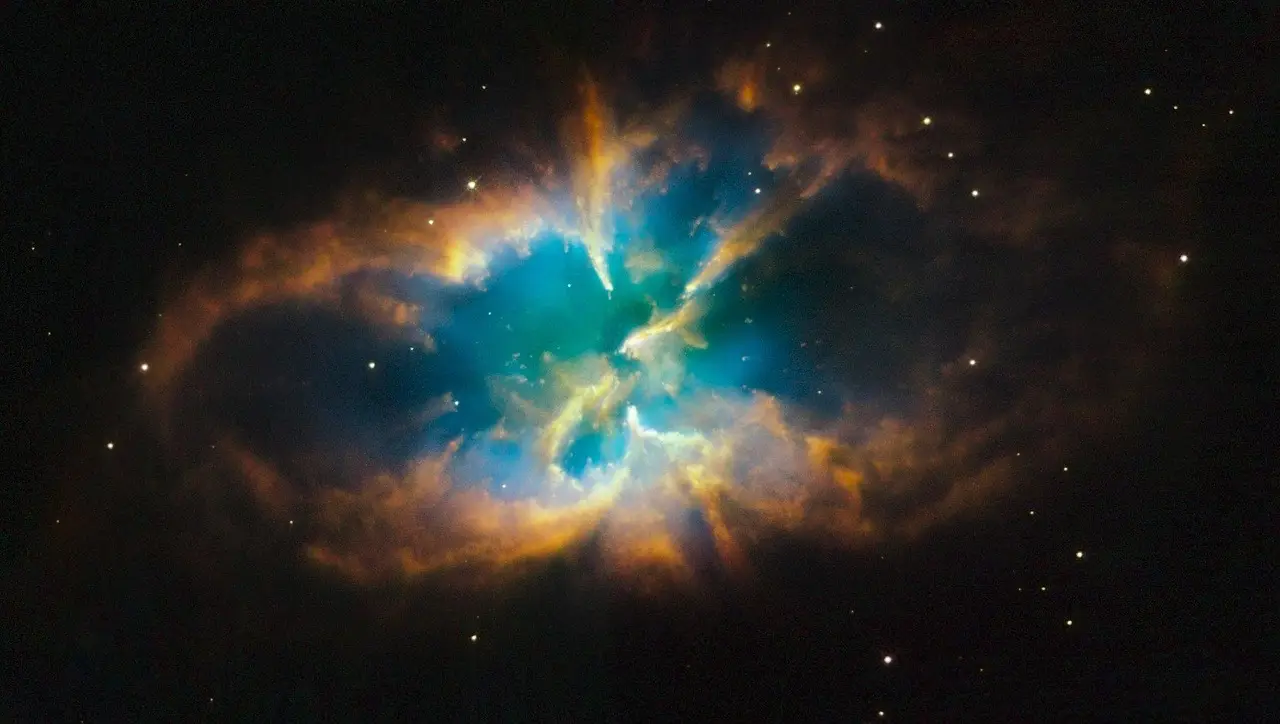
To check performance, researchers aimed MIXS at the Crab Nebula, a bright source of X-rays about 6,500 light-years from Earth. The nebula is the remains of an exploded star. Because astronomers already know a great deal about its X-ray emission, the Crab provided a familiar target against which the team could judge the instrument’s readings.
The observation took place in September, after scientists separated part of the spacecraft used for the long journey. That change gave MIXS a clear view into space. Researchers then carried out 55 spacecraft pointing movements and gathered about 39 hours of observations over September 11 and 12.
Those movements let the team measure how sharply MIXS could distinguish features. Its overall performance came out slightly better than the laboratory baseline recorded before the 2015 launch. That is encouraging because MIXS had spent eight years exposed to the demanding conditions of space.
Takeaway: The first space test passed, with slightly better performance than MIXS achieved before launch.
How did scientists check the images?
X-rays are a form of light with more energy than the light our eyes can see. Instruments that measure them need special detectors, and their readings require careful checks. A bright or faint patch must genuinely represent the object being studied, not a misleading signal. Testing against a well-known target helps confirm that the telescope records the intended object.
Comparing the result with laboratory measurements also shows how the instrument has changed since scientists built it on Earth. MIXS now performs slightly better than it did before launch, despite years in space. The test was meant to prepare a working instrument for more demanding observations; it did more than show that MIXS could switch on.
These first images are a technical milestone rather than a new discovery about Mercury itself. They show that MIXS can handle the demands of space and bring scientists a step closer to examining the planet in detail.
Takeaway: The images validate the instrument; they do not reveal anything new about Mercury.
What will MIXS study at Mercury?
MIXS is not intended mainly to study distant nebulae. Once it reaches its scientific operating position around Mercury, it will investigate X-rays coming from the planet’s surface. Those signals can help researchers identify the chemical elements present in its rocks.
Understanding Mercury’s surface could reveal clues about how the planet formed and why it differs so much from Earth, Venus and Mars. Mercury is unusually dense and sits very close to the sun, making it a challenging but valuable world to study. Scientists can use the element readings from those surface X-rays to investigate the planet’s origins and differences.
Takeaway: MIXS is ready to move from equipment checks to identifying elements in Mercury’s rocks.
What has the test not established?
The September observations point at a nebula roughly 6,500 light-years away, not at Mercury. They add no new measurements of the planet’s surface, composition or history. Instead, they answer a practical instrument question: can MIXS still distinguish X-ray features after an eight-year journey? The answer, based on 55 pointing movements and about 39 hours of data, was yes.
The scientific work lies ahead, when MIXS reaches its operating position around Mercury and begins measuring X-rays from the planet’s surface. Until then, the successful images mark progress in preparing the instrument, not a discovery about the smallest planet.
Takeaway: BepiColombo has cleared an instrument check; Mercury remains the next scientific target.
via knowridge.com (Source)
More from Elena Vasquez
Show full bio
Correspondent covering money, funding and market shifts around general science news at SciBeat.
592 articles
Nearby plates
- Mercury-Bound X-Ray Telescope Passes First Space Test After 8 Years
- Twelve dying radio galaxies spotted fading faster than expected
- After Eight Years, BepiColomo Enters Orbit Around Mercury
- Eight Years in Space, and the Hard Part Starts Now
- Hot Planet 320 Light-Years Away Confirms Stars and Planets Share Chemistry