Recorded November 20, 2026
Earth & ClimateReported finding
Mountains Grew in Two Spurts and May Have Made Earth Livable
Crust burial depths jumped from 30 km to 90 km across two growth spurts, a new Science Advances study says, flushing nutrients into oceans and possibly oxygenating Earth's atmosphere.
By James Calloway4 min read830 words
In brief
- Before ~2.7 billion years ago rocks were buried 30-35 km deep; by ~2.2 billion years ago that reached 55-60 km, supporting mountains ~5 km high.
- Between ~800 and 700 million years ago burial depths hit 90 km, Himalaya-like roots adding another 4 km of elevation.
- The two growth spurts broadly coincide with the Great Oxidation Event and the Neoproterozoic Oxidation Event.
- The study was published this month in Science Advances, led by Dr. Matthijs A. Smit of the University of British Columbia.
- The mountain-building was likely driven by gradual cooling of Earth's mantle changing how tectonic plates collide.
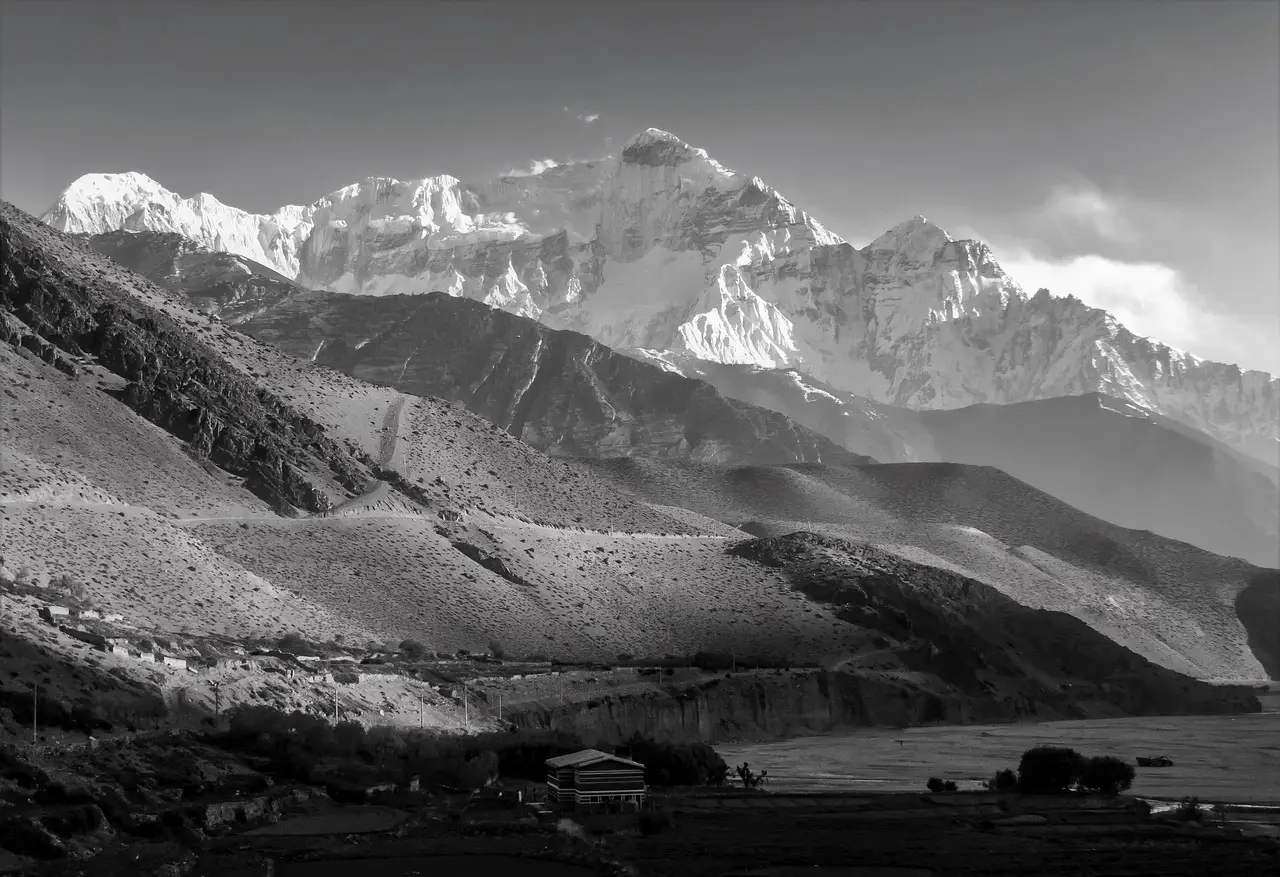
Twice in Earth's history, mountains shot up to unprecedented heights — and a new study argues those two growth spurts helped turn a hostile, oxygen-poor planet into one that could support complex life.
The study, published this month in Science Advances, was led by Dr. Matthijs A. Smit of the University of British Columbia with colleagues at Utrecht University and the Swedish Museum of Natural History. Its central claim is bold: mountains may have played a far greater role in making Earth habitable than scientists previously assumed. But before we accept that, it's worth asking what the team actually measured, and what remains inference.
What did the researchers actually measure?
They didn't measure ancient peaks directly, because peaks don't survive billions of years. Instead, they examined pressures recorded in metamorphic rocks — rocks that form when crust gets buried deep inside mountain belts and then transformed by heat and pressure. Those pressures act, in the authors' words, as a "ruler" for how thick the crust could grow, and therefore how tall the mountains above it could stand.
The numbers tell a clear story:
- Before roughly 2.7 billion years ago, rocks were buried to depths of about 30 to 35 km — modest crust, modest mountains.
- By around 2.2 billion years ago, burial depths reached 55 to 60 km, enough to support mountains perhaps 5 km high.
- Between roughly 800 and 700 million years ago, rocks were buried as deep as 90 km — comparable to the roots beneath today's Himalaya and Tibet — supporting an additional 4 km of elevation.
Two spurts, in other words, separated by well over a billion years. The pattern is real and measurable. What follows from it is where the careful hedging begins.
How could taller mountains make a planet habitable?
The proposed mechanism runs from the deep Earth to the ocean surface. Nutrients such as phosphorus are essential ingredients for life, but before three billion years ago those elements were locked in the Earth's crust, leaving the oceans nutrient-starved.
"All this changed when tall mountains started to develop," Dr. Smit said. Higher peaks accelerate erosion and chemical weathering — the slow breakdown of rock by water and air — flushing phosphorus and other nutrients into the sea. More nutrients mean more biological productivity, and more productivity helps oxygenate the atmosphere.
The timing, at least on paper, lines up. The two mountain-building spurts broadly coincide with the Great Oxidation Event and the Neoproterozoic Oxidation Event, two episodes when atmospheric oxygen rose. They also coincide with increases in nutrient delivery to the oceans and shifts in how microbes processed sulfur.
"The first growth spurt may have led to the emergence of land on a large scale for the first time, while the second growth spurt thrust mountain ranges to enormous heights," said Dr. Douwe van Hinsbergen of Utrecht University.
Both oxidation events were followed by the "Snowball Earth" glaciations and, later, the diversification of complex life. Coincidence of timing, though, is not proof of cause. The authors themselves use the language of probability — "may have," "may well have" — and that caution is appropriate for a chain of events this long and this tangled.
What drove the mountains up in the first place?
Here the study points downward, into the planet's interior. The mountain-building changes were likely driven by the gradual cooling of Earth's mantle — the hot rock layer between the crust and the core — which altered how tectonic plates collide. Cooler plates, the reasoning goes, can build thicker crust and taller ranges.
"It's likely not a coincidence that life on Earth developed and diversified approximately during the same period that the two growth spurts occurred," said Dr. Ellen Kooijman of the Swedish Museum of Natural History. "It's exciting to think that mountain belts were once non-existent and that their development over the past three billion years may have driven the environmental and biological change that shaped our planet."
Exciting, yes. Settled, no. The study reconstructs a correlation across billions of years from indirect evidence — pressure signatures in old rocks — and the causal links between erosion, nutrients, oxygen and evolution remain hypotheses that other researchers will now stress-test.
What does this change for the search for life elsewhere?
The practical payoff may lie far from Earth. If a planet's interior evolution helps determine whether its surface becomes habitable, then scientists assessing which distant worlds might support life should look beyond a planet's distance from its star. What happens in the mantle may matter as much as what happens in the sky.
That's the study's most forward-looking claim, and it comes with the usual caveat: we have a sample size of one habitable planet. Mountains may have helped make Earth livable. Whether they're required anywhere else, nobody yet knows.
Reference: Matthijs A. Smit et al. 2026. "Raising mountains for a habitable Earth." Science Advances 12 (46); doi: 10.1126/sciadv.aei2764
via sci.news (Source)
More from James Calloway
Show full bio
Staff writer covering regulation, policy and their impact on general science news at SciBeat.
596 articles
Nearby plates
- Mountain-building pulses may have helped make Earth habitable
- 3.95-Billion-Year-Old Rocks in China Hint at Early Plate Tectonics
- Plate Tectonics May Have Switched On 2.5 Billion Years Ago
- A Lost Kilometer-High Cliff May Explain the Grand Canyon's Missing Billion Years
- Mantle movement may explain Earth’s billion-year geological gaps