Plate Nº 23 · recorded November 7, 2026
Space & AstronomyReported finding
NASA Commits Over $1.3 Billion to Build Out Its Moon Base Campaign
NASA announced $1.3 billion in transportation task orders, an eight-company $10 billion lunar delivery contract and a nuclear-powered rover for the Moon's South Pole.
By Priya Raman4 min read879 words
In brief
- NASA announced the awards on November 7, 2026, at the MAX POWER expo at Kennedy Space Center
- CLPS 2 is a 10-year contract with a maximum value of $10 billion across eight companies
- The nuclear-powered PROMISE rover targets a late 2028 launch and an 18-month mission at the lunar South Pole
- Blue Origin won a $94 million base contract plus a $140 million option to deliver PROMISE
- Six VADR task orders worth about $1.3 billion support Earth-Moon cargo transportation
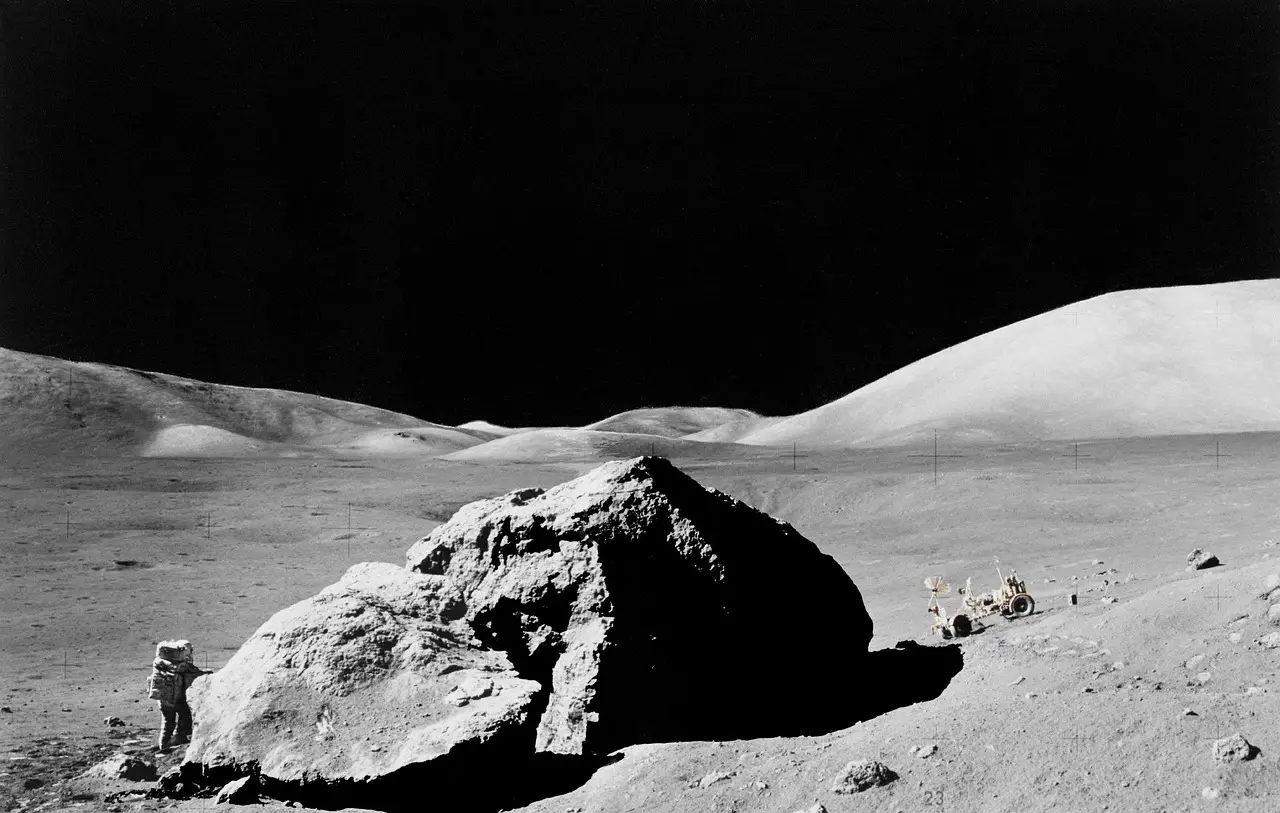
NASA announced on Saturday, November 7, 2026, a suite of awards worth more than $1.3 billion in combined task orders, alongside a $10 billion delivery contract and a $94 million rover mission, all aimed at building a sustained human presence at the Moon's South Pole. The agency shared the news at the MAX POWER aerospace expo and air show at NASA's Kennedy Space Center in Florida.
"We are building the Moon Base mission by mission," said NASA Administrator Jared Isaacman. "Today's announcements expand nearly every part of that campaign, using the playbook that carried NASA through its greatest eras: fly often, learn, apply those lessons, and get more better and more capable with every mission."
Isaacman added that when astronauts return to the Moon, the first elements of the Moon Base will already be waiting on the surface. Carlos García-Galán, manager of the Moon Base Program, described the past eight months since Ignition as a period of "incredible strides" toward what he called the near impossible: a permanent lunar outpost.
Who will carry cargo to the Moon?
NASA selected eight companies to compete for lunar surface delivery missions under a new CLPS 2 contract (CLPS stands for Commercial Lunar Payload Services, NASA's scheme for buying robotic Moon deliveries from private firms):
- Blue Origin
- Firefly Aerospace
- Intuitive Machines
- iSpace US
- Lockheed Martin Space
- Northrop Grumman Space Systems
- SpaceX
- Voyager Technologies
CLPS 2 is a 10-year, multiple-award master contract with a combined maximum value of $10 billion. NASA also raised the value of the existing CLPS 1.0 contract from $2.6 billion to $4.2 billion to support initial Phase One Moon Base objectives. That original contract remains in place through November 2028, with a further five-year window, to November 2033, to complete awarded deliveries.
What is PROMISE?
NASA confirmed it will build PROMISE (Polar Rover for Observation, Mapping, and In-Situ Exploration), a six-wheeled, nuclear-powered rover destined for the lunar South Pole. Nuclear power lets the rover operate through long lunar nights and inside permanently shadowed regions thought to harbor ice, a resource crucial for a sustained human presence.
The rover's instruments will include:
- A drill to extract regolith (lunar dust) from roughly 3 feet, or 1 meter, below the surface to characterize ice and other resources
- Spectrometers to analyze the chemical composition of surface material
- Temperature and radiation sensors
- Visible-light cameras
The Jet Propulsion Laboratory in Southern California will manage the mission and assemble the rover largely from spare flight components and engineering test models built for the Curiosity and Perseverance Mars rovers. Reusing proven hardware, software and operations approaches cuts cost and shortens the timeline. NASA has assessed the hardware's compatibility with the lunar environment and concluded it can tolerate conditions near the South Pole.
PROMISE will also demonstrate a next-generation, radiation-tolerant computing system called High Performance Spaceflight Computing, together with advanced autonomy sensors and algorithms. NASA targets a late 2028 launch and an 18-month mission. Blue Origin won a $94 million base contract, with a performance-based option worth an additional $140 million, to deliver the rover on its Mark 1 lander. The award extends a task order from May 2026 covering two lunar terrain vehicles.
How will the cargo get there?
NASA awarded six task orders under its VADR launch services contract (Venture-Class Acquisition of Dedicated and Rideshare) to Arrow Science and Technology, Blue Origin and Impulse Space. The orders, worth roughly $1.3 billion combined, cover three mission types.
The first reduces risks for long-term human spaceflight, verifying communications and navigation from Earth orbit to the Moon and demonstrating Orbital Transfer Vehicles (spacecraft that act like long-distance freight trucks, hauling large loads across space before landers make the final descent). This type will deliver the CAPSTONE 02 spacecraft to test maneuvers near the Moon. The second sends highly mobile MoonFall drones, built to scout terrain beyond a traditional rover's reach, to survey the South Pole before astronauts arrive. The third tests navigation in multiple cislunar orbits to show commercial orbital transfer that could increase the cargo future landers deliver.
VADR runs as a 10-year contract with a $5 billion ceiling, managed by the Launch Services Program at Kennedy Space Center. Some missions will fly on Blue Origin's New Glenn, Relativity Space's Terran R and SpaceX's Falcon 9, with in-space transport from Blue Origin, Firefly Aerospace, Impulse Space and Quantum Space.
NASA also selected SpaceX for a Cislunar Communications Deployment Demonstration, launching communications satellites aboard a Starship to cislunar space in 2028 to inform future lunar networks.
What happens on the surface?
For a Mini-Communications and Solar Tower, or miniCAST, NASA awarded Honeybee Robotics for energy storage, Redwire for power generation and Yank Technologies for wireless power transfer. Engineers at Marshall Space Flight Center in Huntsville, Alabama, will assemble and test the components before delivery; a separate solicitation for fully integrated power systems is expected in early 2027. NASA also plans a directed call under NextSTEP-3 B to close high-priority data gaps through small spacecraft, payloads or purchased commercial data.
The Moon Base, the agency says, is the foundation for the first crewed mission to Mars.
via jpl.nasa.gov (Original)
More from Priya Raman
Show full bio
Senior reporter covering people, launches and day-to-day practice in general science news at SciBeat.
288 articles
Nearby plates
- NASA Picks Three New Payload Suites to Scout Its Future Moon Base
- Griffin-1 Lander Passes JPL Stress Tests Ahead of Moon Launch
- NASA Picks Three Missions to Find Caves, Ice and Hazards for First Moon Base
- NASA Reworks Moon Lander Plans for 2028 Crewed Landing
- Artemis III Will Rehearse Moon Landings in Earth Orbit in 2027