Recorded November 23, 2026
Space & AstronomyReported finding
NASA Rovers Find 'Potato Chip' Crystals and Silica 'Ghosts' on Mars
Curiosity imaged 'potato chip' crystals on Sol 5067, while Perseverance found hydrated silica rocks — a mineral on Earth tied to hot springs, groundwater and fossil preservation.
By Priya Raman3 min read601 words
In brief
- Curiosity imaged 'potato chip'-like disk-shaped crystals at the Nazca drill site on Nov. 7, Sol 5067.
- Perseverance found hydrated silica-rich 'ghostly rocks' at Idubi, imaged Oct. 29, Sol 2023.
- Hydrated silica on Earth forms with hydrothermal activity or groundwater and can preserve microscopic fossils.
- Curiosity photographed polygon patterns with raised ridges on Mount Sharp on Nov. 13, Sol 5073.
- Polygon formation candidates include mineral shrinkage from evaporating water, temperature changes, and sediment compaction.
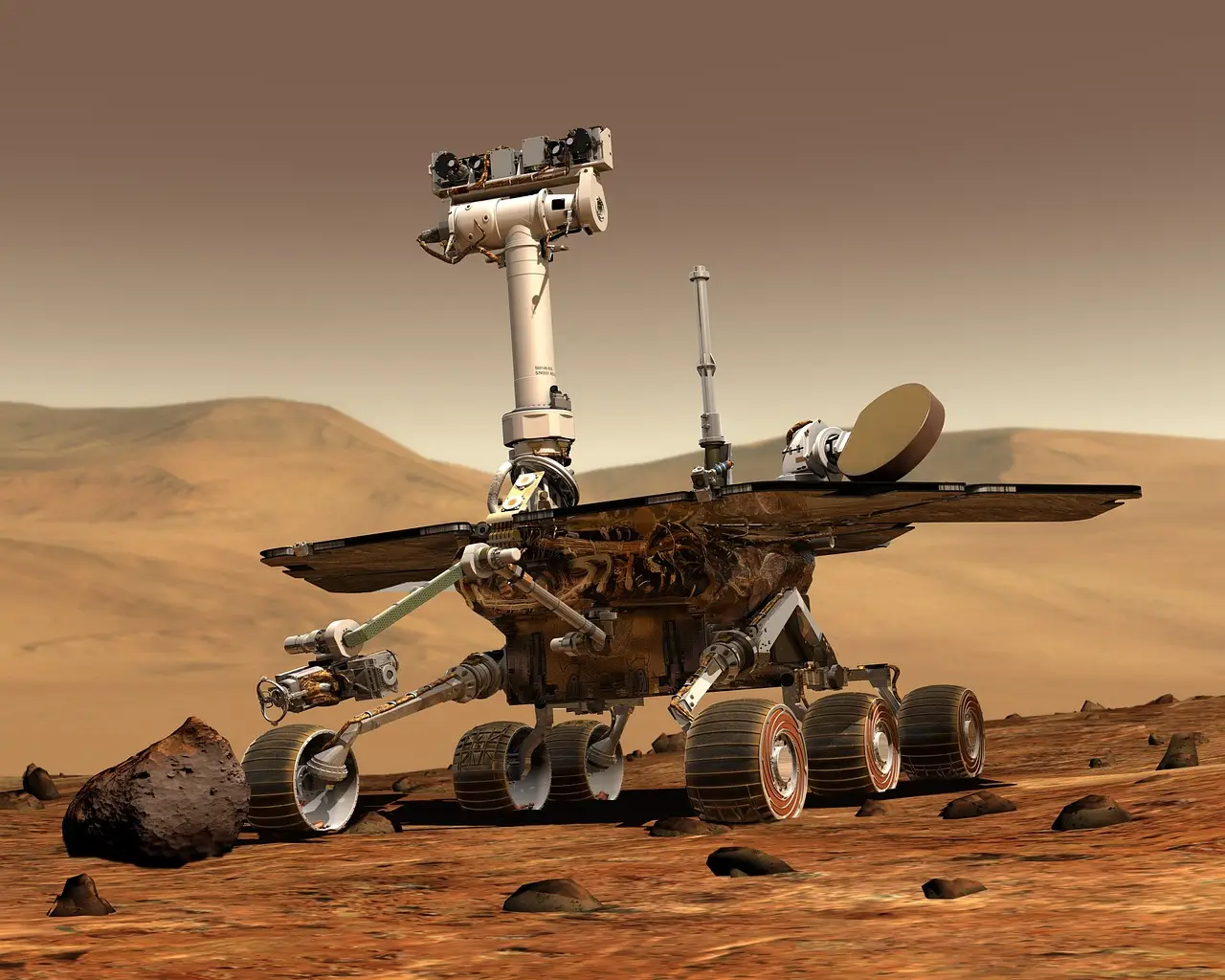
On its 5,067th Martian day, NASA's Curiosity rover photographed crystal formations so thin and flat that mission scientists compared them to potato chips. Thousands of kilometers away, its sibling Perseverance imaged pale, ghostly white rocks whose chemistry suggests flowing water once shaped the terrain. Together, the findings sharpen the central question of modern Mars science: where did the planet's water go, and did it ever sustain life?
The two rovers delivered their oddities within weeks of each other, and neither looks like an ordinary Mars rock.
What did Curiosity find at 'Nazca'?
Curiosity recently completed a drilling campaign at a site nicknamed Nazca, where disk-shaped crystals sit embedded in the bedrock. Some are so thin that the mission team likened them to potato chips, according to a NASA statement.
On November 7 — Sol 5067 in mission counting, a Sol being one Martian day — the rover trained its Mars Hand Lens Imager (MAHLI), a camera mounted on the end of its robotic arm, on the formations to capture detailed close-ups. Its ChemCam instrument, which reads the chemical composition of rocks from a distance, also studied the crystals. Powder from the Nazca drill hole went into the onboard Sample Analysis at Mars (SAM) instrument, a miniature laboratory that heats samples to identify their molecular makeup. Results are pending.
Why are Perseverance's 'ghostly rocks' significant?
Perseverance, for its part, has been examining a cluster of unusually bright rocks in an area called Idubi, within the Lac de Charmes region outside Jezero Crater. Images captured on October 29 (Sol 2023) show pale formations that stand out sharply against the darker, dust-covered landscape.
Data from the rover's SuperCam instrument revealed the rocks are rich in hydrated silica (silica bound with water molecules), not the igneous rock — cooled volcanic material — that dominates much of Mars. That result matters. On Earth, hydrated silica forms in environments involving hydrothermal activity or groundwater. It is also known for its ability to preserve microscopic fossils, which makes these deposits priority targets in the hunt for evidence of ancient microbial life, NASA said in a statement.
Perseverance is now conducting a closer investigation, gathering chemical and mineralogical data that could establish how the rocks formed and whether they hold potential biosignatures (chemical or physical traces of past life).
What are the polygon patterns on Mount Sharp?
Curiosity added a third discovery. On November 13 (Sol 5073), it imaged small, regularly shaped polygons — geometric patches outlined by raised ridges — spread across bedrock on Mount Sharp, the layered mountain it has been climbing for years. The rover saw similar patterns earlier in its ascent, and the mountain's rocky slopes preserve a record of Mars' changing climate and ancient watery environments.
Scientists say several processes could have produced the polygons:
- mineral shrinkage as water evaporated,
- temperature changes,
- expansion and compaction of buried sediments.
By analyzing the composition of the ridges' cementing material, researchers hope to pin down which process actually shaped the terrain. That determination remains preliminary; the statement from NASA lists all three mechanisms as candidates.
What comes next?
These finds offer more than curiosities. Rocks and mineral deposits like those at Nazca and Idubi carry clues to the geological processes that shaped Mars over billions of years, and they help researchers identify environments that may once have supported microbial life.
As Curiosity continues its climb up Mount Sharp and Perseverance works the ancient terrain beyond Jezero Crater, both robots keep feeding a slow, cumulative portrait of a planet whose barren surface conceals a watery past.
The potato chips, in short, may hold the recipe.
via space.com (Source)
More from Priya Raman
Show full bio
Senior reporter covering people, launches and day-to-day practice in general science news at SciBeat.
567 articles
Nearby plates
- Perseverance rover uncovers three water histories in Jezero Crater
- Runny Lava Traveled 200 Kilometers to Build Mars's Séítah Formation
- Perseverance Finds Early Mars Hosted Complex, Hot Water Systems
- A 4.1-Billion-Year-Old Piece of Mars Arrived in the Sahara
- Curiosity rover logs 5,000 sols at Mars ridge Chocolatal