Recorded November 22, 2026
Space & AstronomyReported finding
Runny Lava Traveled 200 Kilometers to Build Mars's Séítah Formation
Perseverance data show the 4-billion-year-old Séítah formation formed from lava as runny as water, flowing 200 km across Mars — a sign the planet's interior was once warm, and maybe life-friendly.
By Elena Vasquez4 min read761 words
In brief
- A new study estimates the Séítah lava flow traveled about 200 kilometers (124 miles) from its vent.
- The Séítah formation is nearly 4 billion years old and sits at the base of Jezero Crater.
- Perseverance has roamed Jezero Crater since 2021; the PIXL spectrometer supplied the geochemistry data.
- The research suggests Earth and Mars mantles evolved very similarly, supporting Earth-based modeling.
- Published in Communications Earth & Environment (2026), DOI: 10.1038/s43247-026-04171-x.
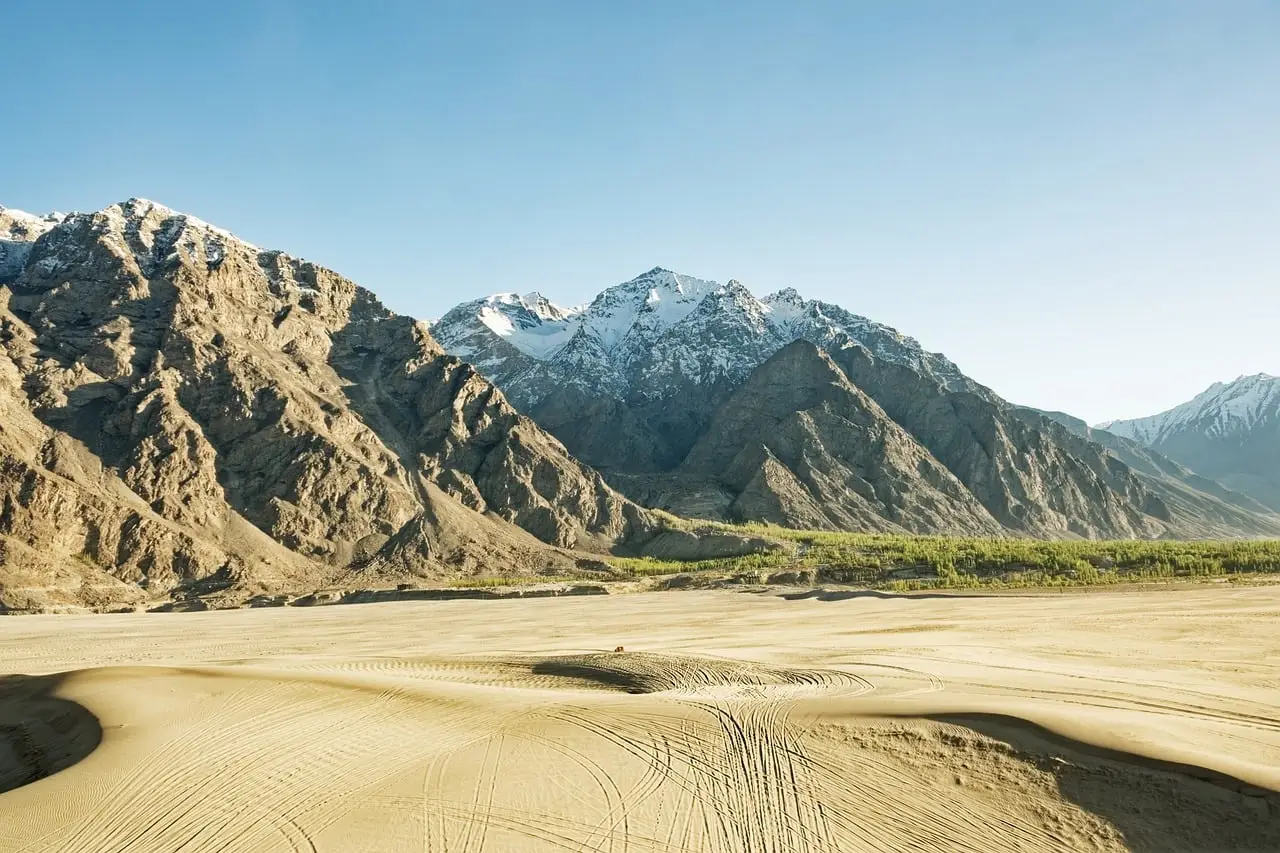
A lava flow crawled roughly 200 kilometers (124 miles) across ancient Mars before settling into a lake that cooled over centuries or millennia, according to a new study of the Séítah formation in Jezero Crater. That distance, and the runny lava it implies, means Mars's interior was likely far warmer nearly 4 billion years ago than many models assume — warm enough, potentially, to make the planet more hospitable to life.
The paper, led by Adrian Brown of Plancius Research and published in Communications Earth & Environment, draws on geochemistry data collected by NASA's Perseverance rover, which has been exploring Jezero Crater since 2021. Its results, if they hold, rewrite a chapter of Martian geological history.
What did the rover actually find?
Since landing, Perseverance has taken close-up images of the Séítah formation, a layer of rock nearly 4 billion years old at the base of the crater. Earlier research identified it as an olivine-rich rock called komatiite — a type that, on early Earth, formed from lavas so runny they flowed "almost like water," forming lava lakes, as Brown put it.
That posed a problem. Mars has a cooler interior, which should in theory make olivine formation harder. Finding large olivine grains there was unusual. So the team set out to measure one property previous studies had skipped: viscosity, meaning simply how easily lava flows across the ground. Thick, high-viscosity lava builds towering cone-shaped volcanoes; runny, low-viscosity lava spreads into flat, wide sheets.
"That's what we were trying to test: Where does the viscosity lie in this range?" Brown said. "Viscosity is something that hasn't been explored so much, because we haven't had as many geochemistry measurements as we do now."
How do you measure lava that solidified eons ago?
The team applied a 2008 model, originally built to describe how magma moves on Earth, to chemical data from PIXL — the Planetary Instrument for X-ray Lithochemistry, an X-ray spectrometer aboard Perseverance that identifies which elements sit in rock and soil.
The geochemistry pointed to a low-viscosity flow moving along the Martian surface. PIXL images revealed another clue: the large olivine grains were actually interlocking crystals. On Earth, in places like Hawaii's lava lakes, such interlocking crystals form as lava cools over hundreds or thousands of years. Brown said the Séítah formation most likely took shape the same way — a shallow lava lake solidifying slowly over a similarly long stretch.
Lionel Wilson, a planetary scientist at Lancaster University who was not involved in the study, called it persuasive. "What [the authors] suggest seems to be the right explanation for how [Mars] accumulated the rocks that we see" in Séítah, he said.
What does this say about Mars's interior?
The findings support a growing body of research indicating that Mars's mantle — its hot, slowly churning rocky interior — resembles Earth's. That matters because scientists aren't sure whether all rocky planets in the solar system were built from the same proportions of elements.
"What we're seeing here is a very strong hint that at least for the Earth and Mars," the evolution of their mantles was "very similar," Wilson said. "We're seeing the same trends."
The study also rules out a competing idea: that the Séítah rock was an intrusion — molten rock rising from Mars's interior that crystallized within preexisting rock layers rather than erupting onto the surface. That scenario, Brown noted, would likely require the rock to be uplifted and exposed, implying active plate tectonics. Current evidence says Mars has none. "If it was an intrusion, that would change a lot of our concepts of things on Mars," he said.
Why viscosity matters beyond one crater
Knowing a lava's viscosity tells scientists how far a flow can travel and where it originated. Mars carries some remarkably long lava flows, and viscosity is only one possible explanation — eruption rate, which depends on how magma is stored underground, is another. Here, the data say viscosity did the work: about 200 kilometers of travel from the vent.
"I see this [research] as throwing light on the bigger picture of what the overall history of volcanic activity is, not just at the surface," Wilson said. And a warm enough interior to produce runny lava billions of years ago, Brown added, may have made early Mars friendlier to life.
The findings are preliminary in the sense that all single-site rover studies are — one formation, one crater. But they suggest Earth-based models can genuinely illuminate Mars's past.
via phys.org/rss-feed/ (Source)
More from Elena Vasquez
Show full bio
Correspondent covering money, funding and market shifts around general science news at SciBeat.
592 articles
Nearby plates
- Low-Viscosity Lava Offers Clues to Mars’s Ancient Interior
- Perseverance Finds Early Mars Hosted Complex, Hot Water Systems
- Perseverance rover uncovers three water histories in Jezero Crater
- A 4.1-Billion-Year-Old Piece of Mars Arrived in the Sahara
- Marsquake Traced to an Active Fault Under the Solar System's Biggest Canyon