Plate Nº 87 · recorded October 9, 2026
Space & AstronomyReported finding
NASA's SSPICY Mission to Test Autonomous Satellite Inspection in Orbit
NASA's SSPICY mission launched Oct. 1, 2026, from Vandenberg. The Otter CubeSat will autonomously inspect up to four inoperable U.S. space objects in low Earth orbit starting in early 2027.
By Nathan Brooks2 min read425 words
In brief
- SSPICY launched Oct. 1, 2026, from Vandenberg Space Force Base in California.
- The Otter 24C CubeSat will approach up to four inoperable U.S. space objects in low Earth orbit.
- Inspections are scheduled to begin in early 2027.
- The spacecraft was built and is operated by Starfish Space, based in Seattle.
- The mission is the first to fly autonomous guidance, electric propulsion, computer vision, and a robotic boom together as one system.
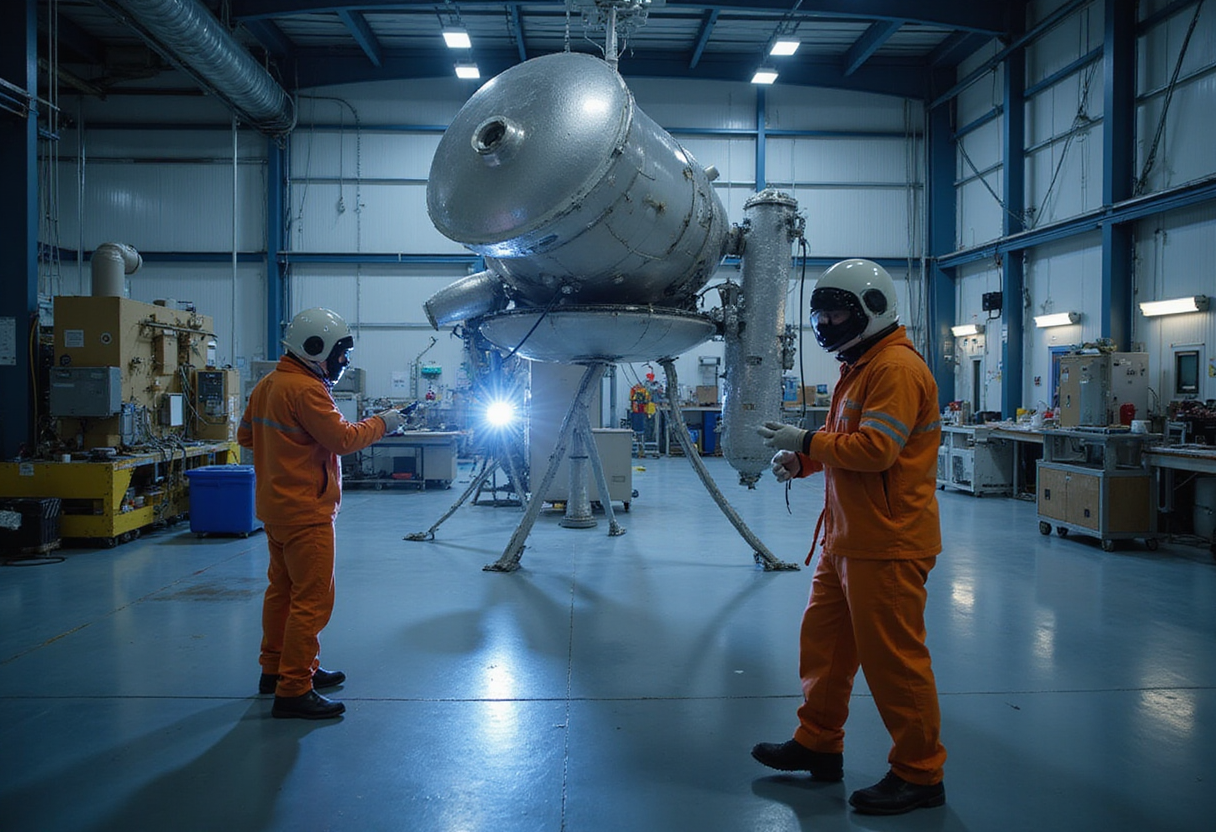
A washing-machine-sized CubeSat launched from Vandenberg Space Force Base on Oct. 1, 2026, will autonomously approach up to four inoperable U.S. space objects in low Earth orbit starting in early 2027, demonstrating inspection technologies NASA says could one day enable in-space repairs and reduce orbital debris.
The spacecraft, named Otter 24C, is part of NASA's Small Spacecraft Propulsion and Inspection Capability (SSPICY) mission, built and operated by Starfish Space in Seattle.
What technology does SSPICY test?
SSPICY is the first mission to fly several inspection technologies together as a single integrated system, according to NASA. The key components include:
- Autonomous guidance and control software that makes real-time navigation decisions with minimal input from ground controllers.
- Computer vision and onboard sensors — algorithms that interpret camera imagery the way human eyes do — that allow the spacecraft to assess each target up close.
- An electric propulsion system that uses electricity to accelerate a propellant, enabling the Otter to travel between multiple objects.
- An articulating robotic boom — a jointed mechanical arm — that angles the spacecraft's thrusters for precise maneuvering between different orbits.
The Otter will not touch or dock with any targets during the mission. Instead, it will fly within hundreds of yards of each object to collect data on spin rate, orientation, and surface condition.
Why focus on inoperable satellites?
Spacecraft that fail or reach the end of their service life can break apart or collide, generating debris that ranges from large fragments to small particles. With thousands of satellites launched each year for communications, weather forecasting, navigation, and other services, congestion near Earth has become a growing operational concern, NASA said.
Detailed inspection data could help future missions service, repair, or remove defunct hardware, including by pulling objects into Earth's atmosphere for safe disposal. The campaign aims to characterize targets in enough detail to plan those follow-on activities.
Who is behind the mission?
NASA's Small Spacecraft and Distributed Systems program, part of the agency's Research and Technology Mission Directorate, funds and manages SSPICY. NASA's Small Business Innovation Research (SBIR) and Small Business Technology Transfer (STTR) programs also funded Starfish Space during early development of the Otter's core capabilities. NASA's Ames Research Center is connected to the project.
What happens next?
The Otter will spend several months in commissioning before inspections begin in early 2027. NASA last updated its SSPICY page on Oct. 8, 2026. Results from the campaign could shape how the agency approaches satellite servicing and debris mitigation for years to come.
via orbitaldebris.jsc.nasa.gov (Original)
More from Nathan Brooks
Nearby plates
- NASA Picks Three Missions to Find Caves, Ice and Hazards for First Moon Base
- NASA Picks Three New Payload Suites to Scout Its Future Moon Base
- NASA Turns Space Trash Into a Heat Shield Test Flight
- NASA Picks PSI-Led Team to Probe Possible Cave Beneath Lunar Pit
- ESA's Juice Spacecraft Used Earth as a Slingshot Toward Jupiter