Recorded November 23, 2026
Neuroscience & MindReported finding
Paper Wasps Recognize Faces With Brain Cells Like Ours
Northern paper wasps tell nestmates apart by facial color patterns, using neurons that resemble primate brain cells, a new Cell study shows—and it keeps the colony's hierarchy peaceful.
By Elena Vasquez3 min read672 words
In brief
- A study published in the journal Cell details how northern paper wasps recognize faces using specialized neurons similar to those in primate brains.
- The wasps' brains are roughly the size of a single rice grain, yet they remember and recall individuals by facial color patterns.
- Northern paper wasps (Polistes fuscatus), about half an inch long, range from southern Canada to Florida and Texas.
- Facial recognition maintains nest hierarchy and prevents constant dominance fights; wasps also 'socially eavesdrop' on fights between others.
- Study co-author Christopher Jernigan of Wake Forest University says the wasp system could help explain human identity recognition.
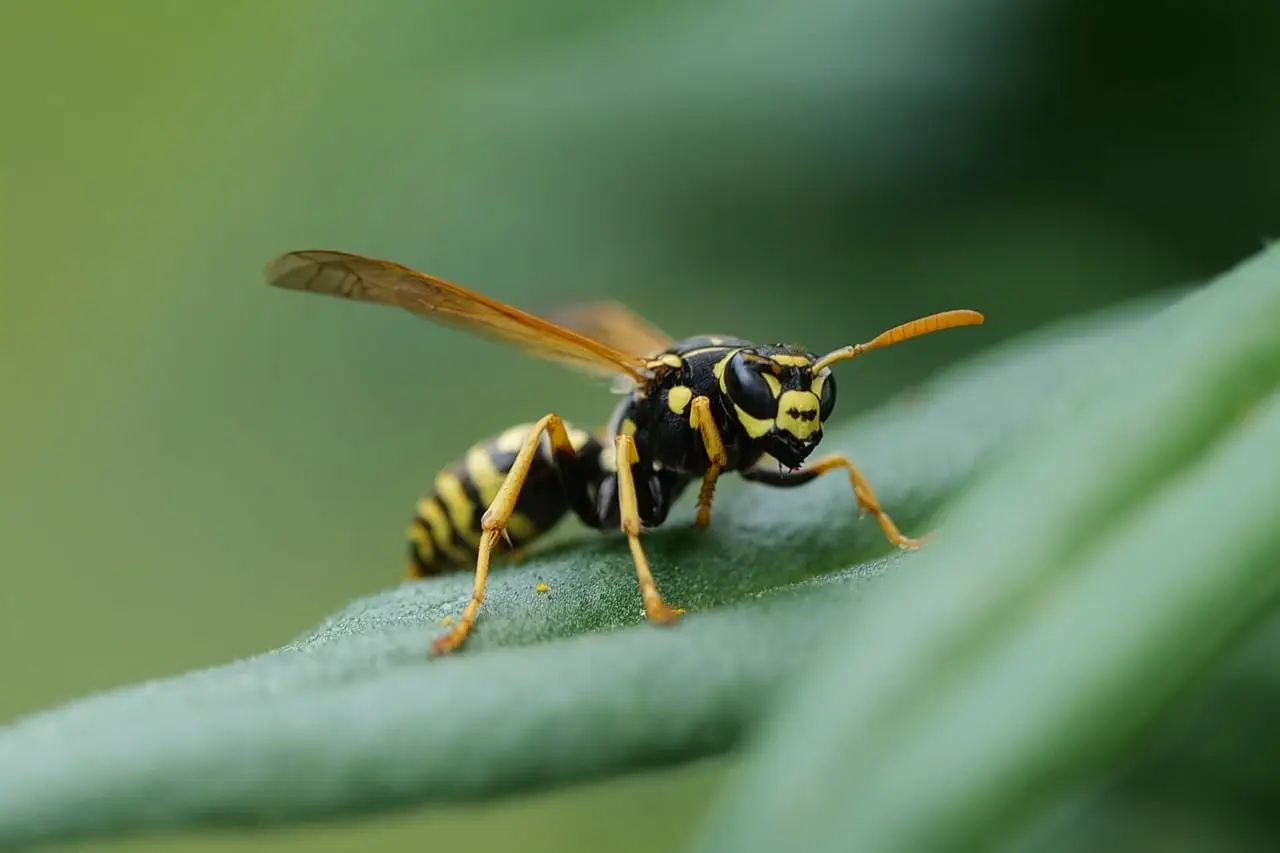
Female northern paper wasps can recognize individual faces—and a study published November 2026 in the journal Cell shows they do it with neurons that work much like our own. The insects use these skills to keep track of who outranks whom in the nest, which spares the colony a constant war for dominance.
The research team, led from Wake Forest University in North Carolina, found that wasps performing facial recognition rely on groups of brain cells that each respond preferentially to particular faces. That arrangement mirrors what happens in primate brains, even though the two systems evolved completely independently.
"These wasps that perform facial recognition have neurons similar to those in our own brains that are doing very similar things," said Christopher Jernigan, a study co-author and neuroethologist at Wake Forest University. "These groups of neurons are all firing, and each neuron has a slightly different preference for one face or another."
How do wasps actually tell faces apart?
The subject of the study, the northern paper wasp (Polistes fuscatus), is a roughly half-inch-long insect found from southern Canada down through Florida and Texas. The species gets its name from the paper-like nests of hexagonal cells that females often build under eaves and porch ceilings. Those nests even contain silk that glows under ultraviolet light, giving them a hidden fluorescent shine.
Despite a brain about the size of a single rice grain, these wasps distinguish nestmates by reading the color patterns on their faces. Specialized neurons compare those patterns from one face to the next, letting the insect tell mama wasp from papa wasp, and friend from foe.
The payoff is social stability. Female northern paper wasps live in a strict hierarchy, and facial memory lets each one remember where every nestmate stands. Once that ranking is settled, recognition helps maintain order without endless fighting.
Jernigan said the wasps are "able to do this incredibly complex task of remembering and recalling individuals" with brains and vision far simpler than ours.
What is social eavesdropping?
The wasps' social intelligence goes beyond simple recognition. They also perform what scientists call social eavesdropping.
- Two unknown wasps fight to establish dominance in the nest hierarchy.
- A spectator wasp watches the quarrel from the sidelines.
- When the spectator later meets one of the fighters, it already knows whether it needs to fight that individual for dominance.
"They will treat the winner of that fight independently in a third interaction differently than they would the loser," Jernigan explained. "Despite having these small brains and relatively simple vision, they have these really complex social lives that revolve around this specialized ability to recognize each other."
The resemblance to primates is striking. Wasps and humans built their face-recognition circuits separately, yet both arrived at a similar solution: populations of neurons, each tuned slightly differently, firing together to encode an individual identity.
Why does a wasp study matter for humans?
The researchers argue that the wasp system could serve as a simple model for understanding our own brains—specifically, how neural circuit connections and lived experience give rise to identity recognition.
"This system, hopefully, holds the potential to help us understand our own brains as we study the circuit connections and the role of experience in giving rise to identity recognition," Jernigan said.
He added that it's remarkable an insect has a "really human-like or primate-like ability that you wouldn't typically expect," and called it "almost unbelievable" that wasps use some of the same neural computations primates use for the same task. In primates, it takes a tremendous number of neural connections to pull off; wasps manage a comparable feat with a fraction of the hardware.
The findings are preliminary in the sense that the work covers one wasp species in laboratory conditions, and the exact circuit-level details remain to be mapped. But the study establishes that sophisticated individual recognition does not require a big brain. A rice-grain-sized one, wired the right way, is enough.
By Elena Vasquez
via popsci.com (Source)
More from Elena Vasquez
Show full bio
Correspondent covering money, funding and market shifts around general science news at SciBeat.
612 articles