Recorded November 22, 2026
Biology & EvolutionReported finding
Male Bumblebees Babysit: Hive Dads Double Egg-Laying Speed
Thermal imaging reveals male bumblebees actively incubating eggs and larvae, doubling queen egg-laying speed and boosting brood by up to 1.5 times in lab nests.
By Elena Vasquez4 min read724 words
In brief
- Queens with males in the nest began laying eggs twice as fast and produced up to 1.5 times more brood.
- Males in incubation posture reached thorax temperatures of about 34.8°C versus a usual 31°C.
- The study appears in Royal Society Open Science (2026), DOI: 10.1098/rsos.261826.
- Nests tracked for about a month had no female workers, an artificial setup the authors flag as a limitation.
- A largely ignored 1980s study by Sydney Cameron had previously hinted at male brood care.
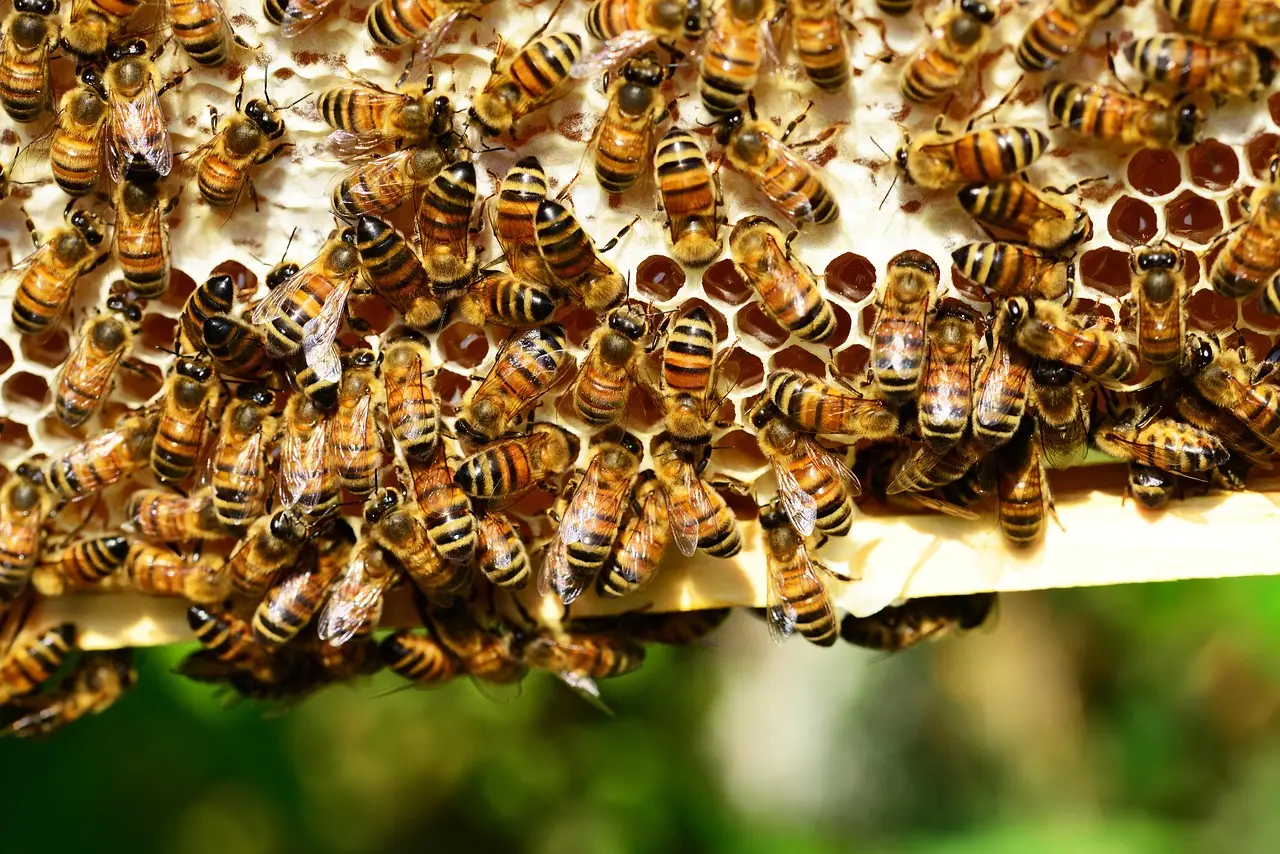
Queens sharing a nest with male bumblebees started laying eggs twice as fast and ended up with up to 1.5 times more brood, according to a new study published in the journal Royal Society Open Science. The finding overturns decades of assumption that male bumblebees contribute nothing to the hive but DNA.
"Queens with males in their nests began laying eggs twice as fast, and they end up with up to 1.5 times more brood," said Meghan Moore, an entomologist at UC Riverside and lead author of the study. "This is an important result at a time when bumblebee populations are threatened by pollution and habitat loss."
What did the thermal camera catch?
For most of the past half-century, the textbook picture was simple. Male bumblebees fly off to mate with queens, and female workers handle everything else — maintenance, feeding, and warming the young. One 1980s study, led by entomologist Sydney Cameron, professor emerita at the University of Illinois at Urbana-Champaign, suggested otherwise. It was largely ignored.
Moore didn't set out to overturn the consensus. She was photographing nests with a thermal camera for a separate experiment when she noticed something odd. Bright white spots — heat signatures — were coming from the males.
Looking closer, the males were hovering over eggs and larvae in what researchers call "incubation posture." They straddled the brood and made contact with their thorax, the body segment where flight muscles generate heat when activated.
"I was quite surprised to see them incubating," Moore said. "In the literature, they say the males' only purpose is to be 'flying bags of sperm,' that their only purpose is to mate with queens. But our research, and Sydney's, show this just isn't true."
How did they test male care?
To probe the accidental discovery, Moore and UCR entomology professor Hollis Woodard built laboratory nests. Each began with a mated queen plus one of four male setups: no males, one male, three males, or five males. No female workers were present in any nest.
The team tracked each nest for about a month, recording:
- Body temperatures from thermal imaging
- Whether males adopted the incubation posture
- How quickly queens laid eggs
- How many young each nest ultimately produced
Males in incubation posture showed clearly elevated thorax temperatures of about 34.8 degrees Celsius, versus a more typical 31 degrees. That gap means they were actively generating heat to warm the brood, not just sitting nearby.
One wrinkle: males incubated at lower temperatures than queens do. Moore suspects the cooler output may protect the viability of the sperm they carry, but she stresses that theory needs more research to confirm.
What are the study's limits?
The setup was artificial, and the researchers say so plainly. Wild bumblebee nests normally contain a queen and workers early on — not males. In the lab, the males couldn't leave the nest. Nobody knows how long males typically stick around in wild colonies.
"It's hard to find bumblebee nests in the wild," Woodard said. "And if you do manage to find one, it's hard to see what's going on inside. Laboratory experiments are the best proxy we have."
The team also can't yet pin down the males' motivations. One possibility is that the males stepped up only because no female workers were present. Moore doubts that explanation. "Though we don't think lack of females caused what we saw," she said. "In a smaller study we observed males doing some caring even in the presence of female workers."
The researchers believe the behavior likely occurs in the wild too, though they haven't confirmed it there.
What comes next?
Follow-up studies will examine whether brood care takes a physical toll on the males themselves. Woodard puts the question bluntly: "What's the trade-off? There's no free lunch. Males are exerting energy to care for siblings. We'd like to understand what it costs them."
The stakes extend beyond bee biology. Bumblebee populations face pressure from pollution and habitat loss, and understanding how nests grow — including a previously overlooked male role — could inform conservation efforts.
The study: Meghan E. Moore et al., "Male bumblebees are capable of providing brood care and impacting nest development in incipient nests," Royal Society Open Science (2026). DOI: 10.1098/rsos.261826.
via phys.org/rss-feed/ (Source)
More from Elena Vasquez
Show full bio
Correspondent covering money, funding and market shifts around general science news at SciBeat.
592 articles
Nearby plates
- Sudden Heat Spikes Harm Honey Bees More Than Sustained Heat
- Honey Bee Colonies Are Superorganisms, New Study Argues
- Bumblebee Brains Under a Million Neurons Rethink What Intelligence Requires
- Thin Mountain Air Stops Varroa Mites From Reproducing, Study Finds
- Heat Waves Are Aging Wild Fairy-Wrens Faster, DNA Study Finds