Recorded November 22, 2026
Biology & EvolutionReported finding
Thin Mountain Air Stops Varroa Mites From Reproducing, Study Finds
A PLOS Biology study of 60 colonies in China shows Varroa mites stop reproducing in low-oxygen mountain air. Thirteen of 15 hives above 3,500 m in Tibet survived two years; lower colonies died within one.
By Nathan Brooks3 min read688 words
In brief
- Study published Nov. 19 in PLOS Biology by Huoqing Zheng, Zhejiang University, and colleagues.
- 13 of 15 colonies above 3,500 m in Lhasa, Tibet, survived two years; all other colonies died within one year.
- Researchers tested 60 Varroa-infested colonies split into four groups of 15 across Tibet and Yunnan.
- Low-oxygen conditions recreated in low-altitude hives suppressed mite reproduction the same way.
- The cause of the two Lhasa colony deaths was not reported; hives were empty when checked.
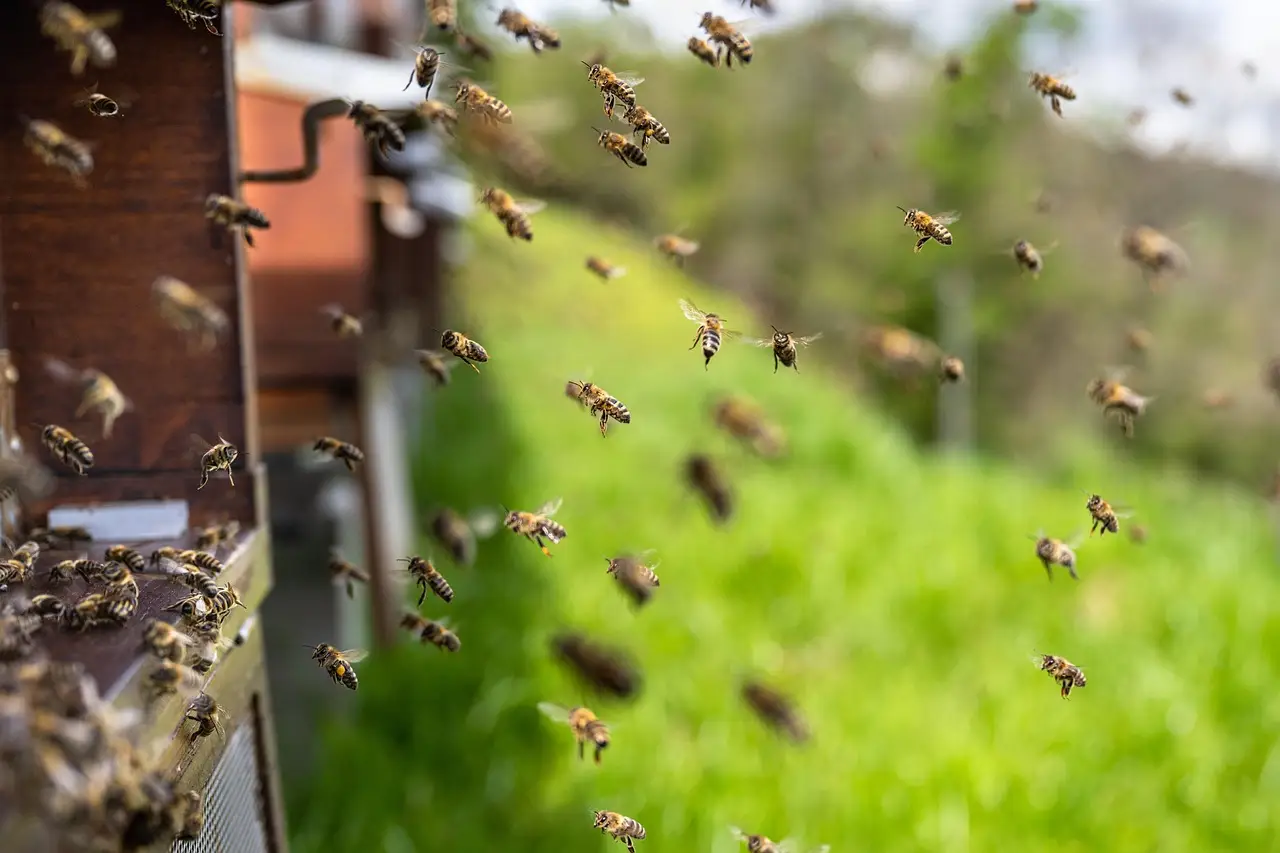
Thirteen of 15 honey bee colonies survived two years at altitudes above 3,500 meters (11,500 feet) in Lhasa, Tibet, while colonies at lower sites all died within a single year. The study, published Nov. 19 in the open-access journal PLOS Biology, links that survival gap to one of beekeeping's deadliest enemies: the parasitic mite Varroa destructor.
Huoqing Zheng of Zhejiang University in Hangzhou, China, and colleagues found that the mites simply stop reproducing properly in the thin, oxygen-poor air of the Tibetan Plateau. That's the altitude of a serious alpine expedition — roughly the height of Mount Everest's base camps — and it appears to be more than the parasite can handle.
Why does this matter for bees?
Varroa destructor is an ectoparasitic mite, meaning it lives on the outside of its host, and it ranks among the most damaging honey bee pests on the planet. Honey bees (Apis mellifera) are the most important managed pollinator of agricultural crops globally, so anything that weakens colonies ripples into food production. Mite infestations contribute to colony collapse, a persistent problem for beekeepers worldwide.
Current mite control leans heavily on chemical treatments, which come with costs, resistance concerns, and residues. A physical limit that the mite can't breed its way around would be a different kind of weapon entirely.
How did the researchers test it?
The team started with 60 colonies infested with V. destructor and split them into four groups of 15. They then moved each group to a separate location at a different altitude in Tibet and Yunnan province in southern China.
The results broke cleanly along elevation lines:
- Colonies above 3,500 meters in Lhasa had the highest two-year survival rate — 13 of 15 made it.
- Every colony at the other three locations died within one year.
- Mites at higher altitudes showed lower reproductive rates and delayed development in their offspring.
- When researchers artificially created low-oxygen conditions in hives at low altitude, mite reproduction dropped in the same way.
That last point is the study's strongest evidence. It suggests oxygen levels — not some other feature of high-altitude life — are what's suppressing the parasite.
What's the mechanism?
The researchers hypothesize that low oxygen pressure at high altitudes inhibits mite reproduction. In plain terms, the air contains less oxygen per breath, and the mites' physiology appears unable to compensate when it comes to producing and raising offspring.
The authors put it plainly in their statement: "We found that the low oxygen pressure on the Tibetan Plateau prevents the mites from reproducing. This physiological limit of varroa mites opens new avenues for controlling this globally destructive pest."
They go further on the discovery's significance: "This is the first time a physiologic limit that affects varroa reproduction has been discovered. This discovery could unlock innovative, chemical-free mite-control methods that will both benefit the beekeeping industry and help ensure global food security."
The story began, fittingly, with beekeepers. As the authors note, keepers in Tibet were the first to notice the parasitic varroa mite "mysteriously disappear" from their colonies.
What are the caveats?
This is a single study, and the authors themselves call for more work. Additional studies are needed to reproduce the results in different environmental contexts before anyone can say the effect is universal.
There's also an unanswered question inside the data. Two colonies at the Lhasa site died, and the researchers don't know why — the hives were already empty when they checked them, so no cause was recorded. Even at the protective altitude, colony loss isn't zero.
And a practical gap remains obvious: most of the world's beekeeping happens far below 3,500 meters. The low-altitude hive experiment, where researchers recreated oxygen-poor conditions artificially, is the thread that could eventually connect mountain air to sea-level apiaries — but that's a hypothesis for future research, not a product on the shelf.
The paper is "Altitude-induced hypoxia suppresses Varroa mite reproduction in Tibetan honey bees," by Ruike Wei et al., PLOS Biology (2026), DOI: 10.1371/journal.pbio.3004091.
via phys.org/rss-feed/ (Source)
More from Nathan Brooks
Show full bio
Market editor covering companies, deals and strategy in general science news at SciBeat.
563 articles
Nearby plates
- 1,742 Bee Species Live Nowhere but Islands, First Global Count Finds
- Colombia's First National Bee Checklist Counts 738 Species
- Honey Bee Colonies Are Superorganisms, New Study Argues
- Sudden Heat Spikes Harm Honey Bees More Than Sustained Heat
- 96 European grasslands reveal which management favors wild bees