Plate Nº 86 · recorded November 1, 2026
Biology & EvolutionReported finding
Reef's Deadliest Coral Killer May Actually Keep It Alive
University of Sydney research finds nearly 75% of crown-of-thorns starfish feeding events leave living coral, suggesting the notorious predator may boost reef diversity when its numbers stay low.
By James Calloway4 min read718 words
In brief
- Nearly 75% of observed crown-of-thorns starfish feeding events left living coral tissue behind.
- The Great Barrier Reef has had four major starfish outbreaks since the 1960s, roughly every 15 years.
- Fast-growing Acroporidae corals did not regenerate over starfish feeding scars; slower-growing Montipora and Porites did.
- Study published in Ecology and Evolution, vol. 16, issue 9, 2026, led by Dr. Shawna Foo.
- Researchers caution outbreaks remain destructive; the findings apply mainly to low-density, protected-area populations.
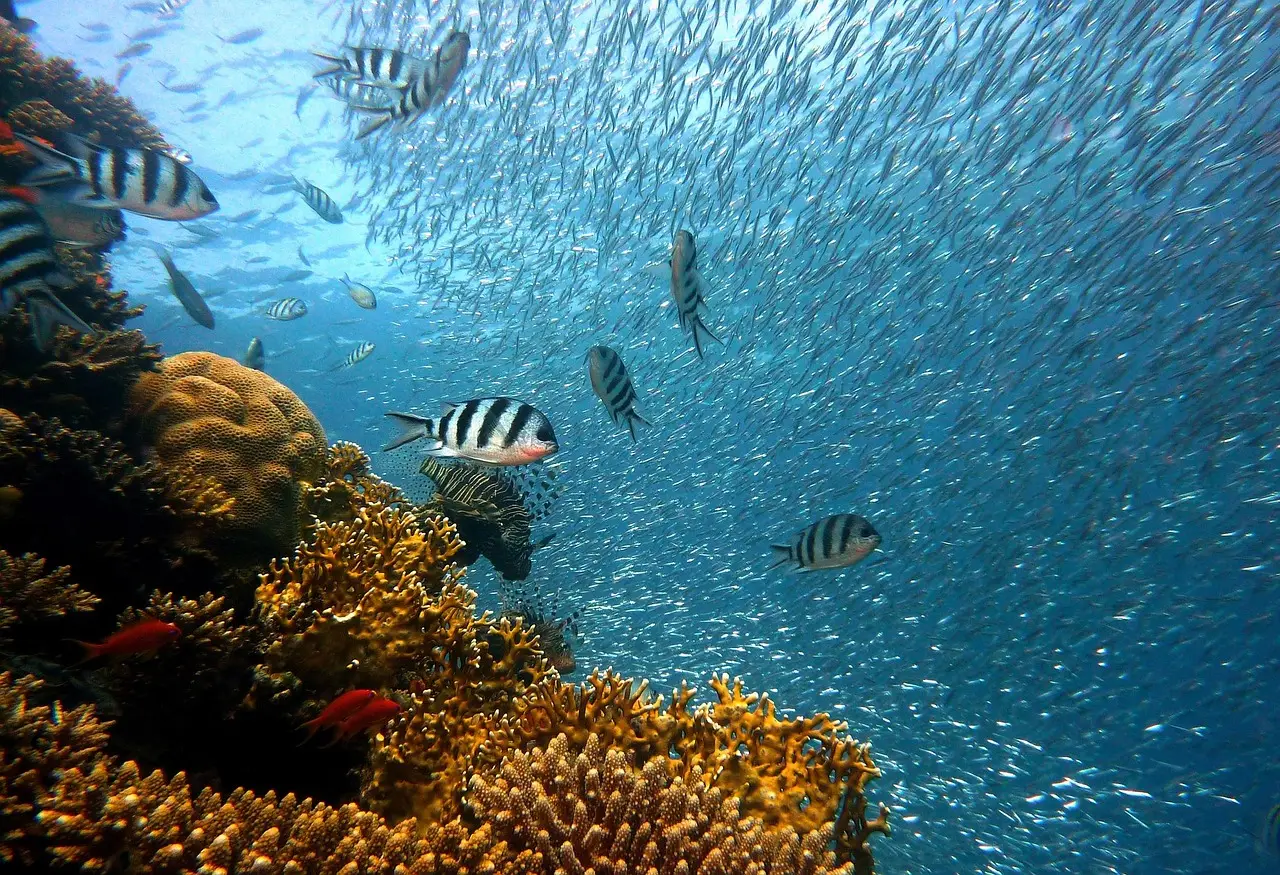
Nearly 75% of crown-of-thorns starfish feeding events on Australia's Great Barrier Reef leave living coral tissue behind, according to new University of Sydney research that complicates the reputation of one of the ocean's most despised predators.
That number is the study's core finding, and it's genuinely surprising. Crown-of-thorns starfish, or COTS, are covered in toxin-filled spines and have spent decades as public enemy number one on coral reefs. Since the 1960s, the Great Barrier Reef has weathered four major outbreaks, arriving roughly every 15 years, and each one stripped coral from vast stretches of reef. Declining populations of natural predators, including tritons (large predatory snails) and several reef fish species, have made things worse.
But destruction isn't the whole story. The new study, published in Ecology and Evolution, suggests that at low, controlled numbers, these starfish may actively help reefs stay diverse and healthy.
What did the researchers actually watch?
A team led by Dr. Shawna Foo, a University of Sydney Horizon Fellow in the School of Life and Environmental Sciences, worked at One Tree Island Research Station on the Great Barrier Reef. They tracked what happened to coral after individual starfish fed on it, examining the feeding scars and any surviving live tissue.
Crucially, the study sites sat inside protected areas where healthy fish populations keep starfish numbers low. These are not outbreak zones. Keep that caveat in mind; it shapes everything the study can and cannot claim.
The result: coral tissue survived roughly three out of every four observed feeding events.
"At One Tree Reef, COTS appear to consume a relatively consistent amount of coral during each meal and move on, rather than demolishing the entire coral colony," Dr. Foo said. "This meant live coral tissue remnants were frequently left behind."
How can a coral killer boost biodiversity?
Here's the mechanism, and it's simpler than you'd expect. Some corals, notably the fast-growing Acroporidae family, spread aggressively and crowd out slower-growing species. By grazing on the dominant ones, low-density starfish open space for the underdogs.
The data backs this up. Surviving fragments of fast-growing Acroporidae corals did not regenerate over the areas the starfish had damaged. Regrowth occurred mainly among slower-growing Montipora and Porites corals.
"By feeding on fast-growing corals such as Acropora, low-density COTS populations create space for slower-growing coral species to persist, helping to increase coral diversity," Dr. Foo said.
Co-author Professor Maria Byrne framed the finding within a familiar ecological idea. "The results are consistent with the intermediate disturbance hypothesis, an important framework in ecology and conservation," she said. In plain English: moderate, occasional disturbance can stop any single species from monopolizing an ecosystem.
Should we stop culling starfish?
Not so fast. The researchers themselves stress that outbreaks remain a serious threat, capable of wiping out extensive reef areas. The entire argument hinges on whether starfish stay at naturally manageable levels or explode into destructive swarms.
"It's important to distinguish between COTS populations performing their natural role as coral predators and outbreaks causing sustained reef decline," the team cautions.
There's also a real limitation here. The research was conducted mainly in protected areas with healthy fish populations and little risk of major outbreaks. We don't yet know whether the same pattern holds on degraded, predator-poor stretches of reef, which is where most outbreak damage actually happens.
Still, the practical implication for conservation managers is clear enough. Once an outbreak has been suppressed, wiping out every last starfish may be the wrong move.
"Once an outbreak is suppressed, the goal should not necessarily be to eliminate COTS entirely," Dr. Foo said. "Culling needs to be complemented by strong marine management to protect COTS predators and keep COTS populations in check."
So what does this change for the reef? Potentially, the target of culling programs, and a renewed push to protect the fish and tritons that do the population control for free. What it doesn't change is the threat of outbreaks, which remain as destructive as ever.
The study appears in Ecology and Evolution, volume 16, issue 9 (DOI: 10.1002/ece3.74285), authored by Shawna Andrea Foo, Matthew Clements, Adi Zweifler, Georgie Eggleton, Hayden Millican and Maria Byrne.
via dx.doi.org (Original)
More from James Calloway
Show full bio
Staff writer covering regulation, policy and their impact on general science news at SciBeat.
267 articles
Nearby plates
- Diseased Florida Keys Coral Faced Nearly 4x Death Risk in 2023 Heat Wave
- Green turtles rebound to 'least concern' amid steep global wildlife declines
- Aldabra's giant tortoises near 183,000 in first rigorous atoll-wide count
- Reef sound playback drew up to 14 times more fish larvae
- Fish thrive in urban waters, but their genes tell a different story