Plate Nº 28 · recorded November 17, 2026
Earth & ClimateReported finding
Scientists Map the Ocean's Climate Safe Zones, and Find Blind Spots
Only 82 of 798 studies from 2021–2026 map marine climate refugia. Corals get 33% of attention while the high seas and deep ocean stay largely unexplored, a new review finds.
By Nathan Brooks4 min read764 words
In brief
- A review of 798 studies (2021–2026) found only 82 that identify or map marine climate refugia.
- Corals dominate refugia research at 33% of studies, versus 18% for fish and 14% for macroalgae; only 12% examine multiple species jointly.
- Refugia can occur from surface waters to depths beyond 1,000 meters (3,280 feet).
- The findings support the goal of protecting 30% of the ocean by 2030 under the Kunming–Montreal Global Biodiversity Framework.
- The U.N. High Seas Treaty (BBNJ Agreement) is now in force and could use refugia mapping to guide high-seas protected areas.
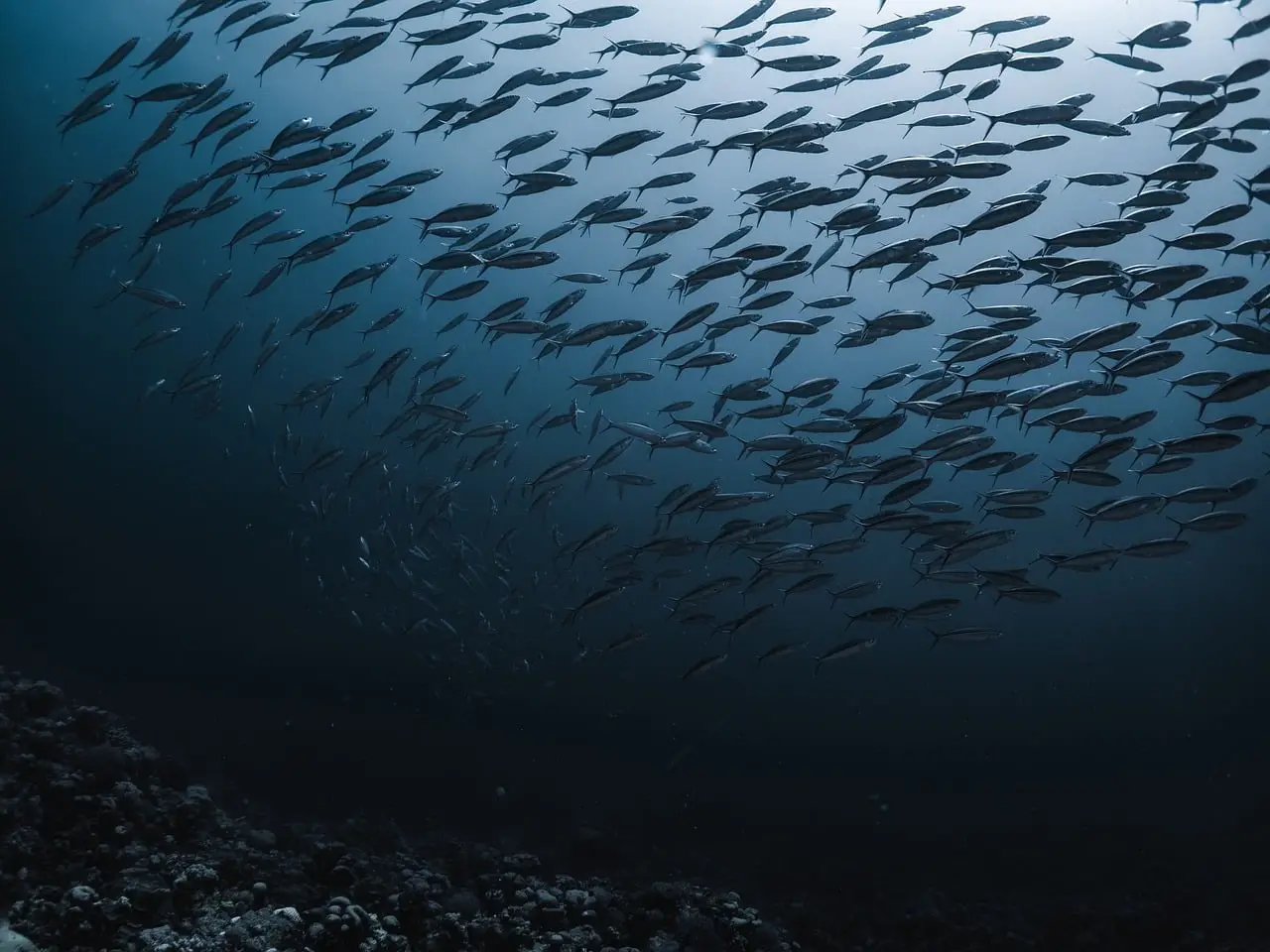
Only 82 of 798 scientific studies published between 2021 and 2026 actually identify or map marine climate refugia — the pockets of ocean that buffer species against warming, acidification and oxygen loss. That figure, from a new review in Trends in Ecology and Evolution, shows how thin the evidence base remains for a concept conservationists increasingly call essential.
Lead author Marina Sanz-Martín and colleagues argue these underwater refugia could anchor climate-smart ocean protection. "Identifying and protecting marine climate refugia is essential for advancing climate-smart conservation and meeting the international goal of protecting 30% of the ocean by 2030," the researchers write.
What exactly is a marine climate refuge?
The term "climate refugia" comes from land-based ecology, where it described areas that let species ride out climate shifts, particularly during the Quaternary period, roughly the last 2.6 million years. Applying it to the ocean is recent, and the fit isn't perfect.
Ocean circulation, upwelling — the upward flow of cold, nutrient-rich water — and the three-dimensional structure of habitats all shape where species can survive. The review says marine-specific frameworks are needed because terrestrial concepts don't automatically transfer underwater.
The stakes are high. Warming, acidification, oxygen loss, sea-level rise and intensifying extreme events are already driving species shifts and mass mortality events across marine ecosystems. Those impacts, though, aren't evenly spread. Some areas buffer them better than others.
How are refugia identified?
The review distilled three main approaches from the 82 relevant studies:
- Low climate exposure: finding areas where ocean warming is slower, from surface waters down past 1,000 meters (3,280 feet) to the seafloor.
- Ecological resilience: mapping ecosystems observed to resist or recover, such as highly persistent kelp forests in the Northeast Pacific.
- Predictive modeling: forecasting areas expected to stay suitable, like those that could still support bamboo coral in the Mediterranean Sea.
Where are the gaps?
The data skews badly, geographically and taxonomically. Research clusters in the North Atlantic and North Pacific, while the high seas and the deep ocean — which together make up the vast majority of ocean habitat — remain largely unexplored.
"We found very concerning gaps in the high seas and deep ocean, regions that make up the vast majority of ocean habitat and where we still have major knowledge gaps about where biodiversity will persist," the authors write.
The species bias is just as stark. Corals dominate, appearing in 33% of studies, followed by fish at 18% and macroalgae at 14%. Seagrass meadows, mangroves and salt marshes are highly underrepresented, and only 12% of studies analyze multiple species together.
Put simply: for every ten studies, three look at corals and barely one examines how several species interact in the same refuge.
Why this matters for the 30-by-30 target
Under the Kunming–Montreal Global Biodiversity Framework, countries have committed to protecting 30% of the ocean by 2030. The review argues refugia protection is a practical way to hit that mark, because these areas reduce extinction risk and maintain ecosystem functioning.
Managers can act on the findings in concrete ways. They can prioritize refugia when establishing or expanding marine protected areas, cut local pressures such as pollution and overfishing so the areas keep functioning, and target kelp forest or coral reef restoration where conditions should remain suitable as the ocean warms.
Field projects are already testing the idea:
- In Tanzania, researchers used participatory mapping to compare how communities perceive climate change with modeled refugia in the Indian Ocean.
- In Australia, kelp refugia guide management and restoration actions.
- In Mexico, teams are turning refugia conservation into practical management guidelines.
What happens next?
The U.N. High Seas Treaty — formally the Biodiversity Beyond National Jurisdiction, or BBNJ, Agreement — is now in force. It gives countries a landmark framework for conserving marine biodiversity in international waters, and refugia identification could help guide a network of high-seas protected areas under it.
The study adds a caution, though. Finding a refuge on a map isn't the same as knowing it will sustain functional ecosystems long-term. Answering that will require combining observations, advanced models and adaptive management, then weaving refugia into spatial planning and marine resource decisions.
With the first COP focused on the high seas approaching, the authors frame refugia protection as an urgent, climate-smart opportunity — one that, for now, rests on 82 studies spread unevenly across a very large ocean.
Publication details: Marina Sanz-Martín et al., "Identifying marine climate refugia to advance climate-smart conservation," Trends in Ecology & Evolution (2026). DOI: 10.1016/j.tree.2026.04.007
via phys.org/rss-feed/ (Source)
More from Nathan Brooks
Show full bio
Market editor covering companies, deals and strategy in general science news at SciBeat.
406 articles
Nearby plates
- Fossil record links marine diversity peaks to climate state
- Two-thirds of flooded coastlines could host invasive species by 2100
- Africa's Underwater Meadows Need Urgent Protection, Scientists Warn
- Deep Reefs Lost Their Shield: 75% of Tropical Corals Hit by Heat
- Two Remote Pacific Atolls Rank Among the World's Last Intact Reefs