Plate Nº 24 · recorded September 29, 2026
Biology & EvolutionReported finding
Africa's Underwater Meadows Need Urgent Protection, Scientists Warn
The first Africa-wide review of seagrass restoration finds trials in only six countries and major gaps in basic data on meadow extent and health along the continent's coasts.
By Marcus Bennett4 min read733 words
In brief
- Only four African countries—Kenya, Mozambique, South Africa and Tunisia—could provide data on seagrass meadow loss and gain.
- Seagrass restoration trials have taken place in just six African countries: Mozambique, Kenya, South Africa, Tanzania, The Gambia and Tunisia.
- Africa's seagrass meadows occur along coastlines home to more than 250 million people, with coastal populations rising substantially since 2010.
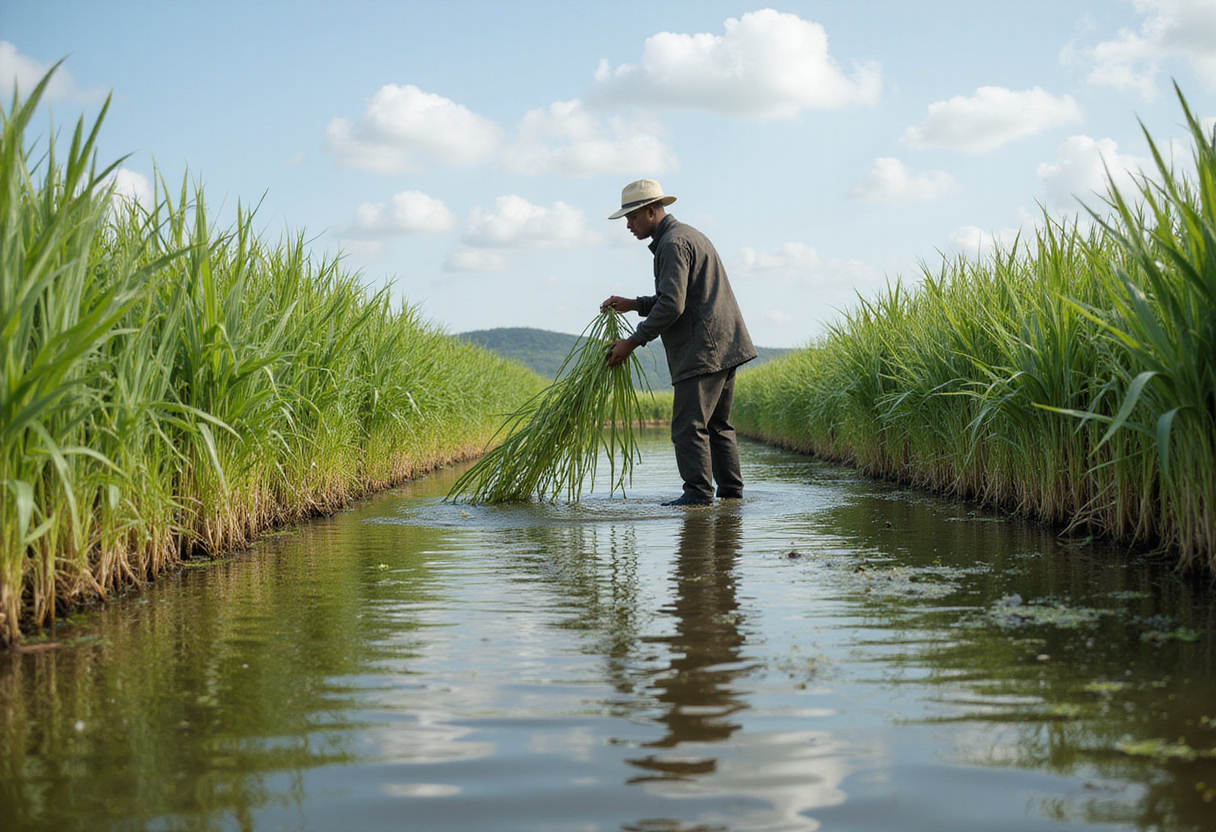
A team of African researchers has published the first comprehensive review of seagrass restoration activities along Africa's coastline—and their findings reveal how little we know about these underwater ecosystems.
The review, led by Professor Sophie von der Heyden of Stellenbosch University's Department of Botany and Zoology, working with colleagues from North, West and East African countries, appeared in the Journal of Applied Ecology under the title "Identifying and addressing critical gaps to accelerate seagrass restoration in Africa."
What are seagrasses, and why do they matter?
Seagrasses are flowering plants that grow in shallow coastal waters, where their bright green leaves form underwater meadows. Along the African coastline, these meadows have supported human societies for millennia, providing food, medicine, raw materials, and cultural and spiritual meaning.
Despite this long relationship, seagrass ecosystems remain among the most poorly understood ocean habitats in terms of their global distribution and status. Von der Heyden points to a stark imbalance in scientific attention: while seagrass research has increased globally over the past 20 years, there is roughly six times as much research on coral reefs as on seagrasses.
"Seagrass restoration is an important part of maintaining seagrass meadows as they decline globally, but seagrass restoration science is fragmented and species-specific, meaning that what works in one region cannot be applied elsewhere," she explains.
A continent-wide data gap
The authors evaluated published seagrass restoration studies in coastal countries with known seagrass meadows. Their most striking finding concerns basic mapping: one of the biggest challenges in monitoring seagrasses in Africa is uncertainty about the extent and area the meadows actually cover in most countries.
Only four countries—Kenya, Mozambique, South Africa and Tunisia—could provide data on the loss and gain of seagrass meadows. In many other nations, nobody knows whether meadows are stable or declining.
The stakes are considerable. Seagrass meadows in Africa occur along coastlines home to more than 250 million people, and the number living within 50 kilometers (31 miles) of the coast has risen substantially since 2010. Combined with regional climate change and other pressures, this population growth could mean Africa's seagrass meadows are in serious decline—although without better monitoring, that remains an open question.
Only a handful of restoration trials
The review identified restoration trials in just six countries: Mozambique, Kenya, South Africa, Tanzania, The Gambia and Tunisia. Researchers have tested a diverse set of techniques, with some proving more successful than others.
Still, the evidence base remains thin. "The small number of trials and different outcomes means that we are a long way off from really knowing what works for African seagrass restoration," von der Heyden says.
A roadmap for action
The review offers a timely perspective on strengthening seagrass restoration efforts in Africa. It aligns with two international frameworks: the United Nations Decade of Ecosystem Restoration (2021–2030) and the recognition of seagrasses as an "Essential Ocean Variable," a designation for key measurements needed to understand ocean change.
The authors make several concrete recommendations. They call for using advances in remote sensing and artificial intelligence to measure the extent and dynamics of meadows, urgently identifying and limiting the drivers of seagrass loss, and exploring opportunities for large-scale restoration.
They also recommend building a culture of stewardship that supports both conservation initiatives and local livelihoods. The meadows sustain local economies, including small-scale fisheries, and offer opportunities to participate in the blue economy—the sustainable use of ocean resources for economic growth—through initiatives such as carbon credit projects.
Money and political commitment remain open questions. "However, we need the political will, secure funding and the buy-in from multiple stakeholders, such as communities living next to seagrass meadows, to ensure meaningful restoration of African seagrass meadows," von der Heyden warns.
Protect what remains first
Above all, the authors call for the immediate, targeted protection of the seagrass meadows that still exist. "Protecting extant meadows not only continues to provide benefits to nature and people but offers opportunities for the cultivation of plant material for future restoration efforts," they write.
Seagrass meadows face threats around the world. Protecting and restoring them, the researchers conclude, is one of the best ways to support both people and planet.
Publication details: Sophie von der Heyden et al, "Identifying and addressing critical gaps to accelerate seagrass restoration in Africa," Journal of Applied Ecology (2026). DOI: 10.1111/1365-2664.70545
via Phys.org Biology (Source)
More from Marcus Bennett
Nearby plates
- Fossil Teeth Suggest Some Dinosaurs Grazed on Seaweed
- Underwater Umbrellas Helped Florida Corals Survive Record Heat Stress
- Ancient Ocean Chemistry Kept Earth Breathing, Study Finds
- Small Crop Patches Draw 70% More Birds, Three-Year Study Finds
- Insects Keep Vertebrates Alive as Food, Medicine and Home Builders