Plate Nº 56 · recorded November 14, 2026
Reported finding
Skull Fractures Back Theory of Sacrifice at Egypt's First Royal Tombs
Eighteen of 46 skulls buried near Egypt's First Dynasty kings show perimortem fractures, giving the first physical backing to a 100-year-old human sacrifice theory.
By James Calloway4 min read733 words
In brief
- 18 of 46 skulls from Abydos, about 39%, show potentially fatal head injuries
- The tombs belong to Egypt's First Dynasty, buried roughly 5,000 years ago around 3000 BCE
- Flinders Petrie first suspected retainer sacrifice in the 1920s but found no physical evidence
- The study, led by Purdue's Roselyn Campbell, appears in Frontiers in Environmental Archaeology, 2026
- The skulls came from the Duckworth Collection at Cambridge University
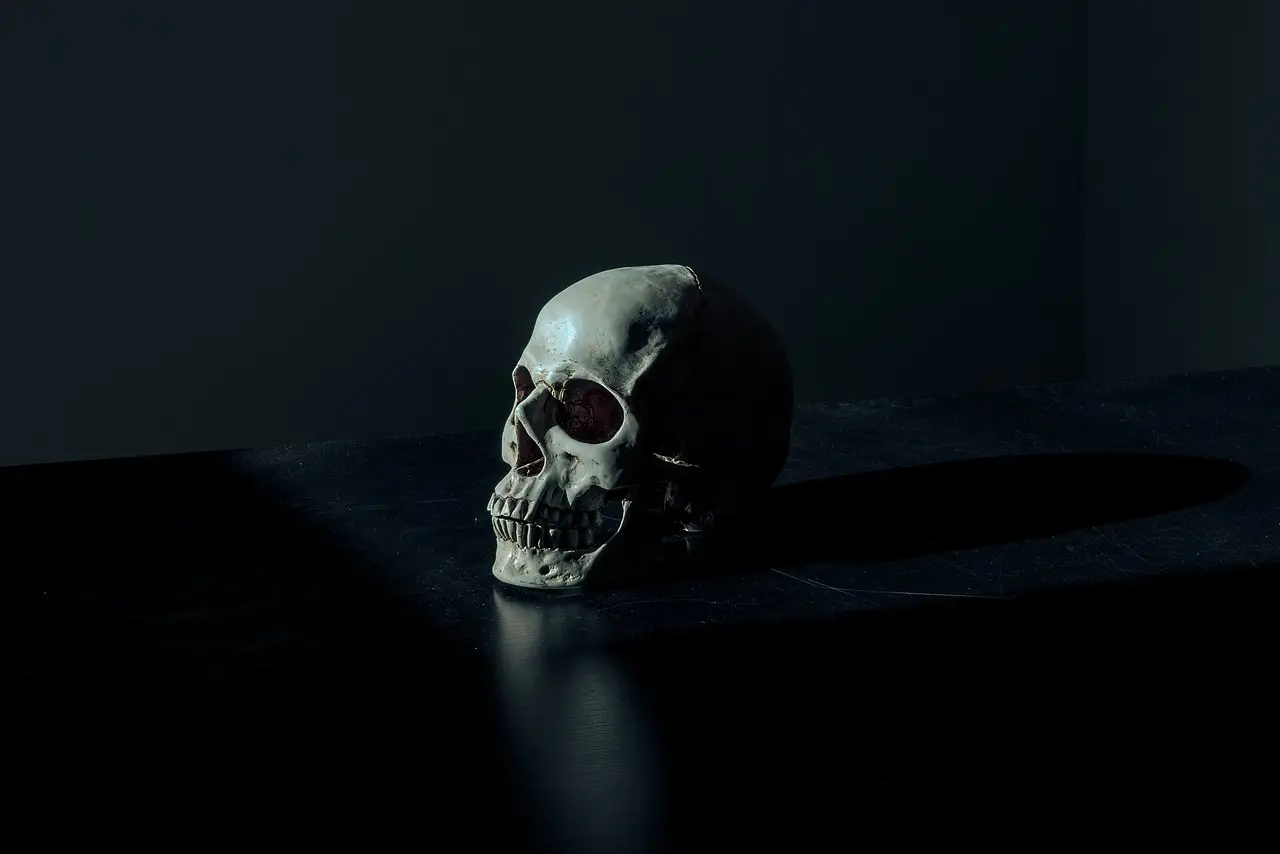
Eighteen of 46 ancient skulls — roughly 39% — show signs of potentially fatal head injuries, according to a new forensic study that finally lends physical evidence to a theory archaeologists have debated for a century: Egypt's first kings may have had their attendants killed to serve them in the afterlife.
The skulls come from subsidiary burials surrounding royal tombs at Abydos, where members of Egypt's First Dynasty were interred around 3000 BCE. That's 5,000 years of silence, and until now, no proof of violence.
What did the researchers actually find?
Dr. Roselyn Campbell of Purdue University, who led the study published in Frontiers in Environmental Archaeology, tracked down 46 skulls preserved in the Duckworth Collection at Cambridge University. She examined them with modern forensic methods, looking for what earlier investigators missed.
She found it. Eighteen skulls carried substantial cranial trauma, mostly linear fractures — cracks running along the bone — that forensic analysis identified as perimortem, meaning they occurred around the time of death, not after it.
"The injuries on the preserved crania are generally linear fractures, which would likely cause rapid unconsciousness, internal bleeding, and death," Campbell said. Some of the 18 skulls also showed sharp-force trauma, including a chopping injury to one individual's eye.
The skeletons' original excavator, Flinders Petrie, had apparently read those same cracks as natural postmortem damage. That misreading is precisely why the sacrifice theory sat unresolved for a hundred years.
Why did anyone suspect sacrifice in the first place?
When Petrie excavated the Abydos graves in the 1920s, he noticed something odd: unusually large numbers of people buried in neat rows around single rulers. Some royal burial sites included hundreds of these subsidiary graves.
"Each subsidiary burial was a simple chamber in a row of dozens of others," Campbell said. "Some people had a simple coffin. Most people had a few grave goods, like ceramic vessels, and many graves also included small objects like copper tools, projectile points, or small ivory figurines."
A few grave markers Petrie found carried names and official titles, mostly referring to lower- or mid-level officials and artisans.
Petrie proposed these people were victims of retainer sacrifice — the killing of a ruler's close associates when the ruler dies. "In many cultures, retainer sacrifice is practiced because of beliefs that the sacrificed individuals will continue to serve the ruler in some kind of afterlife, but retainer sacrifice can also be a visceral display of the ruler's power," Campbell explained. Some retainers might have volunteered for eternal life or honor. Others may have been chosen, or forced.
But Petrie couldn't find fatal injuries. Without them, the idea stayed a hunch.
What does this change for the sacrifice theory?
It moves the hypothesis from plausible to partially proven — with heavy caveats. The weapon question, for instance, remains open. Egyptian art often shows kings striking enemies with maces, but a mace typically leaves depressed, caved-in fractures. The Abydos injuries are predominantly linear, more consistent with broad, flat objects or severe falls.
Falls can't be fully ruled out. Yet a fall hard enough to crack a skull should have damaged other bones, and Petrie's records and photographs document no such injuries.
The picture is incomplete in other ways too. Petrie reburied most of the human remains, so only skulls survived for study. Researchers can't determine how the other individuals died — some may have died naturally, others by methods that leave no skeletal marks, such as asphyxiation. Additional injuries might surface if the full skeletons were ever recovered. They lie somewhere, reburied more than a century ago.
"I was drawn to these retainers partly because, even though they were buried around royalty, they are mostly relegated to footnotes in the grander narrative," Campbell said. "Who were these people and how did they view the ruler and their own role in his or her life and death?" Her forthcoming book, State-sanctioned Violence and Human Sacrifice in Early Dynastic Egypt (Routledge Press), expands on the subject.
The study's broader lesson is methodological: legacy collections can yield new answers when reexamined with updated techniques, even datasets Campbell calls "incomplete and imperfect." Her wish list is straightforward. "If I had unlimited resources, I would love to figure out where the bodies of these individuals might be and analyze them!"
Until someone finds them, 39% remains a floor, not a verdict.
via sciencedaily.com (Source)
More from James Calloway
Show full bio
Staff writer covering regulation, policy and their impact on general science news at SciBeat.
379 articles
Nearby plates
- Scientists digitally reconstruct face of 315,000-year-old Homo sapiens
- Ancient Peru's mass sacrifices were rare, study finds
- First European Meرaraptor Found in a Museum Drawer After 100 Years
- Taung Child Dated to 3 Million Years Ago Still Reshapes Human Origins
- 220-Million-Year-Old Skull From South Africa Unveils New Dinosaur Species