Recorded November 19, 2026
Biology & EvolutionReported finding
Sumatra rubber and oil palm monocultures held about 50% fewer species
A 32-plot Sumatra study found about 50% fewer species in monocultures and up to 78% fewer at landscape scale, exposing ecological simplification hidden by species counts.
By Elena Vasquez4 min read725 words
In brief
- Researchers analyzed 32 plots across tropical lowlands in Sumatra.
- The survey sampled 40,000 species from 24 groups, including organisms above and below ground.
- Monocultures averaged about 50% fewer species than rainforests, with landscape-level deficits reaching 78%.
- Species-poor aboveground sites contained subsets of the species found at richer sites.
- The primary study and a related Nature item were published in 2026.
By Elena Vasquez
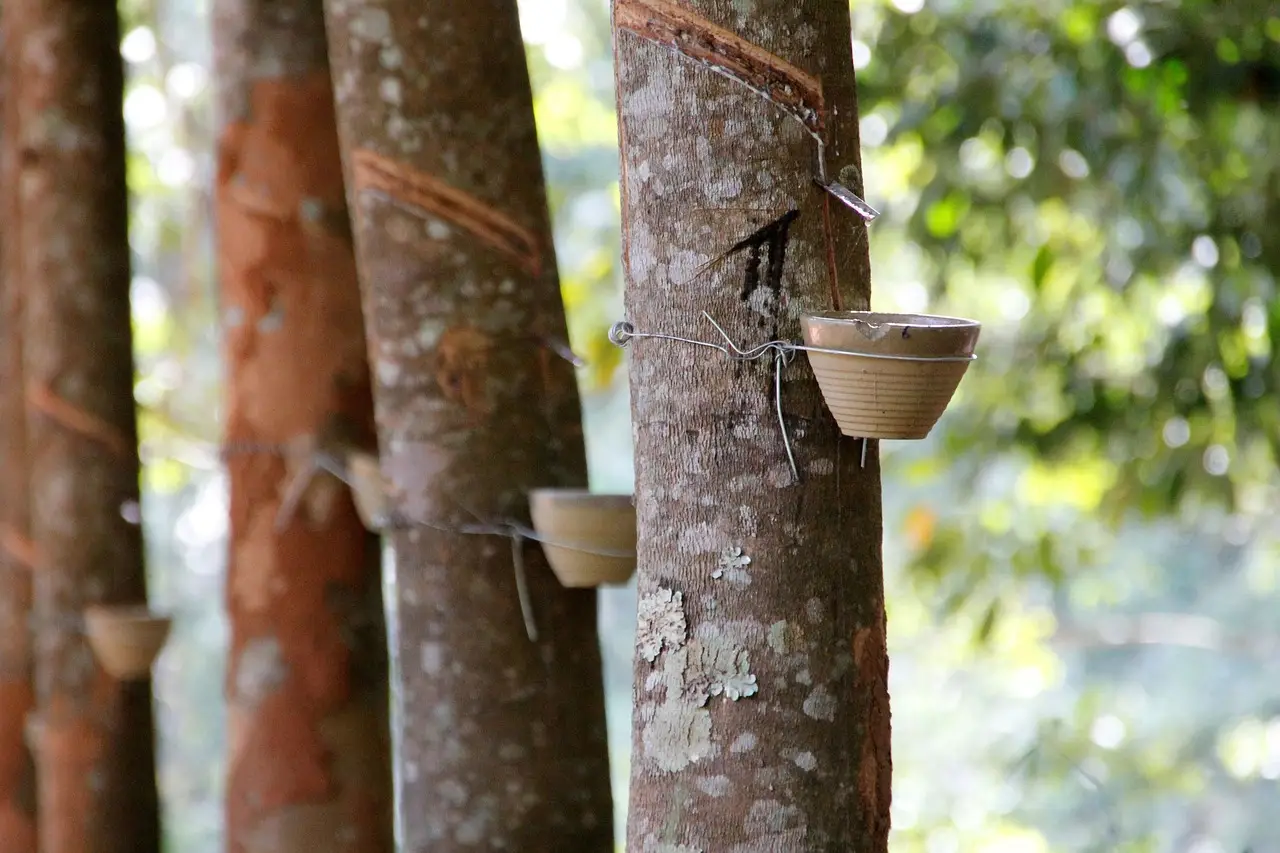
Intensively farmed rubber and oil palm monocultures in Sumatra held about 50% fewer species than rainforest areas on average, and as many as 78% fewer across the wider landscape, a 2026 international study led by the University of Göttingen reports.
The conversion of tropical rainforests into these plantations threatens global biodiversity. The new study adds a complication: fewer species did not always mean the remaining communities became more alike. Intensive agriculture changed biodiversity in ways a simple species tally could miss.
What did the plantations change?
Across the sampled landscapes, average local diversity for the species studied in individual monoculture areas was roughly 50% lower than in rainforest. At the landscape scale, where researchers assessed diversity across a broader area, the deficit reached 78%. Counts fell at both scales, but by different amounts.
Plantations did not automatically converge on the same species mix. The study reported that organisms responded very differently to intensive agriculture. Aboveground communities in monoculture sites remained strongly different from one another because species-poor sites held smaller subsets of the species found at richer sites.
Takeaway: Intensive farming sharply reduced biodiversity, but the remaining communities did not all become alike.
How did researchers measure the change?
The international team analyzed 32 plots in the tropical lowlands of Indonesia’s island of Sumatra. The team sampled across a gradient of land-use intensity: lowland forest, traditional rubber farming where rubber trees grew alongside other trees, and intensively managed smallholder rubber or oil palm monocultures.
Smallholders are small-scale farmers, and monocultures are areas dominated by a single crop. Across the gradient, the researchers sampled a total of 40,000 species from 24 groups, including plants, birds and bats, insects and spiders, soil organisms and microorganisms. The sample covered species diversity both above and below ground.
That breadth allowed the team to examine how farming intensity related to biodiversity change across many kinds of organisms.
Takeaway: The study sampled 40,000 species from 24 groups along a forest-to-plantation gradient.
Why can species counts mislead?
Species richness, meaning the number of different species in a place, showed the scale of the losses. It did not fully describe what remained.
Monoculture sites did not become more alike just because they had fewer species.
“We found that the sharp decline in the number of species does not automatically lead to increased similarity in community composition in monocultures,” said Dr. Nathaly Guerrero-Ramírez, a postdoctoral researcher in Biodiversity, Macroecology and Biogeography at the University of Göttingen.
She added: “However, aboveground communities in monoculture sites differed strongly because species-poor sites contained subsets of the species present at richer ones. This indicates that apparent differences between communities can conceal a progressive simplification of biodiversity.”
Progressive simplification here means that the species at a poorer site form a subset of those at richer sites. Differences between lists can therefore conceal a narrowing of the overall biological community. That makes species richness alone an insufficient measure of the ecological consequences of land use.
Takeaway: A species count can show the loss while missing the narrowing of the community that remains.
What changes for conservation?
“What matters is which species occur in different locations and how their communities are structured. For nature conservation, this means that we cannot focus on individual protected areas or plantations, but we must consider entire landscapes,” said Holger Kreft, a professor who leads the research group at Göttingen University.
The recommendation follows from the study’s distinction between a species count and the structure of a community. Conservation must track how many species remain, which species occur at each location, and how those communities fit together across entire landscapes.
“It is only by taking into account the diversity of habitats and groups of organisms that we will be able to effectively limit the loss of tropical biodiversity.”
Takeaway: Protecting tropical biodiversity requires a landscape-wide view of species, habitats and organism groups.
What did Nature publish?
Nature published the primary study, “Tropical land-use intensification restructures biodiversity,” in 2026. Its DOI is 10.1038/s41586-026-11298-6.
A related Nature item, “Tropical land-use intensification reshapes biodiversity in expected and unexpected ways,” lists the DOI 10.1038/d41586-026-03602-1.
Takeaway: The published evidence treats species counts as one measure of biodiversity, not a complete description of ecological change.
via phys.org/rss-feed/ (Source)
More from Elena Vasquez
Show full bio
Correspondent covering money, funding and market shifts around general science news at SciBeat.
592 articles
Nearby plates
- Denser Forests Do Not Always Mean More Bird Species, Island Study Finds
- Tree-rich landscapes help birds and bats nearly double Peru's cacao yields
- Protecting Standing Amazon Forests Beats Restoration, Study Finds
- Habitat Loss Reshapes Howler Monkey Gut Microbiomes, Study Finds
- Over 80% of Insect Species Live in the Tropics. Science Keeps Missing Them