Plate Nº 90 · recorded November 10, 2026
Earth & ClimateReported finding
Tin deposits come from source rocks, not cooling, study finds
Tin granites are 'born this way': new St Andrews modeling shows tin deposits come from reduced, tin-rich source rocks, not from magma cooling — rewriting exploration strategy.
By Elena Vasquez4 min read723 words
In brief
- Study published in Geology (2026), DOI 10.1130/g55195.1, by University of St Andrews and Oxford researchers
- Tin granites' defining traits are inherited from tin-rich, highly reduced source rocks, not fractional crystallization
- Fractional crystallization actually oxidizes magma, so it cannot produce the reduced granites that host tin
- Tin is the solder powering phones, batteries and AI data centers, making it critical to the net-zero transition
- Lead author Joseph Benson: without a tin-rich, reduced source rock, 'you will never form a tin deposit'
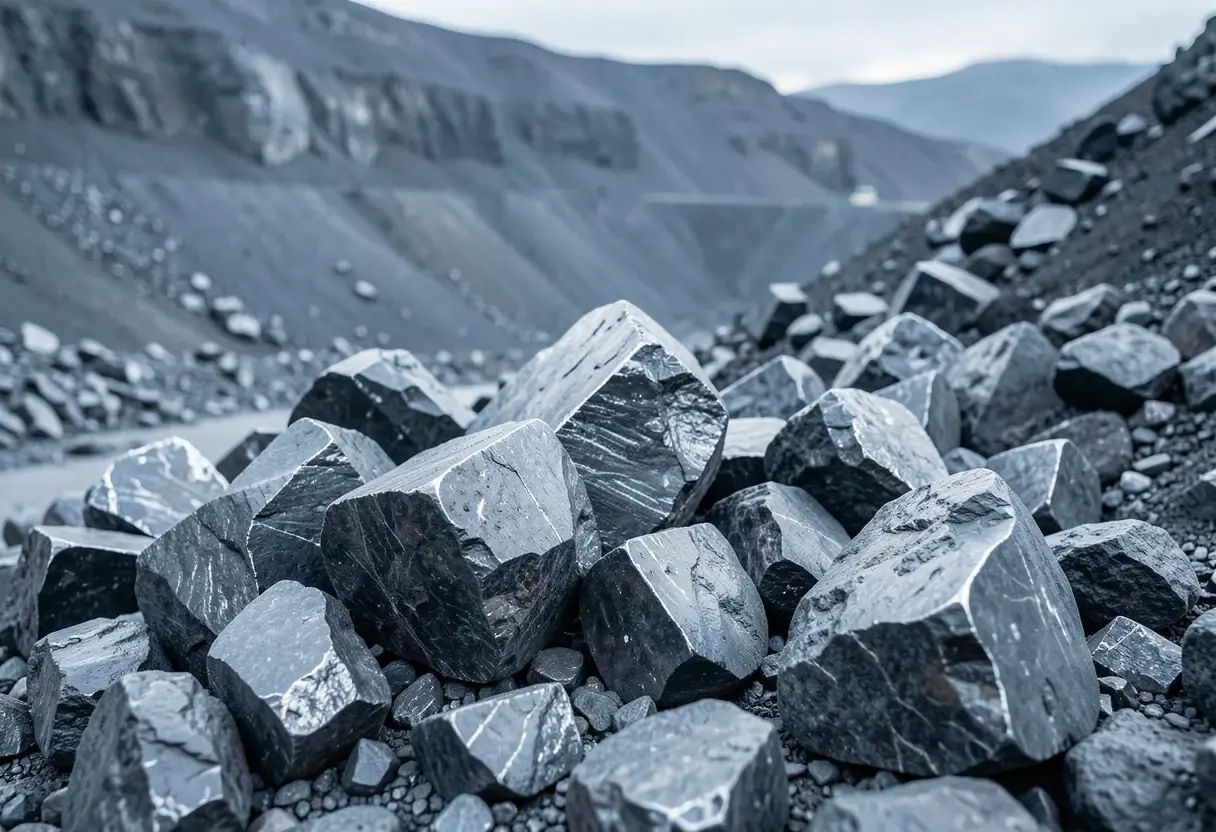
The rocks that produce most of the world's tin are born rich, not made rich. That's the central finding of a new study from the University of St Andrews, published in the journal Geology, which overturns the long-standing theory that tin deposits form as granite magma cools.
The research matters far beyond geology. Tin is a critical metal for the energy transition. It's the solder that holds together virtually every modern electronic device, from mobile phones and batteries to AI data centers. Electrification on the path to net zero simply doesn't happen without enough of it. Finding new tin deposits, with a smaller environmental footprint than existing ones, means understanding exactly how nature builds them.
What did researchers actually find?
The team, from the School of Earth and Environmental Sciences at St Andrews working with colleagues at the University of Oxford, studied "tin granites" — the magmatic rocks that supply the bulk of the world's tin, including the classic examples in southwest England.
For decades, geologists credited a process called fractional crystallization: as granite magma cools and crystallizes, tin gradually concentrates in the remaining melt. The new paper dismantles that idea.
Using the latest advances in geochemical modeling, the researchers showed that the defining traits of tin granites are set at their geological source — what gets melted to form the magma in the first place. In short: nature, not nurture.
Lead author Joseph Benson of the School of Earth and Environmental Sciences put it bluntly: "We've traditionally assumed tin granites become enriched during cooling and crystallization. In fact, our study reveals these magmas are essentially born this way. Unless you start with a tin-rich, highly reduced source rock, you will never form a tin deposit."
How can a magma be both tin-rich and reduced?
The study tackled a puzzle that older models ignored. Tin granites are known for two features: they're rich in tin, and they're highly reduced — meaning low in oxygen, chemically speaking. Copper-rich granites, by contrast, tend to be oxidized. Earlier quantitative models explained the tin enrichment but never the reduced signature.
The new modeling answers both at once. The reduced character is inherited directly from melting highly reduced source rocks. And the melting conditions that produce a reduced melt fall exactly within a "redox transition zone" — a specific window of oxygen conditions where tin preferentially enters the magma rather than staying behind in the source rock.
Two traits, one origin. That's the mechanism.
Where the old theory breaks down
The modeling also exposed a critical flaw in the traditional view. Fractional crystallization, the very process long invoked to explain tin deposits, actually oxidizes magma as it proceeds. A process that makes magma more oxygen-rich cannot simultaneously produce the reduced granites that define tin systems.
The implication is stark. Tin mineralization requires a source rock that is already tin-rich before melting ever begins.
That also explains why tin granites are so scarce. Their rarity isn't about magmatic processing, which happens routinely. It's about the rare convergence of two conditions in one place: source rocks that are both tin-rich and highly reduced.
What does this mean for tin exploration?
Plenty, potentially. The study delivers new, quantitative constraints on tin granite petrogenesis — the branch of geology dealing with how these rocks form. Those constraints can narrow down which geological terranes, or regions of shared rock history, are worth prospecting for new deposits.
For an industry hunting critical metals, that's a sharper map. Exploration teams can now prioritize areas with the right source-rock chemistry rather than chasing granite bodies whose cooling history merely looked promising under the old theory.
The caveats are worth stating. This is a modeling study, grounded in geochemical simulation and coupled with recent experimental work, not a field survey of deposits. The findings constrain what's possible in nature; they don't guarantee a deposit under every qualifying terrane. Still, the source-versus-processing question sat unresolved for decades, and this paper settles it with numbers.
The paper, by Joseph Benson and colleagues, appears in Geology under the title "The tin granite trade-off: Modeling redox evolution during magmatic processing" (DOI: 10.1130/g55195.1).
Bottom line: if you want tin, look first at what melted — not at how it cooled.
via phys.org/rss-feed/ (Source)
More from Elena Vasquez
Show full bio
Correspondent covering money, funding and market shifts around general science news at SciBeat.
384 articles