Plate Nº 95 · recorded November 18, 2026
Space & AstronomyReported finding
ULA Loses Vulcan Rocket and 40 Amazon Satellites, Grounding a Key US Launcher
A Vulcan Centaur rocket failed 10 minutes after liftoff, destroying 40 Amazon Leo satellites. ULA says the booster underperformed from the start; the cause remains unknown as the investigation begins.
By James Calloway4 min read727 words
In brief
- ULA lost a Vulcan Centaur rocket and 40 Amazon Leo satellites; the failure was recognized ~10 minutes after launch on a mission whose booster underperformed from liftoff.
- The Vulcan first stage uses two Blue Origin BE-4 engines, which also power Blue Origin's New Glenn rocket used in NASA's Artemis program.
- Vulcan has flown five times since January 2024, with anomalies on three missions.
- Amazon has booked about 100 launches for its 3,200-plus-satellite Leo constellation, 38 of them on Vulcan.
- Both Vulcan and New Glenn are currently grounded amid an impending US launch crunch.
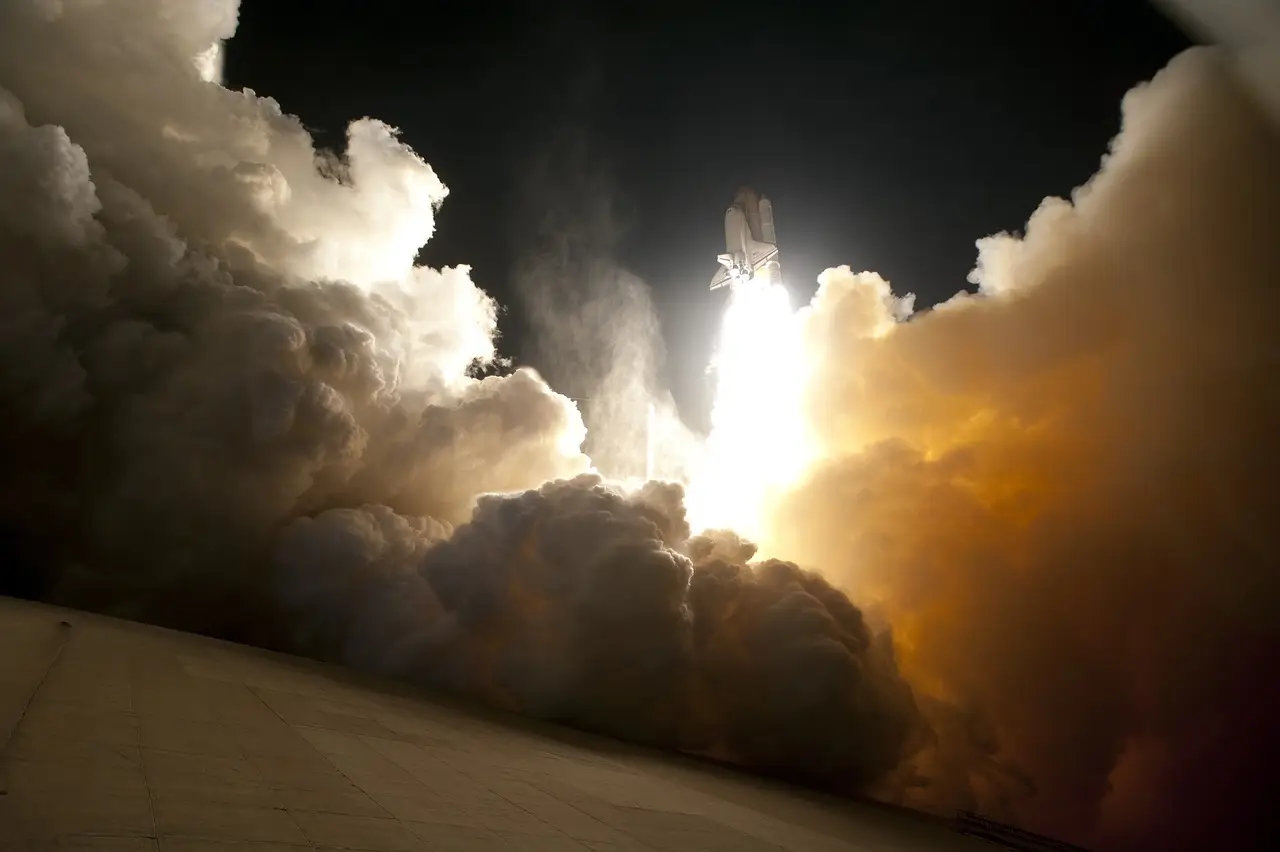
United Launch Alliance lost a Vulcan Centaur rocket and its cargo of 40 Amazon internet satellites on Sunday, and the company now says the fatal trouble started far earlier than the moment controllers noticed. The failure was recognized about 10 minutes into flight. The root problem, according to ULA's Nov. 17 statement, began just after liftoff.
"While we appear to have lost telemetry and the mission at approximately 10 minutes into flight, early indications are that just after liftoff the launch vehicle experienced low booster performance, resulting in stage separation occurring when the vehicle was low in altitude and below minimal velocity to reach orbit," ULA wrote.
In plain English: the first stage didn't push hard enough. When it dropped away, the rocket was too low and too slow for the upper stage to salvage anything. The Centaur V upper stage, powered by two RL-10C engines, performed normally, ULA added, "but was unable to recover from the [booster] performance loss, resulting in loss of mission."
What do we actually know about the cause?
Very little, and that's the honest answer. The first stage runs on two BE-4 engines built by Blue Origin, Jeff Bezos' rocket company. ULA's update did not identify the exact problem with the booster, and the investigation has just begun. Any confident diagnosis at this stage would be guesswork dressed up as reporting.
Here's what the failure is not, apparently. On Vulcan's second and fourth flights — October 2024 and February of this year — the nozzle of a strap-on solid rocket booster fell off about 30 seconds after liftoff. Both times, the rocket recovered and delivered its payloads. Still, the U.S. Space Force paused national-security Vulcan launches after the second occurrence. (The February flight was a Space Force mission.)
ULA implemented "design and process improvements to the nozzle" and said on Oct. 28 the fixes were in. Sunday's launch was the first test of them. "All indications are that the solid rocket booster performance was nominal, following nozzle improvements implemented for this launch," the company wrote. So the old problem looks solved. A new one appeared.
What does this change for the US space program?
Potentially a lot. If investigators find a serious flaw in the BE-4 engine, the ripple could reach far. That same engine powers the first stage of Blue Origin's New Glenn rocket, a key piece of hardware for NASA's Artemis moon program. New Glenn is already recovering from its own failure — a massive explosion on a test stand on May 28.
There was one thin silver lining for NASA. The agency plans to integrate the Centaur V upper stage into its Space Launch System moon rocket, and Centaur performed nominally on Sunday.
The bigger picture is a shrinking fleet. The United States doesn't have a surplus of powerful rockets, and two of them — Vulcan and New Glenn — are now out of commission simultaneously. A launch crunch looms: SpaceX intends to retire its Falcon 9 and Falcon Heavy and shift payloads to the fully reusable Starship megarocket. In Starship's early days, SpaceX is expected to prioritize its own needs, mainly building out its next-gen Starlink broadband constellation and the Starmind AI data center network.
What does this change for Amazon?
It's a setback, not a collapse. Amazon is building Amazon Leo, a constellation meant to compete with Starlink, eventually numbering more than 3,200 satellites. The company has booked roughly 100 launches across a range of rockets: the Atlas V, New Glenn, Falcon 9, Arianespace's Ariane 6, and Vulcan. Thirty-eight of those bookings are on Vulcan, and Sunday's launch was the first of them. About 400 operational Leo satellites have reached orbit across 14 launches so far, not counting Sunday's loss.
One lost mission out of 38 booked flights is recoverable — if the BE-4 problem turns out to be minor. That word, "if," is carrying a great deal of weight right now, and it will keep carrying it until the investigation reports.
Vulcan debuted in January 2024 and has flown five times, with problems on three of those missions. Its predecessor, the Atlas V, retires after just six more flights. ULA has, in short, little margin for a long grounding. Neither does the national launch schedule behind it.
via space.com (Source)
More from James Calloway
Show full bio
Staff writer covering regulation, policy and their impact on general science news at SciBeat.
473 articles
Nearby plates
- ULA Vulcan Rocket Fails in Flight, Stranding Amazon Satellites
- Vulcan Centaur Returns to Flight With 40 Amazon Leo Satellites
- Vulcan Returns to Flight Nov. 13 with First Amazon Leo Payload
- NASA Chief Maps SLS Through the 2030s: Cheaper Flights, No Second Launcher
- ULA Vulcan Rocket Cleared to Launch 40 Amazon Leo Satellites Friday